
The dengue fever is caused by the bite of which of the following mosquitoes ?
- (a)Aedes
- (b)Anopheles
- (c)Asian tiger mosquito
- (d)Culex
Correct — A, Aedes. Dengue is caused by the dengue virus, a flavivirus with four serotypes (DENV-1 to DENV-4), and it reaches humans through the bite of an infected female mosquito of the genus Aedes. The principal vector worldwide and in India is Aedes aegypti, a small dark mosquito with white markings that bites by day — typically in the hours after sunrise and before sunset — and breeds in clean, standing water collected in domestic containers: coolers, overhead tanks, flowerpot trays, discarded tyres and construction pits. The same genus carries chikungunya, Zika and yellow fever, which is why urban vector control targets Aedes breeding sites rather than the marshes and paddy fields associated with other mosquitoes. This item does, however, contain a real overlap that a careful candidate will notice: option (c), the Asian tiger mosquito, is Aedes albopictus, a genuine secondary vector of dengue and therefore itself a member of the genus named in option (a). Option (a) remains the answer because it names the whole genus, including the dominant vector Aedes aegypti, while option (c) names one species inside it — but a candidate who marked (c) had a defensible case, and this is one of the items in the 2022 paper where more than one option can be argued.
- (b)Anopheles — Anopheles is the malaria mosquito. Female Anopheles transmit Plasmodium parasites — falciparum, vivax and others — and their habits differ from Aedes at almost every point: they bite mainly from dusk to dawn, rest at a characteristic angle to the surface, and breed in relatively clean natural water bodies such as pools, paddy fields, stream margins and seepages. Anopheles has no role in dengue transmission.
- (c)Asian tiger mosquito — This is the option that makes the question defective rather than merely difficult, and it should not be dismissed with a false statement. The Asian tiger mosquito is Aedes albopictus, and it genuinely does transmit dengue — it is the recognised secondary vector, important in rural and peri-urban settings and the species responsible for spreading dengue into new regions. It is therefore not wrong; it is simply a species within the genus that option (a) names, and the epidemiologically dominant dengue vector, Aedes aegypti, is a different species of that same genus. UPPSC's key takes the genus-level answer, so the mark goes to (a).
- (d)Culex — Culex mosquitoes transmit Japanese encephalitis, lymphatic filariasis and West Nile fever — Culex tritaeniorhynchus is the classic Japanese encephalitis vector in the rice-growing belt, and Culex quinquefasciatus the filariasis vector of Indian towns, breeding in dirty, organically polluted water such as drains and cesspits. Filariasis in particular matters for Uttar Pradesh, but none of these diseases is dengue.
Vector-borne disease questions are answered by holding three columns together — the mosquito genus, the pathogen and the disease — because each genus has its own signature. Aedes carries viruses: dengue, chikungunya, Zika and yellow fever; it is a day-biter and breeds in clean water inside and around homes. Anopheles carries the malaria protozoan Plasmodium; it bites at night and breeds in clean natural water. Culex carries the Japanese encephalitis and West Nile viruses and the filarial worm Wuchereria bancrofti; it bites at night and breeds in polluted water. Those habits dictate the control strategy: source reduction and weekly dry-day campaigns against Aedes, indoor residual spraying and insecticide-treated nets against Anopheles, and drainage and sanitation against Culex. Dengue itself is worth understanding beyond the vector — infection with one serotype gives lasting immunity only to that serotype, and a subsequent infection with a different one carries a higher risk of severe dengue, which is why the disease is dangerous in areas where several serotypes circulate.
The intended reasoning is one line long: dengue equals Aedes, and the only genus name among the four that fits is Aedes. The complication is that the examiner put a species of Aedes into the same option list under its common English name, so a well-prepared candidate who recognised the Asian tiger mosquito as Aedes albopictus faced two defensible choices. The rule that resolves it, and the rule to carry into the hall generally, is that when a question offers both a genus and one of its species, the genus is the safer answer unless the stem asks for the principal or commonest vector — in which case the species intended would have been Aedes aegypti, which is not on the list at all. Note also what the stem gets slightly wrong: the mosquito does not cause dengue, it transmits the virus that does.
- Dengue is caused by the dengue virus, a flavivirus with four serotypes (DENV-1 to DENV-4), transmitted by the bite of infected female Aedes mosquitoes.
- Aedes aegypti is the principal dengue vector; Aedes albopictus, the Asian tiger mosquito, is a recognised secondary vector — so option (c) names a real dengue mosquito that belongs to the genus in option (a).
- Aedes aegypti bites by day and breeds in clean stagnant water in domestic containers such as coolers, tanks, tyres and flowerpot trays.
- The same genus also transmits chikungunya, Zika and yellow fever.
- Anopheles transmits malaria (Plasmodium); Culex transmits Japanese encephalitis, West Nile fever and lymphatic filariasis.
- Sequential infection by different dengue serotypes raises the risk of severe dengue, which is why immunity to one serotype does not protect against the others.
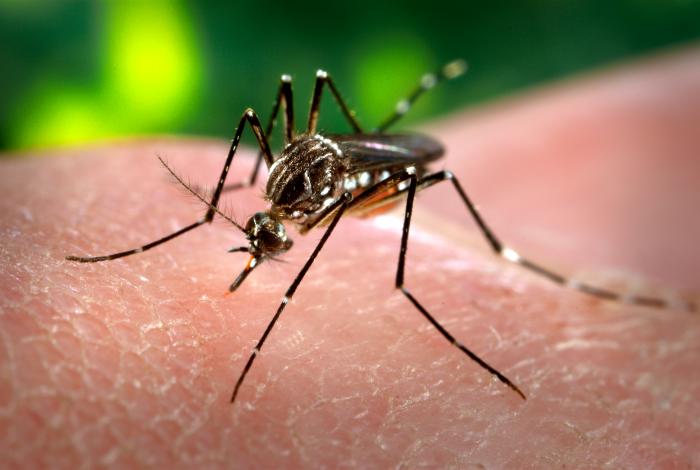
- Being caught by an option list that contains both a genus and one of its species — the Asian tiger mosquito is Aedes albopictus, so options (a) and (c) overlap and this item has two defensible answers.
- Swapping the vectors — Anopheles for malaria, Aedes for dengue and Culex for Japanese encephalitis and filariasis is the triad to memorise.
- Believing that one attack of dengue confers lifelong protection; immunity is serotype-specific, and a later infection with another serotype can be more severe.
UPPSC asks the vector-to-disease pairing directly, or in reverse as 'which is NOT a mosquito-borne disease', and repeats it across years; UPSC prefers statement-based items on the biology — whether dengue is viral or protozoan, which symptoms are genuine, or which other virus shares the dengue mosquito.
Consider the following statements: 1. Dengue is a protozoan disease transmitted by mosquitoes. 2. Retro-orbital pain is not a symptom of Dengue. 3. Skin rash and bleeding from nose and gums are some of the symptoms of Dengue. Which one of the following statements is/are correct?
- (a) 1 and 2
- (b) 3 only
- (c) 2 only
- (d) 1 and 3
Answer(b) 3 only
The same disease from the pathogen side — dengue is viral, not protozoan, a distinction that also separates its Aedes vector from the Anopheles that carries the malaria protozoan.
Consider the following statements: 1. In tropical regions, Zika virus disease is transmitted by the same mosquito that transmits dengue. 2. Sexual transmission of Zika virus disease is possible. Which of the statements given above is/are correct?
- (a) 1 only
- (b) 2 only
- (c) Both 1 and 2
- (d) Neither 1 nor 2
Answer(c) Both 1 and 2
Builds directly on the vector identified here — Aedes carries not only dengue but Zika, chikungunya and yellow fever, so the mosquito, not the disease, is the unit worth memorising.
Which of the following is NOT mosquito borne disease ?
- (a) Dengue fever
- (b) Filariasis
- (c) Sleeping sickness
- (d) Malaria
Answer(c) Sleeping sickness
The same vector map asked in reverse a year earlier — dengue by Aedes, filariasis by Culex and malaria by Anopheles are all mosquito-borne, while sleeping sickness belongs to the tsetse fly.
Match list-I with list-II and select the correct answer using code given below – List - I (Diseases): (A) Peptic ulcers (B) Dengue (C) Elephant Foot (D) Malaria List - II (Factors): (1) Virus (2) Protozoa (3) Worm (4) Bacteria Code -
- (a) A-(2), B-(3), C-(4), D-(1)
- (b) A-(4), B-(1), C-(3), D-(2)
- (c) A-(4), B-(2), C-(3), D-(1)
- (d) A-(3), B-(4), C-(2), D-(1)
Answer(b) A-(4), B-(1), C-(3), D-(2)
The pathogen half of the same picture a year later — dengue matched to virus and malaria to protozoa, the pairing that explains why their mosquito vectors are treated as separate control problems.
- practice — not a real PYQ
Which one of the following pairs of vector and disease is correctly matched?
- (a)Anopheles — dengue
- (b)Culex — malaria
- (c)Aedes — chikungunya
- (d)Aedes — Japanese encephalitis
Answer(c) Aedes — chikungunya. Aedes carries dengue, chikungunya, Zika and yellow fever; malaria belongs to Anopheles and Japanese encephalitis to Culex.
- practice — not a real PYQ
Anti-dengue campaigns concentrate on emptying coolers, tyres, flowerpot trays and overhead tanks every week chiefly because Aedes aegypti
- (a)breeds in polluted drains and cesspits
- (b)breeds in small collections of clean, standing water in and around houses
- (c)breeds only in flowing river water
- (d)lays its eggs directly on human skin
Answer(b) breeds in small collections of clean, standing water in and around houses — which is why source reduction at home, rather than spraying open marshes, is the core of dengue control.