
Match List-I (Diseases) with List-II (Factors) and select the correct answer using the code given below: List-I (Diseases): (A) Peptic ulcers (B) Dengue (C) Elephant Foot (D) Malaria List-II (Factors): (1) Virus (2) Protozoa (3) Worm (4) Bacteria
- (a)A-(2), B-(3), C-(4), D-(1)
- (b)A-(4), B-(1), C-(3), D-(2)
- (c)A-(4), B-(2), C-(3), D-(1)
- (d)A-(3), B-(4), C-(2), D-(1)
Correct — B, A-(4), B-(1), C-(3), D-(2). Peptic ulcers are caused chiefly by the bacterium Helicobacter pylori (4); Dengue by the dengue virus, a flavivirus (1); 'Elephant Foot' (elephantiasis / lymphatic filariasis) by parasitic filarial worms such as Wuchereria bancrofti (3); and Malaria by the Plasmodium protozoan (2). Only option B pairs every disease with the right class of pathogen.
- (a)A-(2), B-(3), C-(4), D-(1) — Wrongly makes peptic ulcers protozoan, dengue a worm, elephantiasis bacterial and malaria viral — none of these match; malaria in particular is protozoan, not viral.
- (c)A-(4), B-(2), C-(3), D-(1) — Gets peptic ulcers (bacteria) and elephantiasis (worm) right, but calls dengue protozoan (it is viral) and malaria viral (it is protozoan) — the classic dengue/malaria swap.
- (d)A-(3), B-(4), C-(2), D-(1) — Mislabels peptic ulcers as a worm and dengue as bacterial, and makes elephantiasis protozoan and malaria viral — every pair is displaced.
Human diseases are grouped by their causative agent: bacteria (peptic ulcer's H. pylori, tuberculosis, cholera), viruses (dengue, influenza, polio), protozoa (malaria's Plasmodium, amoebiasis, kala-azar) and helminth worms (filariasis/elephantiasis, ascariasis). Knowing the agent class explains how a disease spreads and how it is treated — antibiotics work on bacteria but not on viruses or protozoa.
Solve by anchoring the two 'famous' pairs first: malaria = protozoa (Plasmodium) and dengue = virus. That immediately fixes D-(2) and B-(1), which only option B satisfies. Peptic ulcer being bacterial (H. pylori, a 2005 Nobel-winning discovery) is the modern twist people miss — many still think it is caused only by stress or spicy food.
- Peptic ulcer → Helicobacter pylori bacterium (Marshall & Warren, Nobel Prize in Medicine 2005).
- Dengue → dengue virus (a flavivirus), spread by the Aedes aegypti mosquito.
- Elephant Foot / elephantiasis (lymphatic filariasis) → filarial worms (Wuchereria bancrofti), spread by Culex mosquitoes.
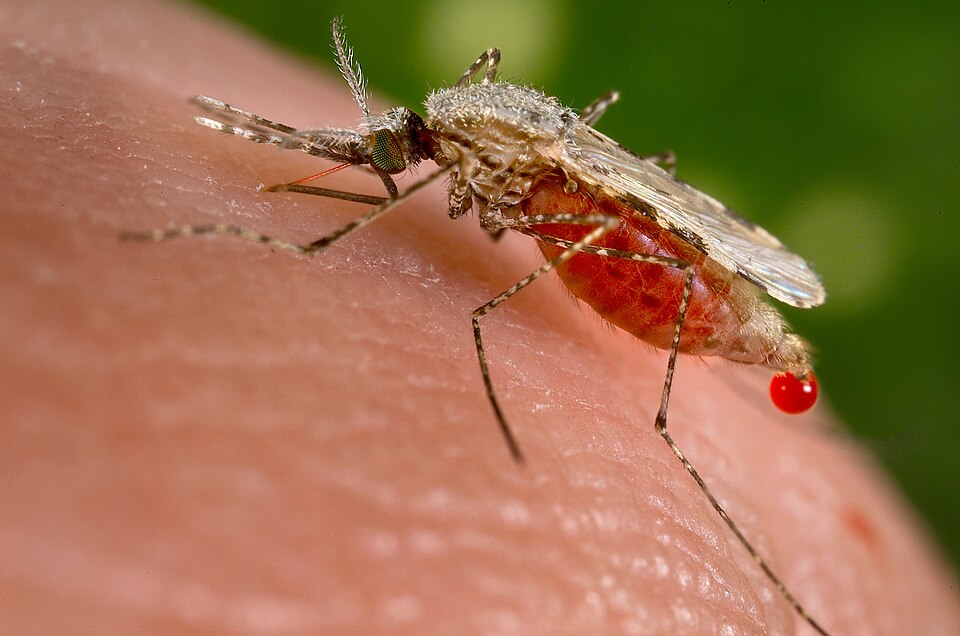
- Malaria → Plasmodium protozoan, transmitted by the female Anopheles mosquito.
- Swapping dengue (virus) and malaria (protozoa) — the most common error here.
- Assuming peptic ulcers are caused only by stress or diet rather than the bacterium H. pylori.
UPPSC/UPSC repeatedly ask disease-to-pathogen or disease-to-vector matching — memorise the causative-agent class and the carrying mosquito for each major disease.
Match List I (Disease) with List II (Organism) and select the correct answer: I. Malaria II. Poliomyelitis III. Tuberculosis IV. Ringworm ; A. Fungi B. Bacteria C. Virus D. Protozoan
- (a) I-D, II-C, III-B, IV-A
- (b) I-D, II-C, III-A, IV-B
- (c) I-C, II-D, III-A, IV-B
- (d) I-C, II-D, III-B, IV-A
Answer(a) I-D, II-C, III-B, IV-A — Malaria–Protozoan, Poliomyelitis–Virus, Tuberculosis–Bacteria, Ringworm–Fungi.
Identical skill — matching each disease to the class of organism (bacteria/virus/protozoa/fungi/worm) that causes it, including the shared malaria–protozoa pair.
- practice — not a real PYQ
Which of the following diseases is caused by a protozoan?
- (a)Dengue
- (b)Malaria
- (c)Tuberculosis
- (d)Influenza
Answer(b) Malaria — caused by the Plasmodium protozoan, spread by female Anopheles mosquitoes. - practice — not a real PYQ
Elephantiasis (lymphatic filariasis) in humans is caused by:
- (a)A virus
- (b)A bacterium
- (c)A filarial worm
- (d)A protozoan
Answer(c) A filarial worm — Wuchereria bancrofti, transmitted by Culex mosquitoes.