
Who was the founder of 'Hindustan Socialist Democratic Union' ?
- (a)Gopen Chakravartee, Faneendra Banerjee, Dharnee Goswami
- (b)Yateendranath, Ajay Ghosh, Phanindranath Ghosh
- (c)Vyomesh Chandra, Gopen Chakravartee, Sacheendra Sanyal
- (d)Vyomesh Chandra Banerjee, Ajay Ghosh, Sacheendra Sanyal
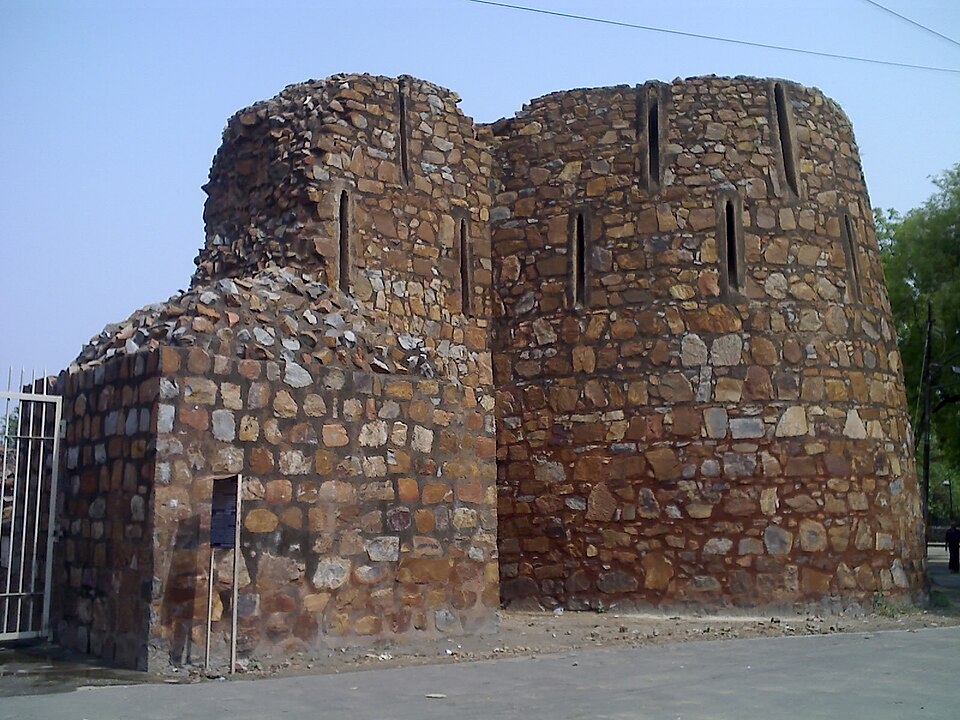
Correct — B, Yateendranath, Ajay Ghosh, Phanindranath Ghosh. Two things need saying plainly about this item. First, the organisation: 'Hindustan Socialist Democratic Union' is a loose English rendering of the Hindustan Socialist Republican Association — in Hindi Hindustan Samajwadi Prajatantra Sangh — which was formed when the older Hindustan Republican Association was reorganised at a meeting in the ruins of Feroz Shah Kotla, Delhi, on 8–9 September 1928, the word 'Socialist' being added to mark the group's new commitment to a socialist republic. Second, the naming of 'the founder': the standard histories do not give an agreed founding trio for that 1928 meeting, and the names usually associated with it form a much wider group — Chandrashekhar Azad, Bhagat Singh, Sukhdev, Bhagwati Charan Vohra, Shiv Verma, Jaidev Kapoor, Vijay Kumar Sinha, Kundan Lal, Phanindra Nath Ghosh and Ajoy Ghosh among them. Two of the three names in the keyed option, Ajoy Ghosh and Phanindra Nath Ghosh, do appear in those accounts of the reorganised association; the third, printed here as 'Yateendranath', cannot be identified with confidence from the spelling given. So the honest position is this: the key marks (b), two of its three names are genuine HSRA figures, and calling any trio 'the founder' of the HSRA goes beyond what the sources support. What makes (b) the answer in practice is elimination — the other three options each contain a name that cannot belong.
- (a)Gopen Chakravartee, Faneendra Banerjee, Dharnee Goswami — None of these three names appears in the standard accounts of the Hindustan Republican Association of 1924 or of its reorganisation as the Hindustan Socialist Republican Association in 1928. The option is built out of names that resemble those in the other choices — note 'Faneendra Banerjee' set against the 'Phanindranath Ghosh' of the keyed option — which is a common device for making a wrong list look familiar.
- (c)Vyomesh Chandra, Gopen Chakravartee, Sacheendra Sanyal — Two problems, either of which is fatal. 'Vyomesh Chandra' is Womesh Chandra Bonnerjee, the first president of the Indian National Congress at its Bombay session in 1885, who died in 1906 — he cannot be a founder of a body created in 1928. And Sachindra Nath Sanyal belongs to the earlier Hindustan Republican Association, founded at Kanpur on 3 October 1924, and to its manifesto 'The Revolutionary'; he is not part of the 1928 reorganisation.
- (d)Vyomesh Chandra Banerjee, Ajay Ghosh, Sacheendra Sanyal — This option gives the full name, Vyomesh Chandra Banerjee, which removes any doubt — W. C. Bonnerjee, first president of the Congress in 1885, died in 1906, twenty-two years before the HSRA was formed. The anachronism alone rules the option out, and Sachindra Nath Sanyal again belongs to the 1924 HRA rather than the 1928 body. Ajay Ghosh's presence is what makes the option tempting; the other two names destroy it.
Revolutionary nationalism in north India runs through two linked organisations. The Hindustan Republican Association was founded at Kanpur on 3 October 1924 by Ram Prasad Bismil, Sachindra Nath Sanyal, Jogesh Chandra Chatterjee, Sachindra Nath Bakshi, Yogendra Shukla and Ashfaqulla Khan, with the aim of an armed overthrow of British rule and the establishment of a federal republic. Its most famous action was the Kakori train robbery of 1925, and the executions and life sentences that followed broke its first generation of leaders. The survivors, joined by a younger and more explicitly left-wing group from Punjab and the United Provinces, met at Feroz Shah Kotla in Delhi on 8–9 September 1928 and reconstituted it as the Hindustan Socialist Republican Association, with Chandrashekhar Azad as commander-in-chief of its armed wing. The change of name mattered: the new body did not merely want the British gone, it wanted a socialist republic, and its subsequent actions — the killing of the police officer Saunders in Lahore, the bomb thrown in the Central Legislative Assembly in 1929, Bhagat Singh's prison writings — were designed as propaganda for that programme.
Approach this question defensively rather than confidently, because it asks for something the historical record does not clearly supply. There is no settled 'founding trio' of the HSRA; what there is, is a long and well-documented list of the men associated with the 1928 reorganisation, and two of the keyed option's three names sit on that list. The reliable route to the mark is elimination on a single anchor: Womesh Chandra Bonnerjee, who appears in two options, was the first Congress president in 1885 and died in 1906, so any option containing him is impossible. Sachindra Nath Sanyal is the second anchor — he belongs to the 1924 Kanpur founding of the HRA, not to the 1928 Delhi meeting. Between them these two anchors remove options (c) and (d), and option (a) contains no name from either organisation. That leaves (b). Carry the two organisations, their dates and their places rather than trying to memorise a trio the sources do not agree on.
- The Hindustan Republican Association was founded at Kanpur on 3 October 1924; its founders included Ram Prasad Bismil, Sachindra Nath Sanyal, Jogesh Chandra Chatterjee, Sachindra Nath Bakshi, Yogendra Shukla and Ashfaqulla Khan.
- It was reorganised as the Hindustan Socialist Republican Association — Hindustan Samajwadi Prajatantra Sangh — at a meeting in Feroz Shah Kotla, Delhi, on 8–9 September 1928; the question's 'Hindustan Socialist Democratic Union' is a loose rendering of that name.
- Standard sources do not name a founding trio for the 1928 meeting; the names usually associated with the reorganised association include Chandrashekhar Azad, Bhagat Singh, Sukhdev, Bhagwati Charan Vohra, Shiv Verma, Jaidev Kapoor, Vijay Kumar Sinha, Kundan Lal, Phanindra Nath Ghosh and Ajoy Ghosh.
- Womesh Chandra Bonnerjee — the 'Vyomesh Chandra Banerjee' of options (c) and (d) — presided over the first session of the Indian National Congress in 1885 and died in 1906, so he cannot belong to a 1928 organisation.
- Sachindra Nath Sanyal belongs to the 1924 Hindustan Republican Association, not to the 1928 reorganisation.
- The Kakori train action of 1925 was the HRA's best-known operation; after 1928 the HSRA, with Chandrashekhar Azad heading its armed wing, carried out the Lahore action against Saunders and the Central Assembly bombing of 1929.
- Assuming the question names a settled founding trio; the sources do not agree on one for the HSRA's 1928 reorganisation, so the item is answered by eliminating impossible names rather than by recall.
- Confusing the Hindustan Republican Association (Kanpur, 1924) with the Hindustan Socialist Republican Association (Delhi, 1928) — Sachindra Nath Sanyal belongs to the first, not the second.
- Missing the anachronism — W. C. Bonnerjee, the first Congress president of 1885, died in 1906 and cannot appear in any list of 1928 revolutionaries.
UPPSC asks revolutionary history through founders, organisations and places, often with deliberately variant spellings of Bengali and Punjabi names; UPSC prefers to test the same ground through match lists pairing an action such as Kakori or the Chittagong armoury raid with the person who led it.
Match List I with List II and select the correct answer by using the codes given below the lists: List I I. Chittagong Armoury Raid II. Kakori Conspiracy III. Lahore Conspiracy IV. Ghadar Party List II A) Lala Hardayal B) Jatin Das C) Surya Sen D) Ram Prasad Bismil E) Vasudev Phadke Codes:
- (a) I–C, II–D, III–A, IV–E
- (b) I–D, II–C, III–B, IV–E
- (c) I–C, II–D, III–B, IV–A
- (d) I–B, II–D, III–C, IV–A
Answer(c) I–C, II–D, III–B, IV–A
The two actions that bracket this question — Kakori, the Hindustan Republican Association's operation of 1925, and the Lahore conspiracy case that followed the reorganised HSRA's activities after 1928.
Who among the following was NOT an early member of the 'Naujawan-Sabha' formed in 1926 A.D.?
- (a) Bhagat Singh
- (b) Yaspal
- (c) Chhabil Das
- (d) Ambika Chakravarti
Answer(d) Ambika Chakravarti
The Punjab youth organisation of 1926 out of which the younger, socialist wing of the HSRA came — the same circle of men, tested through membership rather than founding.
Ministry of Culture, Government of India as part of Azadi ka Amrit Mahotsav celebrated the birth anniversary of Saheed Ram Prasad Bismil in June, 2021 at which one of the following places in Uttar Pradesh?
- (a) Chauri Chaura
- (b) Shahjahanpur
- (c) Rampur
- (d) Ballia
Answer(b) Shahjahanpur
The founder of the parent body — Ram Prasad Bismil helped found the Hindustan Republican Association at Kanpur in 1924, the organisation that was reconstituted as the HSRA four years later.
- practice — not a real PYQ
The Hindustan Republican Association was founded in 1924 at
- (a)Lahore
- (b)Kanpur
- (c)Delhi
- (d)Calcutta
Answer(b) Kanpur — founded on 3 October 1924, with Ram Prasad Bismil, Sachindra Nath Sanyal and Jogesh Chandra Chatterjee among its founders.
- practice — not a real PYQ
At which place was the Hindustan Republican Association reorganised as the Hindustan Socialist Republican Association in September 1928?
- (a)Feroz Shah Kotla, Delhi
- (b)Lahore Central Jail
- (c)Alfred Park, Allahabad
- (d)Kakori, near Lucknow
Answer(a) Feroz Shah Kotla, Delhi — at a meeting held on 8–9 September 1928, when 'Socialist' was added to the association's name.