
Eco mark is given to a product which is
- (a)Economically viable
- (b)Rich in carbohydrate
- (c)Un-adulterated
- (d)Environment friendly
Answer
Why
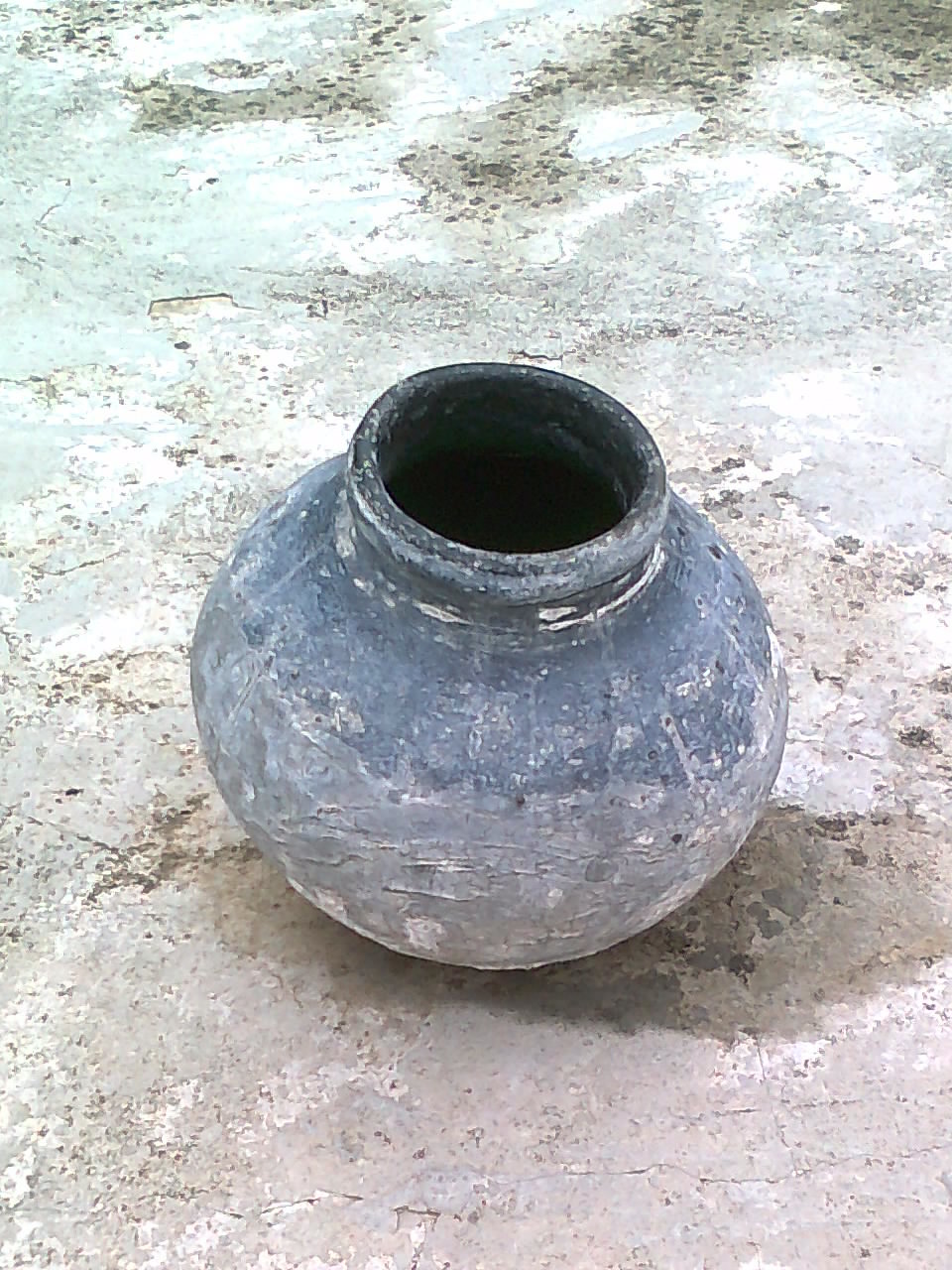
Correct — D, Environment friendly. The Ecomark is India's official eco-labelling scheme, instituted by the Government of India in 1991 through the Ministry of Environment and Forests and operated as a certification mark by the Bureau of Indian Standards. A product earns it by meeting prescribed criteria for environmental performance across its life cycle — the raw materials it consumes, how it is manufactured, what it emits, how it is packaged and what happens when it is discarded — in addition to meeting the ordinary Indian Standard for quality and safety in its product category. The label is therefore an environmental claim and nothing else: it certifies that the product does less environmental harm than others of its kind, not that it is cheaper, purer or more nutritious. The logo makes the same point visually — an earthen pot, chosen because it is made from a renewable material, takes little energy to produce, carries no toxic residue and returns harmlessly to the soil when broken.
Why the others are wrong
- (a)Economically viable — The Ecomark makes no statement about cost, profitability or value for money. Eco-labelled goods are frequently dearer than their conventional equivalents, because meeting life-cycle environmental criteria adds to production cost; the scheme's premise is that consumers can be persuaded to pay that difference for an environmental benefit. Economic viability is not assessed at any stage of the certification.
- (b)Rich in carbohydrate — Nutritional content is regulated in India by the Food Safety and Standards Authority of India through labelling rules, and no certification mark of any kind is awarded for carbohydrate content. The Ecomark also covers far more than food — soaps and detergents, paper, paints, plastics, textiles, cosmetics, batteries, wood substitutes and packaging materials — so a nutrient claim could not be its basis.
- (c)Un-adulterated — Purity and freedom from adulteration belong to other marks. Agmark, issued by the Directorate of Marketing and Inspection under the Union Ministry of Agriculture, grades agricultural commodities such as spices, honey, ghee and pulses for quality; the BIS Standard Mark (the ISI mark) certifies conformity to an Indian Standard; food safety generally is enforced by the FSSAI. The Ecomark is the environmental label in that family, and is the only one of them that asks what a product does to the environment rather than what it contains.
Concept
India runs several distinct certification marks, and each answers a different question about a product. The BIS Standard Mark, popularly the ISI mark, answers 'does this conform to the relevant Indian Standard?' — and is compulsory for a notified list of goods such as automotive tyres and tubes, cement, LPG cylinders and packaged drinking water. Agmark answers 'what grade is this agricultural commodity?' and is administered by the Directorate of Marketing and Inspection. Hallmarking answers 'what is the purity of this gold or silver article?'. The Ecomark, launched in 1991, answers 'is this the environmentally better choice within its category?' It is an eco-label of the kind found worldwide — Germany's Blue Angel, the Nordic Swan, the EU Ecolabel — and works on the same logic: a government-backed mark that lets an ordinary shopper act on environmental information they could never verify themselves, thereby creating a market incentive for cleaner production.
The word 'eco' does the work here, and the intended reasoning is elimination rather than recall. Economic viability, carbohydrate content and freedom from adulteration are all claims about price, nutrition and purity; only one option is about the environment, and 'eco' points straight at it. What the question rewards on a second reading is the ability to keep the Indian certification marks apart, because UPPSC and UPSC both rotate them: Ecomark for environment, Agmark for agricultural grading, ISI or Standard Mark for conformity to an Indian Standard, Hallmark for precious-metal purity. Note also that the Ecomark is administered by the Bureau of Indian Standards even though it was created by the environment ministry — a division of labour that a question can be built around.
Key facts
- The Ecomark scheme was launched by the Government of India in 1991 through the Ministry of Environment and Forests to identify environment-friendly consumer products.
- It is administered as a certification mark by the Bureau of Indian Standards, which also awards the ISI Standard Mark.
- Certification rests on life-cycle criteria — raw materials, manufacture, emissions, packaging and disposal — in addition to the ordinary Indian Standard for quality and safety in that product category.
- The Ecomark logo is an earthen pot, chosen as a symbol of a product made from renewable material that uses little energy and leaves no harmful residue.
- Other Indian marks answer different questions: Agmark grades agricultural produce and is run by the Directorate of Marketing and Inspection; the BIS Standard Mark certifies conformity to an Indian Standard; hallmarking certifies the purity of precious metals.
- The Ecomark belongs to the international family of government eco-labels that includes Germany's Blue Angel, the Nordic Swan and the EU Ecolabel.
Study next
Common traps
- Reading 'eco' as 'economy' rather than 'ecology' — the option 'economically viable' exists purely to catch that slip.
- Assuming the environment ministry itself issues the mark; the scheme was created by the ministry but is administered by the Bureau of Indian Standards.
- Confusing Ecomark with Agmark — one certifies environmental performance, the other grades agricultural produce for quality.
UPPSC asks it as a bare definition — 'Eco mark is given to a product which is …' — and has now asked it in more than one year with almost the same option set; UPSC asks it either identically, as in 1998, or as a multi-statement item pairing several certification marks with the bodies that issue them.
Related PYQs
‘Eco mark’ is given to the Indian products that are
- (a) pure and unadulterated
- (b) rich in proteins
- (c) environment friendly
- (d) economically viable
Answer(c) environment friendly
Effectively the same question UPSC asked in 1998, down to the distractors — purity, nutrition and economic viability set against the environmental claim the mark actually makes.
Consider the following statements: 1. The Standard Mark of Bureau of Indian Standards (BIS) is mandatory for automotive tyres and tubes. 2. AGMARK is a quality Certification Mark issued by the Food and Agriculture Organisation (FAO). Which of the statements given above is/are correct?
- (a) 1 only
- (b) 2 only
- (c) Both 1 and 2
- (d) Neither 1 nor 2
Answer(a) 1 only
The same family of Indian certification marks tested from the institutional side — which body issues which mark, the distinction that separates Ecomark, Agmark and the BIS Standard Mark.
The symbol 'ECOMARC' is related to which of the following ?
- (a) Goods of best quality
- (b) Safe goods for environment
- (c) Exported goods
- (d) Imported goods
Answer(b) Safe goods for environment
UPPSC asked the identical fact one year earlier, spelling the mark 'ECOMARC' — evidence that this is a repeat item worth memorising rather than reasoning out each time.
Practice
- practice — not a real PYQ
The Ecomark scheme of the Government of India is administered by which one of the following?
- (a)The Central Pollution Control Board
- (b)The Bureau of Indian Standards
- (c)The Food Safety and Standards Authority of India
- (d)The Directorate of Marketing and Inspection
Answer(b) The Bureau of Indian Standards — the scheme was created by the environment ministry in 1991 but the mark is awarded and policed by BIS. - practice — not a real PYQ
Which one of the following pairs is correctly matched?
- (a)Agmark — purity of gold jewellery
- (b)Hallmark — grading of agricultural produce
- (c)Ecomark — environment-friendly consumer products
- (d)ISI mark — nutritional content of packaged food
Answer(c) Ecomark — environment-friendly consumer products. Agmark grades agricultural produce, hallmarking certifies precious-metal purity and the ISI mark certifies conformity to an Indian Standard.