
The bacillus haemophilus influenza causes
- (a)A form of meningitis in young children
- (b)Influenza
- (c)Whooping cough
- (d)Pneumonia
Correct — C, Whooping cough. That is what the Uttar Pradesh Public Service Commission's official key sheet for Booklet A marks for this question, and the official key is what decides marks, so it is stated first and without qualification. It is also, on the medical record, wrong — and a student is far better served by being told so than by being taught a falsehood. Haemophilus influenzae, particularly the encapsulated type b (Hib), is a Gram-negative coccobacillus that causes acute bacterial meningitis, epiglottitis, pneumonia, bacteraemia and infections of the ear, eye and sinuses, with young children the classic victims. Whooping cough is caused by an entirely different bacterium, Bordetella pertussis. The most likely origin of the examiner's error is a naming accident: Bordetella pertussis was formerly classified in the genus Haemophilus, as Haemophilus pertussis (and Bordetella parapertussis as Haemophilus parapertussis), and that obsolete name survives in older textbook lineages, where it makes 'Haemophilus' and 'whooping cough' look connected. On the four options printed here, the scientifically correct choice is (a), a form of meningitis in young children — Hib meningitis is precisely the disease the Hib component of India's pentavalent vaccine exists to prevent. The species name is a second historical accident of the same kind: Richard Pfeiffer, working in 1893, isolated the organism from influenza patients and took it to be the cause of influenza, and the name stuck even after influenza was shown to be viral. Note also that the stem's own wording is loose — the organism is a coccobacillus, not a member of the genus Bacillus.
- (a)A form of meningitis in young children — This is the medically correct statement, and it is important to say so rather than to invent a reason against it. Haemophilus influenzae type b was, before mass vaccination, a leading cause of acute bacterial meningitis in children under five, alongside epiglottitis and pneumonia. The commission's key nonetheless marks (c), and this card follows the key because the key governs the marks for this paper. Carry (a) as the microbiology you will need in every other examination and in the Hib-vaccine questions that follow from it, and carry (c) as what this particular paper rewarded.
- (b)Influenza — Genuinely wrong, and the trap the species name sets. Influenza is caused by influenza viruses — orthomyxoviruses, of which types A, B and C infect humans — not by any bacterium. The organism carries the epithet 'influenzae' only because Richard Pfeiffer isolated it from influenza patients in 1893 and wrongly concluded that it was the causative agent; the misnomer survived the correction. Bacteria such as H. influenzae can, however, cause secondary infections on top of viral influenza, which is part of why the mistake persisted so long.
- (d)Pneumonia — Not wrong as biology, but not the disease this organism is defined by. Haemophilus influenzae genuinely is a cause of pneumonia, especially in children and in adults with chronic lung disease; the commonest bacterial cause of community-acquired pneumonia, however, is Streptococcus pneumoniae. Among the four options, the presentation classically attributed to Hib in young children is meningitis, which is why (a) rather than (d) is the medically best answer here.
Two separate ideas are being tested, and only one of them is microbiology. The first is that a bacterium's name is a historical artefact and not a description of what it does: Haemophilus influenzae is named for influenza it does not cause, and Bordetella pertussis once sat inside the genus Haemophilus as Haemophilus pertussis before being moved out. The second is the actual disease map. Haemophilus influenzae type b, an encapsulated Gram-negative coccobacillus, colonises the nasopharynx and can invade to produce meningitis, epiglottitis, pneumonia and septicaemia in unvaccinated young children. Bordetella pertussis, by contrast, attaches to the ciliated epithelium of the respiratory tract and produces pertussis toxin, giving the long paroxysmal cough with its characteristic inspiratory whoop. The vaccines follow the same split: in India Hib is delivered through the pentavalent vaccine under the Universal Immunisation Programme, while pertussis is the 'P' of DPT.
This item is worth studying twice — once for the biology and once as a lesson in how to handle a defective key. The commission's key marks whooping cough; every standard reference attributes whooping cough to Bordetella pertussis and attributes meningitis, epiglottitis and pneumonia to Haemophilus influenzae type b. The obsolete synonym Haemophilus pertussis is the bridge that most plausibly explains how the error entered the paper. For the examination hall the practical rule is simple: answer what the key marks in this paper's own scoring, but never let a defective key overwrite what you know, because the same fact will be asked correctly by UPSC and by every other commission. Store the pair as one unit — Haemophilus influenzae equals meningitis in the young, Bordetella pertussis equals whooping cough — and you cannot be caught by either version of the question.
- Haemophilus influenzae, especially type b (Hib), causes acute bacterial meningitis, epiglottitis, pneumonia, bacteraemia and ear, eye and sinus infections, chiefly in young children.
- Whooping cough (pertussis) is caused by Bordetella pertussis, a different genus altogether.
- Bordetella pertussis was formerly classified as Haemophilus pertussis, and Bordetella parapertussis as Haemophilus parapertussis — the obsolete naming that most plausibly explains this key's answer.
- The epithet 'influenzae' dates from Richard Pfeiffer's work in 1893, when he isolated the bacterium from influenza patients and mistook it for the cause of the disease; influenza is in fact caused by influenza viruses.
- In India, Hib is covered by the pentavalent vaccine given under the Universal Immunisation Programme, while pertussis is covered by the 'P' in DPT.
- UPPSC's official 2022 key marks option (c), whooping cough; on the printed option list the medically correct answer is (a), a form of meningitis in young children.
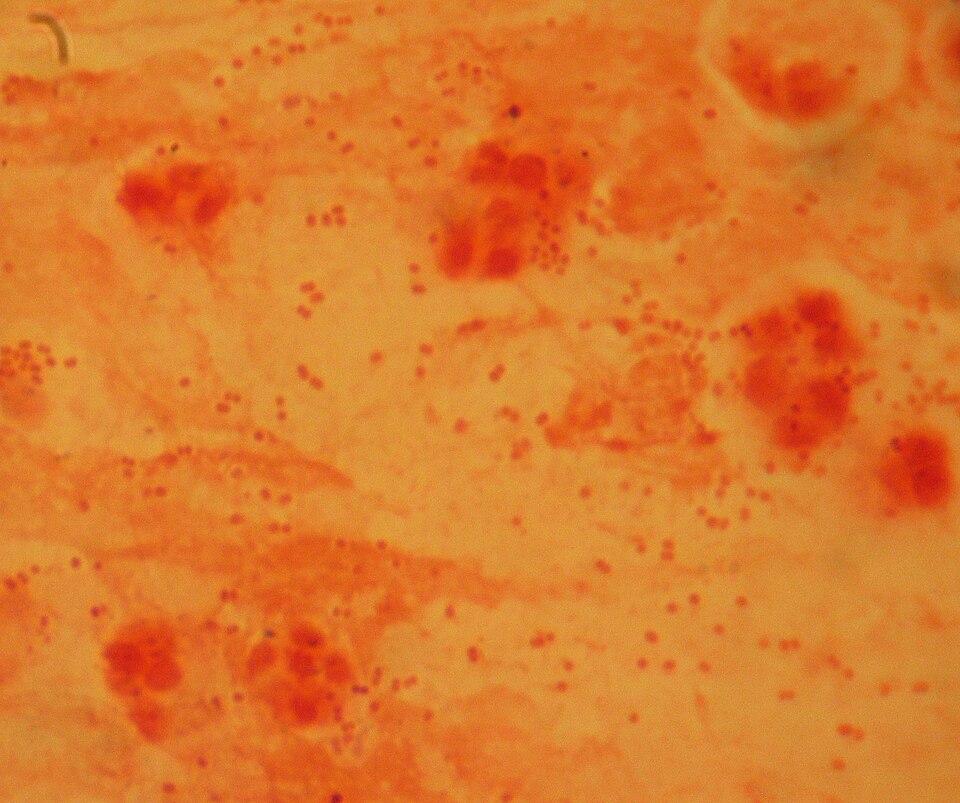
- Believing the organism's name — Haemophilus influenzae does not cause influenza, and Escherichia coli in the gut is mostly harmless; names record history, not function.
- Linking 'Haemophilus' to whooping cough because of the obsolete synonym Haemophilus pertussis; the modern name is Bordetella pertussis.
- Assuming a single bacterium causes only one disease — H. influenzae causes meningitis, epiglottitis and pneumonia, so an option list can contain more than one true statement about it.
UPPSC asks the organism-to-disease pairing as a bare one-liner or as a four-row match list, and has used the same disease set repeatedly; UPSC prefers the consequence — which vaccine protects against which infections, or how a named disease is transmitted — as in its pneumococcal-conjugate-vaccine and meningococcal-meningitis questions.
Consider the following statements: 1. Meningococcal Meningitis is transmitted from person to person by mosquito bites. 2. Vomiting and neck pain are two of the symptoms of Meningococcal meningitis. Which of the statements given above is/are correct?
- (a) 1 only
- (b) 2 only
- (c) Both 1 and 2
- (d) Neither 1 nor 2
Answer(b) 2 only
The same disease from the other main bacterial cause — bacterial meningitis, its droplet spread and its symptoms, which is the illness Haemophilus influenzae type b is actually known for.
Match List I with List II and select the correct answer using the codes given below the lists: List I (Disease) I. Malaria II. Poliomyelitis III. Tuberculosis IV. Ringworm List II (Organism) A. Fungi B. Bacteria C. Virus D. Protozoan Codes:
- (a) I-D, II-C, III-B, IV-A
- (b) I-D, II-C, III-A, IV-B
- (c) I-C, II-D, III-A, IV-B
- (d) I-C, II-D, III-B, IV-A
Answer(a) I-D, II-C, III-B, IV-A
The general skill this question depends on — pairing a named disease with the class of organism that causes it, where the name of the organism is no guide to the name of the disease.
Match list-I with list-II and select the correct answer using code given below – List - I (Diseases): (A) Peptic ulcers (B) Dengue (C) Elephant Foot (D) Malaria List - II (Factors): (1) Virus (2) Protozoa (3) Worm (4) Bacteria Code -
- (a) A-(2), B-(3), C-(4), D-(1)
- (b) A-(4), B-(1), C-(3), D-(2)
- (c) A-(4), B-(2), C-(3), D-(1)
- (d) A-(3), B-(4), C-(2), D-(1)
Answer(b) A-(4), B-(1), C-(3), D-(2)
UPPSC returning to the same disease-to-pathogen mapping a year later, in match-list form — the concept this 2022 item tests, minus the naming trap.
- practice — not a real PYQ
Whooping cough (pertussis) is caused by
- (a)Haemophilus influenzae
- (b)Bordetella pertussis
- (c)Streptococcus pneumoniae
- (d)An orthomyxovirus
Answer(b) Bordetella pertussis — a bacterium once classified as Haemophilus pertussis, which is why the older name still causes confusion.
- practice — not a real PYQ
The Hib component of the pentavalent vaccine given under India's Universal Immunisation Programme protects children mainly against
- (a)Influenza caused by influenza viruses
- (b)Meningitis and other invasive disease caused by Haemophilus influenzae type b
- (c)Whooping cough
- (d)Tuberculous meningitis
Answer(b) Meningitis and other invasive disease caused by Haemophilus influenzae type b — the pentavalent vaccine combines diphtheria, pertussis, tetanus, hepatitis B and Hib.