
Which one of the following blood cells type secrete large number of antibodies during an immune response of the body?
- (a)Neutrophils
- (b)Eosinophils
- (c)Lymphocytes
- (d)Monocytes
Answer
Why
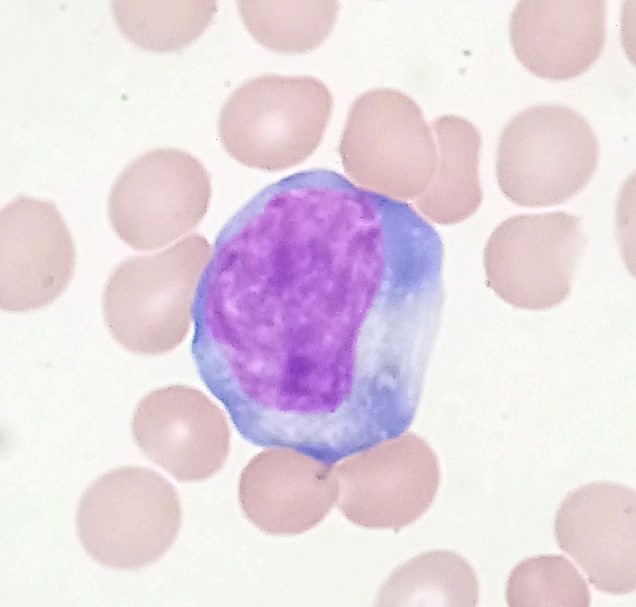
Correct — C, Lymphocytes. Antibodies (immunoglobulins) are produced by B-lymphocytes, which on encountering an antigen multiply and mature into plasma cells that pour out large numbers of antibody molecules — the antibody-mediated (humoral) arm of the immune response.
Why the others are wrong
- (a)Neutrophils — Neutrophils are the most abundant white blood cells and the body's first phagocytic responders — they engulf and digest bacteria in inflammation, but they do not make antibodies.
- (b)Eosinophils — Eosinophils combat parasitic worms and mediate allergic and inflammatory reactions; they release enzymes and toxins, not antibodies.
- (d)Monocytes — Monocytes are the largest white blood cells and mature into macrophages and dendritic cells that engulf pathogens and present antigens, but they do not secrete antibodies.
Concept
Lymphocytes are agranular white blood cells of two main kinds — B cells and T cells. B cells drive humoral (antibody) immunity, while T cells drive cell-mediated immunity. On meeting a specific antigen, a B cell divides and differentiates into antibody-secreting plasma cells and long-lived memory cells.
All four options are white blood cells, so all of them 'fight infection' in some way, which is the trap. The distinction being tested is the mechanism: granulocytes and monocytes act mainly by phagocytosis, whereas only lymphocytes (specifically B cells and their plasma cells) actually secrete antibodies.
Key facts
- Antibodies (immunoglobulins) are Y-shaped proteins secreted by plasma cells derived from B-lymphocytes.
- Lymphocytes come in two main types — B cells (humoral, antibody immunity) and T cells (cell-mediated immunity).
- Neutrophils are the most numerous white blood cells and the first phagocytes to reach a bacterial infection.
- Monocytes mature into macrophages that engulf pathogens and present antigens to lymphocytes.
Study next
Common traps
- Do not assume every infection-fighting white blood cell makes antibodies — only lymphocytes (B cells) do.
- Distinguish phagocytosis (neutrophils, monocytes) from antibody secretion (B cells/plasma cells).
Immune cells are asked as 'which white blood cell does X', matching neutrophils, eosinophils, monocytes and lymphocytes to their specific roles.
Related PYQs
Antigen is a substance which
- (a) destroys harmful bacteria
- (b) is used to treat poisoning
- (c) lowers body temperature
- (d) stimulates formation of antibody
Answer(d) stimulates formation of antibody
Same concept — antibodies in the immune response. UPSC pinned an antigen to the fact that it stimulates antibody formation; the antibody-secreting cells that answer that stimulus are exactly the B-lymphocytes named in this NDA question.
Which one among the following cells produces antibodies against a foreign antigen?
- (a) Lymphocytes
- (b) Erythrocytes
- (c) Eosinophils
- (d) Platelets
Answer(a) Lymphocytes
Almost the same question a session earlier — NDA-I 2024 asked which cell produces antibodies (Lymphocytes), while NDA-II 2025 asks which cell secretes large numbers of antibodies. Both point to the B-lymphocyte/plasma-cell answer.
Practice
- practice — not a real PYQ
The cells chiefly responsible for cell-mediated immunity are
- (a)B-lymphocytes
- (b)T-lymphocytes
- (c)Neutrophils
- (d)Platelets
Answer(b) T-lymphocytes — T cells drive cell-mediated immunity, while B cells handle antibody (humoral) immunity. - practice — not a real PYQ
Which one of the following is the most abundant type of white blood cell in human blood?
- (a)Lymphocytes
- (b)Monocytes
- (c)Neutrophils
- (d)Basophils
Answer(c) Neutrophils — they form the largest fraction of white blood cells and are the first responders to bacterial infection.