
Which one among the following cells produces antibodies against a foreign antigen?
- (a)Lymphocytes
- (b)Erythrocytes
- (c)Eosinophils
- (d)Platelets
Answer
Why
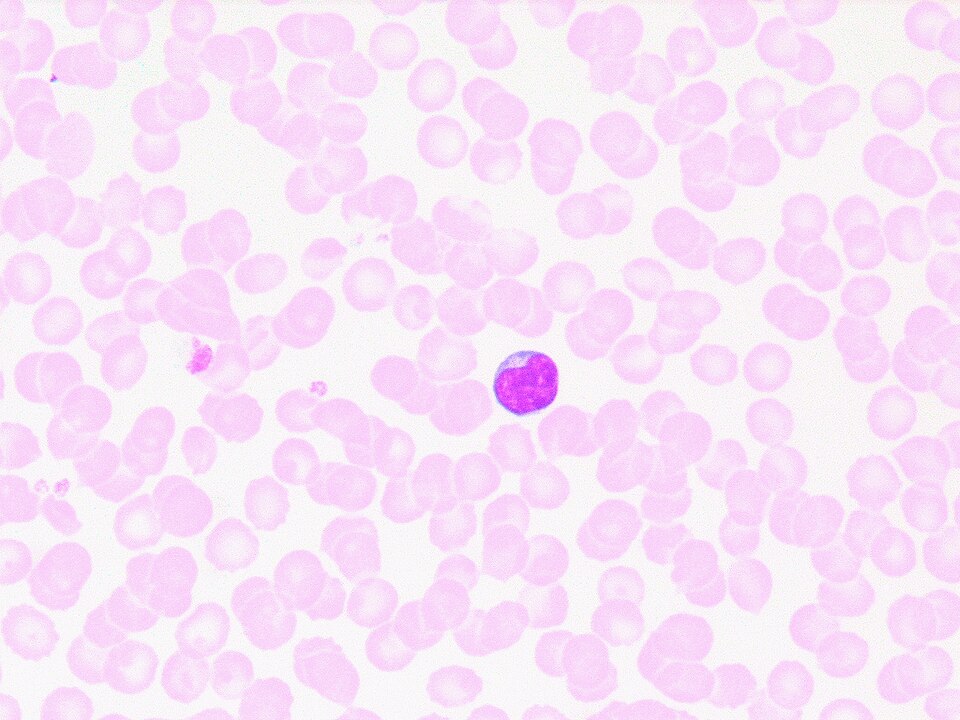
Correct — A, Lymphocytes. Antibodies are made by a class of white blood cell called the lymphocyte — specifically the B-lymphocytes, which, once they meet a foreign antigen, multiply and mature into plasma cells that pour out large amounts of antigen-specific antibody. The other blood cells listed have no role in antibody synthesis, so option (a) is correct.
Why the others are wrong
- (b)Erythrocytes — Red blood cells are packed with haemoglobin to carry oxygen and carbon dioxide and, in mammals, have no nucleus. They neither recognise antigens nor make antibodies.
- (c)Eosinophils — Eosinophils are granulocytes that fight parasitic worms and take part in allergic reactions; they do not manufacture antibodies.
- (d)Platelets — Platelets are cell fragments that clump together to plug wounds and start blood clotting; they play no part in antibody production.
Concept
The adaptive arm of the immune system relies on lymphocytes. B-lymphocytes produce antibodies (humoral immunity), while T-lymphocytes coordinate responses and destroy infected cells (cell-mediated immunity). An antibody is a Y-shaped protein that binds a specific antigen and marks it for destruction by the rest of the immune system.
Distinguish lymphocytes from the other blood cells in the list. Erythrocytes carry gases, platelets clot blood, and eosinophils are granulocytes doing other defensive jobs. Only lymphocytes generate antibodies, so the other three can be eliminated at once.
Key facts
- Antibodies (immunoglobulins) are Y-shaped proteins that bind specifically to a matching antigen.
- B-lymphocytes differentiate into plasma cells, the cells that actually secrete antibodies.
- T-lymphocytes provide cell-mediated immunity — helping B-cells and killing infected cells — but do not secrete antibodies.
- Lymphocytes arise from stem cells in the bone marrow; B-cells mature there, while T-cells mature in the thymus.
Study next
Common traps
- Assuming every white blood cell makes antibodies — only lymphocytes (B-cells) do.
- Thinking T-cells secrete antibodies; it is the B-cells and their plasma cells that do.
- Mixing up antigen (the foreign trigger) with antibody (the body's protein response).
A direct single-best-answer on which blood cell makes antibodies — recall the lymphocyte and its B-cell to plasma-cell pathway.
Related PYQs
Which one of the following statements best describes the role of B cells and T cells in the human body?
- (a) They protect the body from environmental allergens.
- (b) They alleviate the body's pain and inflammation.
- (c) They act as immunosuppressants in the body.
- (d) They protect the body from the diseases caused by pathogens.
Answer(d) They protect the body from the diseases caused by pathogens — B-cells make antibodies and T-cells kill infected cells, together forming adaptive immunity.
Directly builds on the same lymphocyte biology — B-cells producing antibodies — that this NDA question tests.
In which organ of the human body are the lymphocyte cells formed?
- (a) Liver
- (b) Long bone
- (c) Pancreas
- (d) Spleen
Answer(b) Long bone — lymphocytes arise from hematopoietic stem cells in the bone marrow of long bones.
Locates the origin of the very cells this NDA question is about — the antibody-producing lymphocytes.
Practice
- practice — not a real PYQ
The cells that mature into antibody-secreting plasma cells are the:
- (a)T-lymphocytes
- (b)B-lymphocytes
- (c)Neutrophils
- (d)Monocytes
Answer(b) B-lymphocytes — on meeting an antigen they differentiate into plasma cells that secrete antibodies. - practice — not a real PYQ
Which type of immunity is provided directly by antibodies circulating in the blood and lymph?
- (a)Cell-mediated immunity
- (b)Humoral immunity
- (c)Innate barrier immunity
- (d)Passive skin immunity
Answer(b) Humoral immunity — antibody-mediated defence carried out by B-lymphocytes and their plasma cells.