
In British India, which one among the following Acts permitted detention without trial for up to two years?
- (a)Regulating Act, 1773
- (b)Rowlatt Act, 1919
- (c)Pitt's India Act, 1784
- (d)Government of India Act, 1935
Answer
Why
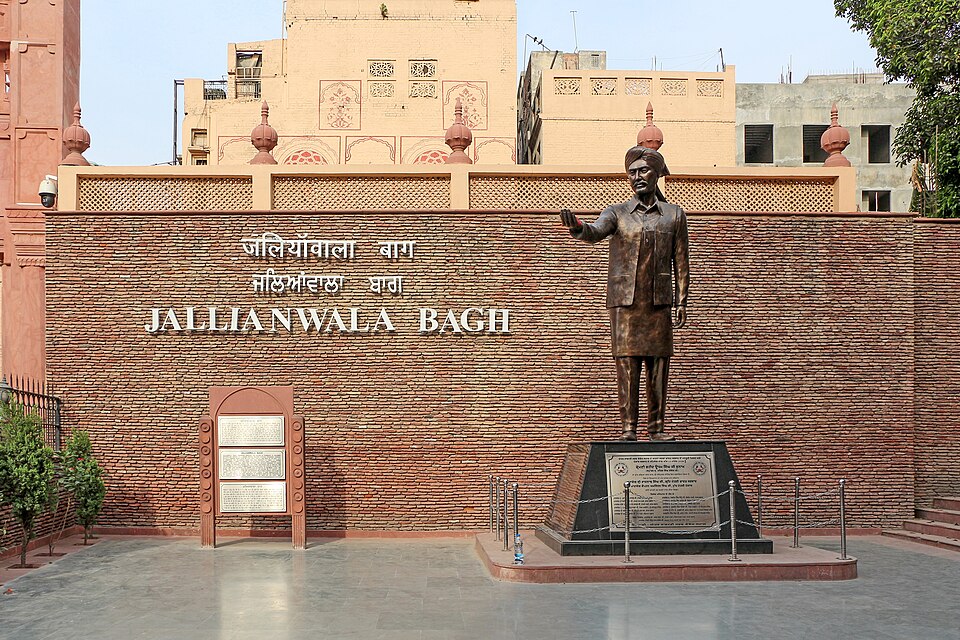
Correct — B, Rowlatt Act, 1919. The Rowlatt Act — officially the Anarchical and Revolutionary Crimes Act, 1919 — empowered the colonial government to detain a person suspected of revolutionary activity without trial for up to two years, to arrest without warrant, and to try political cases summarily through special courts with no appeal. This suspension of ordinary legal safeguards provoked Gandhi's Rowlatt Satyagraha and, in April 1919, the Jallianwala Bagh massacre.
Why the others are wrong
- (a)Regulating Act, 1773 — The Regulating Act of 1773 was an administrative measure — it reorganised the East India Company's government (a Governor-General of Bengal and a Supreme Court at Calcutta); it had nothing to do with preventive detention.
- (c)Pitt's India Act, 1784 — Pitt's India Act set up the Board of Control to bring the Company under British government supervision — again a governance reform, not a detention law.
- (d)Government of India Act, 1935 — The 1935 Act was a constitutional statute introducing provincial autonomy and a proposed federation; it was not a preventive-detention law authorising two-year imprisonment without trial.
Concept
The Rowlatt Act (1919) extended wartime emergency powers into peacetime. Based on the Rowlatt (Sedition) Committee's report, it let the government imprison suspects without trial for up to two years and dispense with juries and appeals for political offences — 'no vakil, no dalil, no appeal', as nationalists put it.
Three of the options are Company-era or constitutional statutes about how India was governed; only the Rowlatt Act is a repressive security law. The clue 'detention without trial for up to two years' points squarely to the Rowlatt Act.
Key facts
- The Rowlatt Act, 1919 (Anarchical and Revolutionary Crimes Act) allowed detention without trial for up to two years.
- It permitted arrest without warrant and summary, appeal-less trials by special panels.
- It triggered Gandhi's Rowlatt Satyagraha and preceded the Jallianwala Bagh massacre (13 April 1919).
- It was passed on 18 March 1919 and repealed in 1922.
Study next
Common traps
- Picking a Company-era 'India Act' because it sounds important — those were about governance, not detention.
- Confusing the Rowlatt Act (1919, detention) with the Government of India Act 1919 (Montagu-Chelmsford reforms).
Asked as 'which Act allowed detention without trial / what the Rowlatt Act aimed at', or through the Rowlatt-Jallianwala chronology.
Related PYQs
The Rowlatt Act aimed at
- (a) compulsory economic support to war efforts
- (b) imprisonment without trial and summary procedures for trial
- (c) suppression of the Khilafat Movement
- (d) imposition of restrictions on freedom of the press
Answer(b) imprisonment without trial and summary procedures for trial
Same concept — the Rowlatt Act. UPSC asks what it 'aimed at' (imprisonment without trial and summary courts), which is exactly the detention-without-trial power this NDA item tests.
Consider the following events: 1. Launch of Non-Cooperation Movement 2. All-India Khilafat Conference in Delhi 3. Passing of the Rowlatt Act 4. Jallianwala Bagh incident Which one of the following is the correct chronological order of the given events (earliest to latest)?
- (a) 1, 2, 3, 4
- (b) 3, 4, 2, 1
- (c) 3, 2, 4, 1
- (d) 2, 3, 4, 1
Answer(b) 3, 4, 2, 1
Same era — the Rowlatt Act (1919) and its aftermath. That NDA item places the Rowlatt Act -> Jallianwala Bagh -> Khilafat -> Non-Cooperation in order; this one tests what the Rowlatt Act itself did.
Practice
- practice — not a real PYQ
The Rowlatt Act of 1919 is also known as the
- (a)Vernacular Press Act
- (b)Anarchical and Revolutionary Crimes Act
- (c)Ilbert Bill
- (d)Indian Councils Act
Answer(b) Anarchical and Revolutionary Crimes Act — it allowed detention without trial for up to two years. - practice — not a real PYQ
Mahatma Gandhi's first all-India satyagraha was launched against the
- (a)Salt Law
- (b)Rowlatt Act
- (c)partition of Bengal
- (d)Simon Commission
Answer(b) Rowlatt Act — the Rowlatt Satyagraha of 1919.