
Which one among the following mahajanapadas in ancient India was an oligarchy?
- (a)Vajji
- (b)Kosala
- (c)Gandhara
- (d)Magadha
Answer
Why
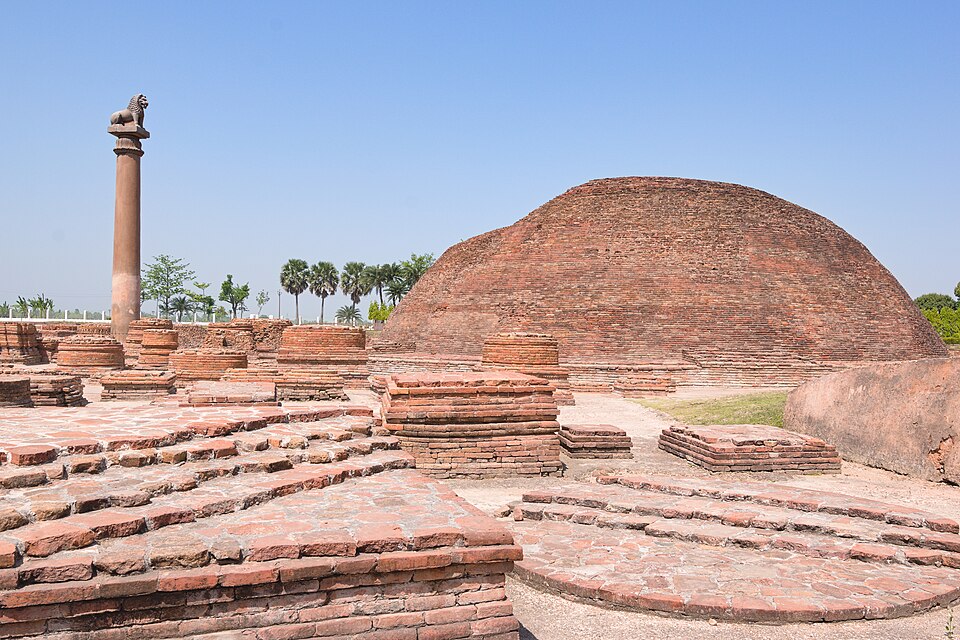
Correct — A, Vajji. The Vajji (Vrijji) was a gana-sangha — a confederacy governed by an assembly of clan chiefs and heads of leading families rather than by a single hereditary king. Because power was shared among a ruling class of 'rajas', it is described as an oligarchy (or republic), unlike its neighbours. Its best-known constituent was the Licchavi clan, with Vaishali as the chief city.
Why the others are wrong
- (b)Kosala — Kosala was a powerful monarchy — its king Prasenajit was a contemporary of the Buddha — not an oligarchy.
- (c)Gandhara — Gandhara, in the north-west with its capital at Taxila, was ruled as a monarchy.
- (d)Magadha — Magadha was the archetypal monarchy — under kings like Bimbisara and Ajatashatru, and later the Nandas and Mauryas, it grew into an empire; it was never an oligarchy.
Concept
The sixteen mahajanapadas (c.6th century BCE) came in two political types. Most were monarchies (rule by a hereditary king), but a few were gana-sanghas — 'clan republics' or oligarchies in which an assembly of kshatriya chiefs took decisions collectively. The Vajji confederacy, led by the Licchavis of Vaishali, is the standard example.
The question tests the monarchy-versus-oligarchy split. Kosala, Gandhara and Magadha are all famous monarchies; only Vajji is a gana-sangha. Vaishali and the Licchavis are the flag for 'republic/oligarchy'.
Key facts
- The Vajji (Vrijji) confederacy was a gana-sangha (oligarchy/republic) centred on Vaishali; the Licchavis were its leading clan.
- Kosala (capital Shravasti), Gandhara (capital Taxila) and Magadha (capitals Rajagriha, later Pataliputra) were monarchies.
- A gana-sangha was ruled by an assembly of chiefs, not a single hereditary king.
- Magadha eventually absorbed its rivals and became the base of the Nanda and Maurya empires.
Study next
Common traps
- Assuming every mahajanapada was a kingdom — a few were oligarchic republics.
- Mixing up Vaishali (Vajji) with Rajagriha (Magadha) or Shravasti (Kosala).
Asked as 'which mahajanapada was a republic/oligarchy', or by matching a mahajanapada to its capital or its type.
Related PYQs
The following map shows four of the sixteen mahajanapadas that existed in ancient India. The places marked A, B, C and D respectively are
- (a) Matsya, Cedi, Kosala, Anga
- (b) Surasena, Avanti, Vatsa, Magadha
- (c) Matsya, Avanti, Vatsa, Anga
- (d) Surasena, Cedi, Kosala, Magadha
Answer(c) Matsya, Avanti, Vatsa, Anga
Same concept — the sixteen mahajanapadas of the 6th century BCE. UPSC tests their locations on a map; this NDA item tests which one was an oligarchic republic (Vajji).
Taxila was the capital of which one among the following Mahajanapadas of ancient India?
- (a) Kuru
- (b) Kasi
- (c) Gandhar
- (d) Avanti
Answer(c) Gandhar
Same concept — the mahajanapadas. That NDA item matches a mahajanapada to its capital (Gandhara-Taxila); this one asks which mahajanapada was an oligarchy (Vajji).
Practice
- practice — not a real PYQ
The capital of the Vajji (Vrijji) confederacy, ancient India's best-known republic, was
- (a)Rajagriha
- (b)Vaishali
- (c)Taxila
- (d)Shravasti
Answer(b) Vaishali — seat of the Licchavis, who led the Vajji gana-sangha. - practice — not a real PYQ
Which one of the following was a gana-sangha (oligarchic republic) rather than a monarchy?
- (a)Avanti
- (b)Magadha
- (c)Vajji
- (d)Kosala
Answer(c) Vajji — a confederacy of clans ruled by an assembly, not by a single king.