
The intermixing of particles of two different types of matter on their own is called
- (a)Osmosis
- (b)Brownian motion
- (c)Diffusion
- (d)Conductance
Answer
Why
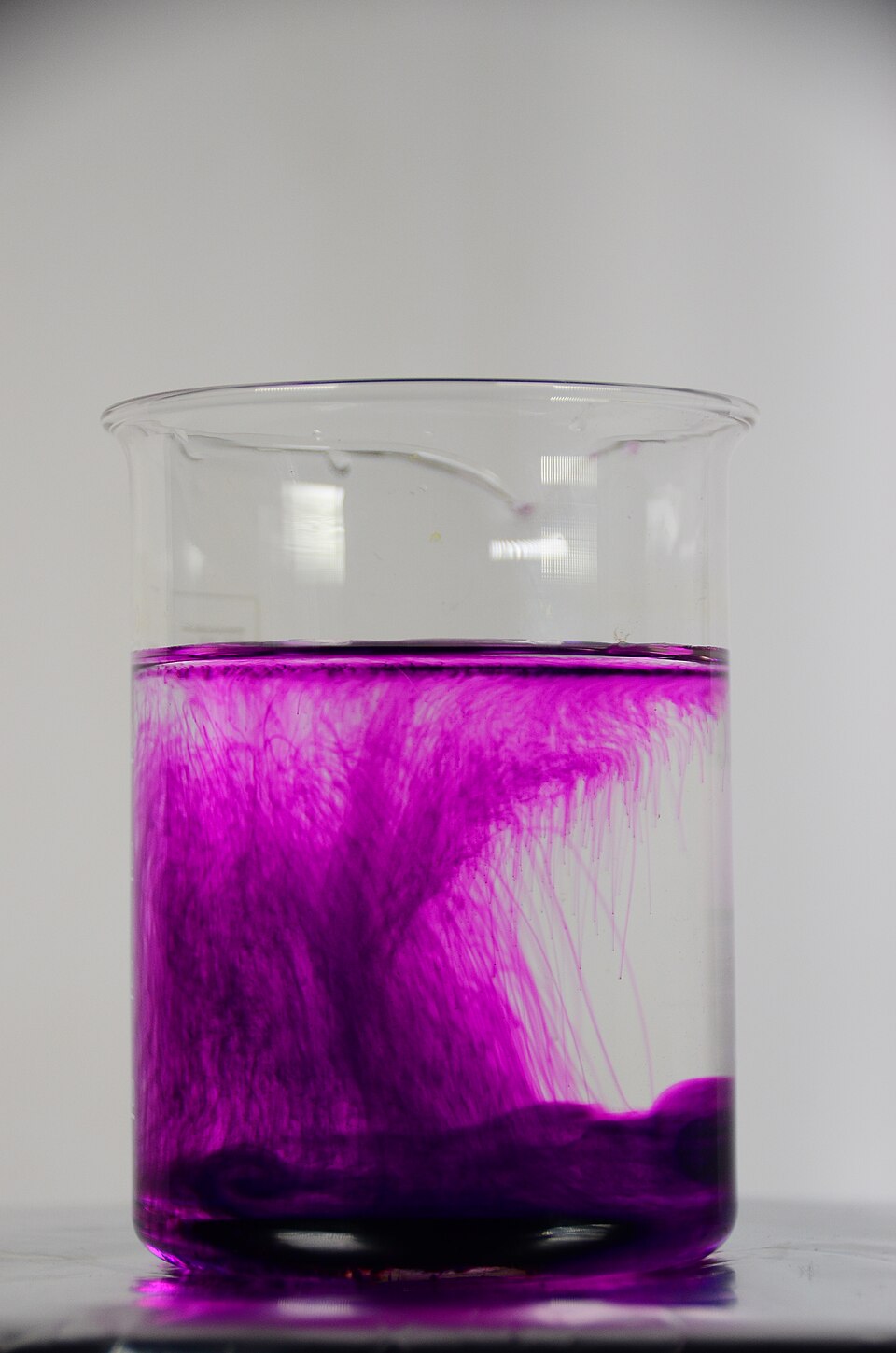
Correct — C, Diffusion. Diffusion is the spontaneous net movement of particles from a region of higher concentration to one of lower concentration until they are evenly spread. Because particles are in constant random motion, two substances intermix by themselves — no stirring required — which is exactly what the phrase 'intermixing of particles of two different types of matter on their own' describes (e.g. perfume spreading through a room).
Why the others are wrong
- (a)Osmosis — Osmosis is the movement of the SOLVENT (usually water) across a SEMI-PERMEABLE MEMBRANE from a dilute to a concentrated solution. It needs a membrane and involves only the solvent, so it is not the free intermixing of two substances.
- (b)Brownian motion — Brownian motion is the random zig-zag movement of tiny particles suspended in a fluid, caused by collisions with the fluid's molecules. It is the underlying random motion of individual particles, not the net intermixing of two different kinds of matter.
- (d)Conductance — Conductance refers to the flow of electric current (or heat) through a material — a transport of charge or thermal energy, not the mixing of particles of two substances.
Concept
Diffusion is a consequence of the constant random motion of particles in gases and liquids. When two substances are brought together, their particles wander and gradually intermix until the mixture is uniform, moving on average from where they are crowded (high concentration) to where they are sparse (low concentration).
Sort the options by what actually moves and how. Diffusion = particles of any two substances intermixing freely. Osmosis narrows this to solvent-through-a-membrane. Brownian motion is the random jiggling that drives diffusion, not the mixing itself. Conductance is about current/heat, not particle mixing. The clue 'on their own / two different types of matter' points to diffusion.
Key facts
- Diffusion: net movement of particles from high to low concentration until evenly distributed.
- It is fastest in gases, slower in liquids, and negligible in most solids.
- Osmosis is a special case of diffusion — of the solvent across a semi-permeable membrane.
- Brownian motion (random particle motion) is the mechanism that makes diffusion happen.
Study next
Common traps
- Choosing osmosis — it is only the solvent, and only across a membrane.
- Choosing Brownian motion — it is the random particle motion behind diffusion, not the mixing of two substances.
Asked by definition ('spontaneous intermixing of particles') or by everyday examples (perfume spreading, ink in water) — the answer is diffusion.
Related PYQs
No directly related past PYQ was found.
Practice
- practice — not a real PYQ
The spreading of the smell of perfume across a room is an example of
- (a)osmosis
- (b)diffusion
- (c)conduction
- (d)capillarity
Answer(b) diffusion — perfume particles intermix with air particles on their own. - practice — not a real PYQ
The movement of solvent molecules across a semi-permeable membrane from a dilute to a concentrated solution is called
- (a)diffusion
- (b)osmosis
- (c)Brownian motion
- (d)conductance
Answer(b) osmosis — a special, membrane-restricted case of diffusion involving only the solvent.