
Which one among the following is an example of oxidation reaction?
- (a)Freezing of water
- (b)Dissolving sugar in water
- (c)Rusting of iron
- (d)Boiling of petrol
Answer
Why
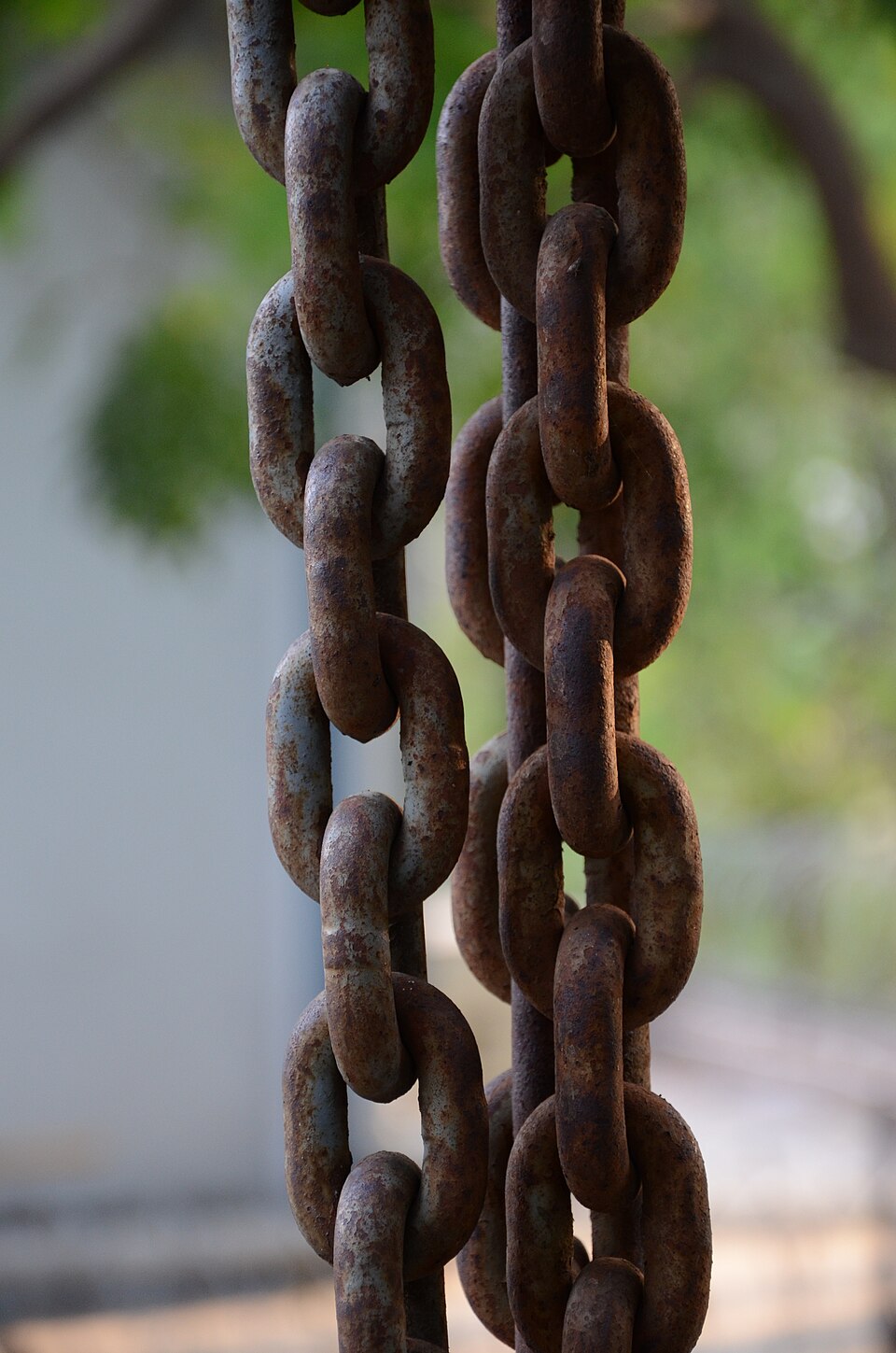
Correct — C, Rusting of iron. Rusting is the slow oxidation of iron: iron reacts with oxygen and moisture from the air to form hydrated iron(III) oxide (4Fe + 3O2 + xH2O gives 2Fe2O3.xH2O), the reddish-brown rust. Because iron combines with (is oxidised by) oxygen, it is a classic oxidation reaction.
Why the others are wrong
- (a)Freezing of water — Freezing is a physical change of state (liquid to solid); the water molecules are unchanged and no oxygen is gained, so it is not an oxidation reaction.
- (b)Dissolving sugar in water — Dissolving is a physical process — the sugar can be recovered by evaporation and no new substance forms and no oxidation occurs.
- (d)Boiling of petrol — Boiling is a physical change (liquid to vapour). Petrol only oxidises when it burns; merely boiling it involves no reaction with oxygen.
Concept
Oxidation, in its classical sense, is the addition of oxygen to (or removal of hydrogen or electrons from) a substance. Rusting and combustion are everyday oxidation reactions because the substance gains oxygen; changes of state and dissolving are physical processes with no oxygen gain.
Scan the options for the one where a substance actually combines with oxygen to form a new compound. Freezing, dissolving and boiling are all physical changes — only the rusting of iron adds oxygen, so it alone is oxidation.
Key facts
- Rust is hydrated iron(III) oxide, Fe2O3.xH2O, formed when iron meets oxygen and moisture.
- Oxidation = gain of oxygen (or loss of electrons/hydrogen); reduction is the reverse.
- Rusting needs both air (oxygen) and water; it is prevented by painting, greasing, galvanising or alloying (stainless steel).
- Freezing, boiling and dissolving are physical changes — no new substance forms.
Study next
Common traps
- Thinking a change of state (freezing or boiling) is a chemical reaction — it is physical.
- Assuming petrol is oxidising just because it is a fuel — it must burn, not merely boil.
Exams ask you to pick the oxidation / chemical change from a set that is mostly physical changes — look for the substance that actually gains oxygen or forms a new product.
Related PYQs
No directly related past PYQ was found.
Practice
- practice — not a real PYQ
Rusting of iron is chemically the formation of:
- (a)Iron carbonate
- (b)Hydrated iron(III) oxide
- (c)Iron sulphide
- (d)Iron chloride
Answer(b) Hydrated iron(III) oxide (Fe2O3.xH2O) — iron oxidised by air and moisture. - practice — not a real PYQ
Which process prevents rusting by coating iron with a layer of zinc?
- (a)Galvanisation
- (b)Vulcanisation
- (c)Pasteurisation
- (d)Electrolysis
Answer(a) Galvanisation — a protective zinc coating keeps oxygen and moisture off the iron.