
The energy possessed by a body due to its change in position or shape is called
- (a)thermal energy
- (b)potential energy
- (c)kinetic energy
- (d)electric energy
Answer
Why
Correct — B, potential energy. Potential energy is the energy a body has because of its position (for example a raised weight) or its shape/configuration (for example a stretched spring or a drawn bow). The two descriptions in the question — 'change in position or shape' — are exactly the gravitational and elastic forms of potential energy.
Why the others are wrong
- (a)thermal energy — Thermal (heat) energy comes from the random motion of a body's particles, measured as temperature — not from its position or shape.
- (c)kinetic energy — Kinetic energy is the energy of motion; it depends on the body's speed, not on where it is placed or how it is deformed.
- (d)electric energy — Electric energy is associated with electric charges and currents, not with the general position-or-shape idea the question describes.
Concept
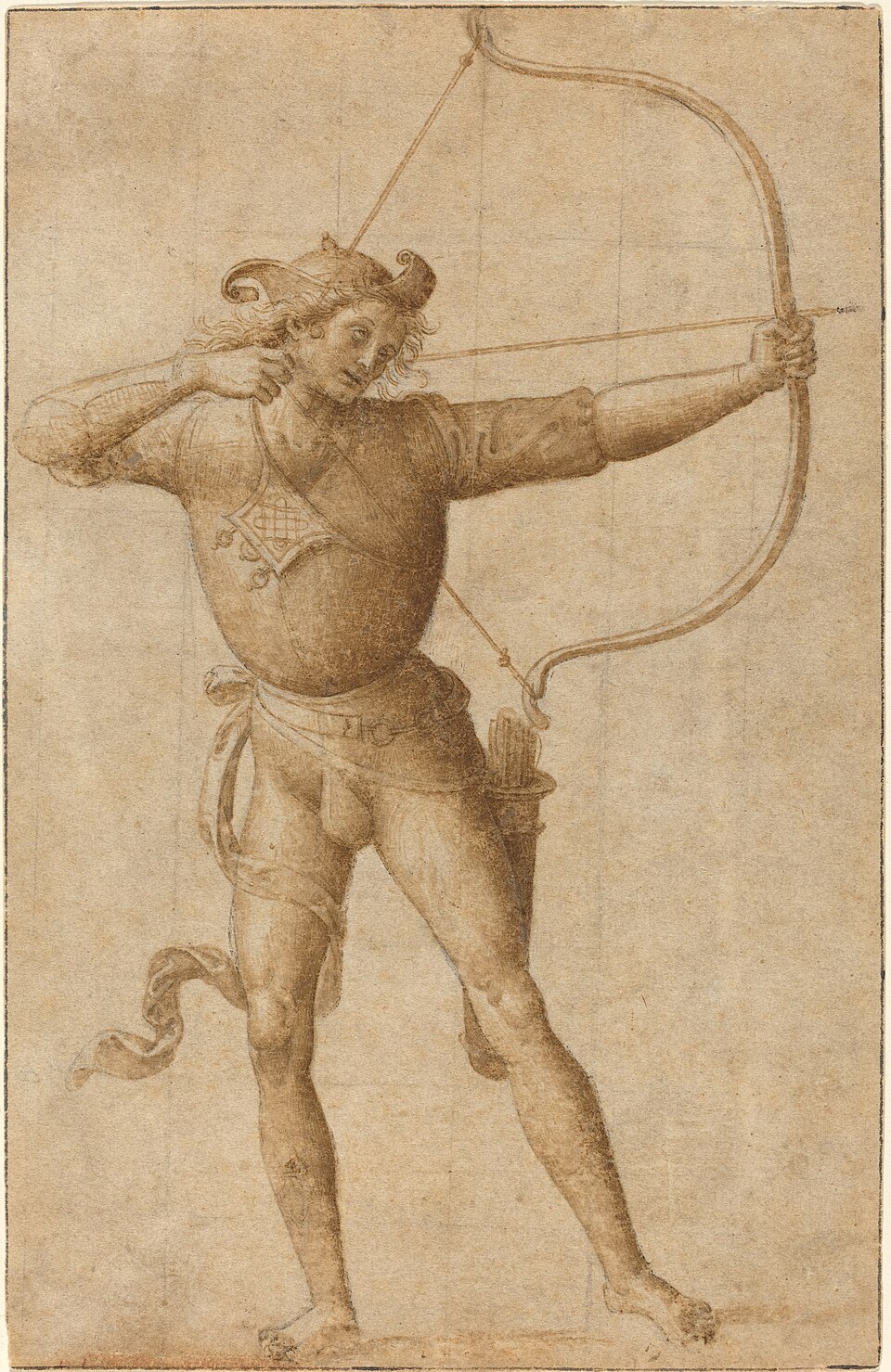
Potential energy is stored energy. It can be gravitational — energy stored by raising a mass to a height (PE = mgh) — or elastic, stored by deforming an object such as a compressed spring or a bent bow. In both cases the energy can later be released as motion (kinetic energy).
The phrase 'position or shape' bundles the two classic kinds of potential energy into one option. Kinetic energy is the tempting near-miss, but it is tied to motion, not position or deformation.
Key facts
- Gravitational potential energy = m·g·h (mass × gravity × height).
- Elastic potential energy is stored in stretched or compressed objects — springs, rubber bands, drawn bows.
- Potential energy can convert into kinetic energy — a falling weight or a released bowstring.
- Energy is measured in joules (J).
Study next
Common traps
- Choosing kinetic energy — that is the energy of motion, not of position or shape.
- Thinking only raised objects have potential energy — stretched springs and bent bows do too (elastic PE).
A definitional item — 'energy due to position or shape' points straight to potential energy.
Related PYQs
There is a ball of mass 320 g. It has 625 J potential energy when released freely from a height. The speed with which it will hit the ground is
- (a) 62.5 m/s
- (b) 20 m/s
- (c) 50 m/s
- (d) 40 m/s
Answer(a) 62.5 m/s
Uses the same idea one step further — a body's gravitational potential energy converts fully into kinetic energy as it falls.
An object of mass 2000 g possesses 100 J kinetic energy. The object must be moving with a speed of
- (a) 10.0 m/s
- (b) 11.1 m/s
- (c) 11.2 m/s
- (d) 12.1 m/s
Answer(a) 10.0 m/s
The companion concept — kinetic energy (energy of motion), the counterpart to the potential energy defined here.
Practice
- practice — not a real PYQ
A stretched rubber band stores
- (a)kinetic energy
- (b)elastic potential energy
- (c)thermal energy
- (d)electric energy
Answer(b) elastic potential energy — stored by the change in the band's shape. - practice — not a real PYQ
The energy possessed by a body because of its motion is called
- (a)potential energy
- (b)kinetic energy
- (c)chemical energy
- (d)nuclear energy
Answer(b) kinetic energy — energy due to motion, in contrast with potential energy.