
Legendary Kathak dancer Pandit Birju Maharaj died recently. He was the doyen of which one of the following Gharanas of Kathak?
- (a)Jaipur
- (b)Raigarh
- (c)Lucknow
- (d)Banaras
Answer
Why
Correct — C, Lucknow. Pandit Birju Maharaj was the foremost exponent of the Lucknow (Kalka-Bindadin) gharana of Kathak, the family lineage founded by his ancestors Kalka Prasad and the brothers Bindadin and Kalka. Known for expressive, graceful abhinaya (facial and emotive expression) rather than pure footwork acrobatics, this gharana is the one he led; he died in January 2022.
Why the others are wrong
- (a)Jaipur — The Jaipur gharana of Kathak is a separate lineage noted for vigorous footwork and rhythmic (layakari) work, not the one Birju Maharaj belonged to.
- (b)Raigarh — The Raigarh gharana, patronised by the princely state of Raigarh, is a distinct twentieth-century school and not Birju Maharaj's lineage.
- (d)Banaras — The Banaras (Janakiprasad) gharana is another recognised Kathak school, but Birju Maharaj was the doyen of Lucknow, not Banaras.
Concept
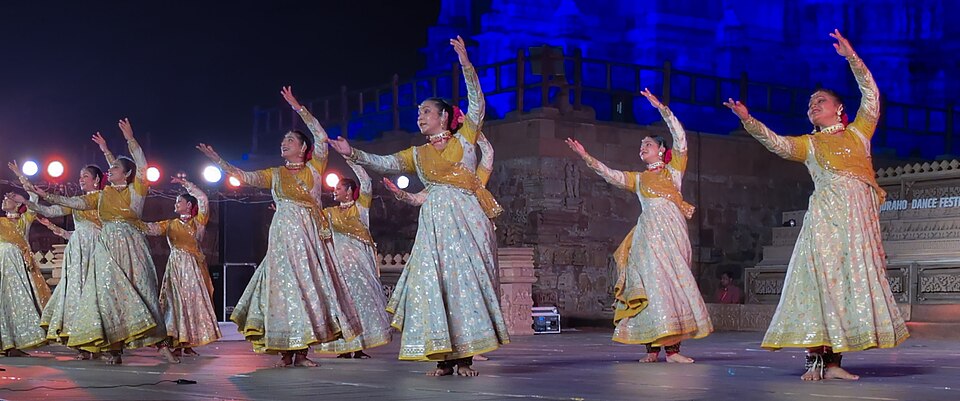
Kathak is one of India's eight classical dance forms and the principal classical dance of North India. It is organised into gharanas — hereditary schools each with its own stylistic emphasis. The three most cited are Lucknow (grace and expression), Jaipur (footwork and rhythm) and Banaras; Raigarh is a later school. Pandit Birju Maharaj personified the Lucknow gharana.
A current-affairs obituary question tied to a name most aspirants know. The reliable anchor is that the Kalka-Bindadin family — Birju Maharaj's own lineage — belongs to Lucknow, so if you recall the family or the 'grace and abhinaya' emphasis, the gharana falls out at once.
Key facts
- Pandit Birju Maharaj (1938-2022) belonged to the Lucknow Kalka-Bindadin gharana of Kathak.
- The Lucknow gharana is known for expressive abhinaya and graceful movement.
- Kathak is one of the classical dance forms recognised by the Sangeet Natak Akademi.
- The Jaipur gharana emphasises brisk footwork and rhythmic patterns, a contrast to Lucknow's style.
Study next
Common traps
- Confusing the Jaipur (footwork) and Lucknow (expression) gharanas of Kathak.
- Assuming any famous North Indian dancer belongs to whichever gharana you remember first.
As a person-and-tradition current-affairs item linking a noted artist's death to their gharana or dance form.
Related PYQs
Bimbavati Devi is a well-known dancer of which type of dance?
- (a) Manipuri
- (b) Bharat Natyam
- (c) Kuchipudi
- (d) Odissi
Answer(a) Manipuri
Same 'match the exponent to their classical dance' idea — here a Manipuri dancer, the way this NDA item ties Birju Maharaj to Kathak.
Which dance form of India has been inscribed into UNESCO's Representative List of Intangible Cultural Heritage of Humanity?
- (a) Kathakali
- (b) Garba
- (c) Bhangra
- (d) Odissi
Answer(b) Garba
A later NDA paper on Indian dance heritage — reinforces the classical/traditional dance theme this Kathak obituary item belongs to.
Practice
- practice — not a real PYQ
Kathak, with its Lucknow, Jaipur and Banaras gharanas, is the classical dance chiefly associated with which region of India?
- (a)North India
- (b)Tamil Nadu
- (c)Odisha
- (d)Kerala
Answer(a) North India — Kathak is North India's principal classical dance form. - practice — not a real PYQ
Which Kathak gharana is best known for its emphasis on intricate, brisk footwork and rhythmic layakari?
- (a)Lucknow
- (b)Jaipur
- (c)Raigarh
- (d)Banaras
Answer(b) Jaipur — noted for vigorous footwork, in contrast to Lucknow's expressive style.