
The term ‘Industrial Revolution’ was first used by
- (a)J. A. Blanqui
- (b)T. S. Ashton
- (c)Arnold Toynbee
- (d)R. H. Tawney
Answer
Why
Correct — A, J. A. Blanqui. The French economist Jerome-Adolphe Blanqui is generally credited with first using the term 'Industrial Revolution' (around 1837) to describe the sweeping changes in manufacturing that began in Britain. The phrase was later made famous in the English-speaking world by Arnold Toynbee, but the coinage itself is attributed to Blanqui.
Why the others are wrong
- (b)T. S. Ashton — Ashton wrote a well-known 20th-century study of the Industrial Revolution, but he did not coin the term; he was writing long after it was already in use.
- (c)Arnold Toynbee — Toynbee popularised the term through his Oxford lectures published in 1884, which is why he is a tempting answer, but he did not first use it — that credit goes to Blanqui.
- (d)R. H. Tawney — Tawney was an economic historian known for other work; he neither coined nor is specially linked with first using 'Industrial Revolution'.
Concept
The Industrial Revolution was the shift from hand production to machine and factory production, powered by steam and driven by inventions in textiles, iron and transport, beginning in Britain in the late 18th century. The label for this transformation is credited to the French economist J. A. Blanqui, and was later popularised by Arnold Toynbee.
The safe-looking trap is Arnold Toynbee, who is closely tied to the term through his famous lectures. The distinction the question tests is between first using a term (Blanqui) and popularising it (Toynbee).
Key facts
- J. A. (Jerome-Adolphe) Blanqui, a French economist, is credited with first using 'Industrial Revolution' around 1837.
- Arnold Toynbee popularised the term in the English-speaking world through lectures published in 1884.
- The Industrial Revolution began in Britain in the second half of the 18th century.
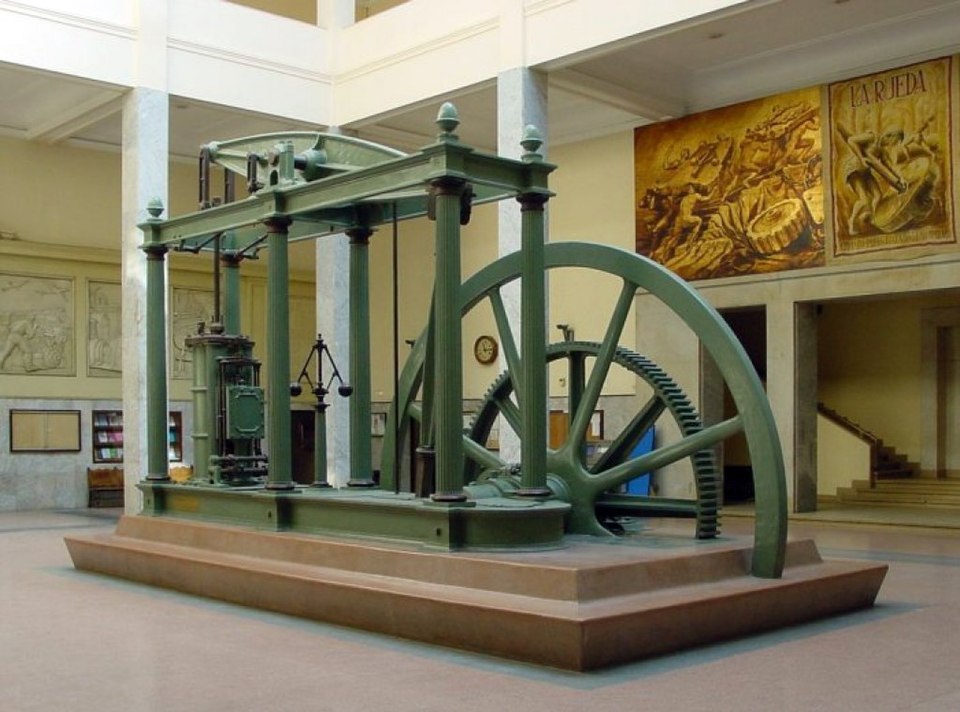
- James Watt's improved steam engine turned the engine from a pump into a source of power for factory machines.
Study next
Common traps
- Choosing Arnold Toynbee, who popularised but did not first use the term.
- Confusing later historians of the Industrial Revolution (Ashton, Tawney) with the person who coined the term.
As a 'who coined/first used the term' recall, with the populariser (Toynbee) planted as the main distractor.
Related PYQs
Which of the following statements correctly explains the impact of Industrial Revolution on India during the first half of the nineteenth century?
- (a) Indian handicrafts were ruined.
- (b) Machines were introduced in the Indian textile industry in large numbers.
- (c) Railway lines were laid in many parts of the country.
- (d) Heavy duties were imposed on the imports of British manufactures.
Answer(a) Indian handicrafts were ruined.
Same topic — the Industrial Revolution. This UPSC item tests its impact on India (ruin of handicrafts), complementing the naming/coinage angle asked here.
Which one of the following statements about the Industrial Revolution is correct?
- (a) Thomas Savery invented astrolabe
- (b) Thomas Newcomen invented chemical dyes
- (c) James Watt’s invention converted the steam engine from being a mere pump into one which would provide energy to power machines in factories
- (d) Mathew Boulton discovered the technique of refining gold of impurities
Answer(c) James Watt’s invention converted the steam engine from being a mere pump into one which would provide energy to power machines in factories
A later NDA item on the Industrial Revolution — tests the technology (Watt's steam engine) behind the same transformation named by Blanqui.
Practice
- practice — not a real PYQ
The term 'Industrial Revolution' was popularised in the English-speaking world through the lectures of
- (a)J. A. Blanqui
- (b)Arnold Toynbee
- (c)Adam Smith
- (d)Karl Marx
Answer(b) Arnold Toynbee — he popularised the term, though Blanqui first used it. - practice — not a real PYQ
The Industrial Revolution first began in which of the following countries?
- (a)France
- (b)Britain
- (c)Germany
- (d)United States
Answer(b) Britain — in the second half of the 18th century.