
Which one of the following features is the result of erosion and deposition work of a river?
- (a)Pothole
- (b)Oxbow lake
- (c)Levee
- (d)Rapid
Answer
Why
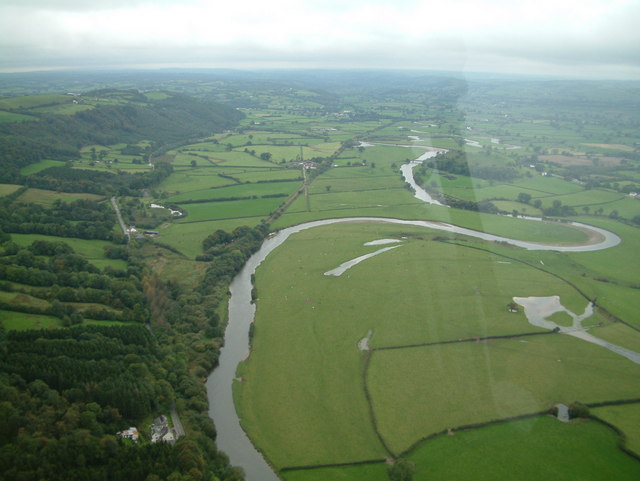
Correct — B, oxbow lake. An oxbow lake is the classic feature made by BOTH erosion and deposition of a river: as a meander loop grows, the river erodes through the narrow neck of the loop, and deposition then seals off the abandoned bend, leaving a crescent-shaped lake beside the channel. A pothole and a rapid are cut purely by erosion, while a levee is built purely by deposition — only the oxbow lake needs the two processes working together.
Why the others are wrong
- (a)Pothole — A pothole is a bowl-shaped hollow drilled into the river bed by abrasion — an erosional feature only.
- (c)Levee — A levee is a raised bank built along a river by sediment deposited during floods — a depositional feature only.
- (d)Rapid — A rapid is a turbulent, fast stretch formed where the river erodes hard and soft rock unevenly — erosional, not depositional.
Concept
A river shapes landforms by erosion (cutting and removing rock and sediment) and by deposition (dropping sediment where its energy falls). Most landforms are the work of one process; the oxbow lake is special because it needs both — erosion to cut off a meander neck and deposition to seal the loop into a standalone lake.
The question asks for the ONE feature that combines both processes. Classify each option as erosional (pothole, rapid), depositional (levee) or both (oxbow lake).
Key facts
- An oxbow lake is a cut-off meander loop, crescent-shaped.
- It forms when erosion breaches the meander neck and deposition seals off the loop.
- It is also called a cut-off lake or mortlake, common on the floodplains of mature rivers.
- Potholes and rapids are erosional; levees and floodplains are depositional.
Study next
Common traps
- Calling an oxbow lake purely depositional or purely erosional.
- Confusing a levee (deposition) with an oxbow lake (both processes).
Asked as the landform produced by both the erosion and the deposition work of a river — the oxbow lake.
Related PYQs
No directly related past PYQ was found.
Practice
- practice — not a real PYQ
An oxbow lake is formed by the
- (a)deposition of a glacier
- (b)cutting off of a river meander
- (c)action of sea waves
- (d)wind erosion in a desert
Answer(b) cutting off of a river meander — erosion breaches the neck and deposition seals the loop. - practice — not a real PYQ
Which one of the following is a purely depositional landform of a river?
- (a)Pothole
- (b)Rapid
- (c)Natural levee
- (d)Gorge
Answer(c) Natural levee — a raised bank built up by sediment deposited during floods.