
Which one of the following best describes the electoral system of India?
- (a)First-Past-the-Post System
- (b)Proportional Representation
- (c)Mixed System
- (d)General Ticket
Answer
Why
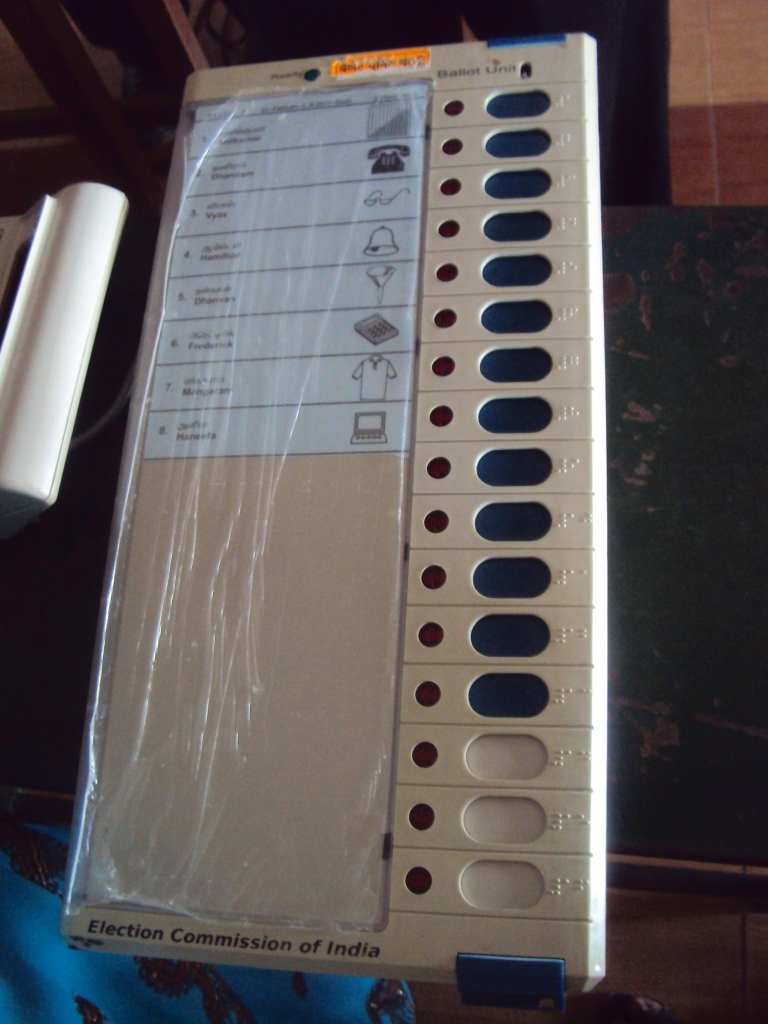
Correct — A, First-Past-the-Post System. For elections to the Lok Sabha and the State Legislative Assemblies, India divides the country into single-member territorial constituencies, and the candidate who wins the most votes in a constituency — the one who is 'first past the post' — is declared elected, even without an absolute majority. This plurality method is what best describes India's general electoral system, so option (a) is right.
Why the others are wrong
- (b)Proportional Representation — Proportional representation (by single transferable vote) is used in India only for the Rajya Sabha and for the President and Vice-President — not for the main Lok Sabha and Assembly elections.
- (c)Mixed System — A mixed system blends plurality and proportional seats (as in Germany); India's Lok Sabha and Assemblies are elected purely by first-past-the-post, so it is not a mixed system.
- (d)General Ticket — General ticket (bloc voting) awards all of a district's seats to the winning slate; India uses single-member constituencies, so this does not describe its system.
Concept
India's Constitution provides for direct election of the Lok Sabha and State Assemblies from territorial constituencies (Articles 81 and 170). The method used is First-Past-the-Post (FPTP), a simple-plurality system in which the leading candidate in each single-member constituency wins the seat.
The trap is that India does use proportional representation — but only for indirectly elected bodies and the highest offices. For the popular, direct elections that define the 'electoral system', FPTP is the correct label.
Key facts
- The Lok Sabha and State Legislative Assemblies are elected by First-Past-the-Post from single-member constituencies.
- The winner needs only a plurality (the most votes), not an absolute majority.
- Proportional representation by single transferable vote is used for the Rajya Sabha and for electing the President and Vice-President.
- The Election Commission of India (Article 324) conducts these elections.
Study next
Common traps
- Choosing proportional representation because India uses it — but only for the Rajya Sabha and Presidential elections.
- Reading 'mixed system' into India's set-up, which is actually pure FPTP for the popular houses.
Asked as 'best describes the electoral system' — anchor on the direct Lok Sabha/Assembly elections, which are FPTP.
Related PYQs
In which one of the following countries are 75 per cent of seats in both Houses of Parliament filled on the basis of first-past-the-post system and 25 per cent on the basis of Proportional Representation system of elections?
- (a) Germany
- (b) Italy
- (c) France
- (d) Russia
Answer(b) Italy
Same concept — first-past-the-post as an electoral method. That UPSC item contrasts FPTP with proportional representation in a mixed system; this NDA item identifies FPTP as India's own system.
Practice
- practice — not a real PYQ
The President of India is elected by which one of the following methods?
- (a)First-Past-the-Post
- (b)Proportional representation by single transferable vote
- (c)Direct popular vote
- (d)General ticket
Answer(b) Proportional representation by single transferable vote — used for the President. - practice — not a real PYQ
In the First-Past-the-Post system, a candidate is declared elected if he or she secures
- (a)more than 50% of the votes
- (b)the most votes in the constituency
- (c)votes from every polling booth
- (d)the support of a majority of parties
Answer(b) the most votes in the constituency — a simple plurality suffices.