
Which one of the following is the chemical formula of Plaster of Paris?
- (a)CaSO₄·½ H₂O
- (b)CaSO₄·2 H₂O
- (c)CaSO₄·5 H₂O
- (d)CaSO₄·4 H₂O
Answer
Why
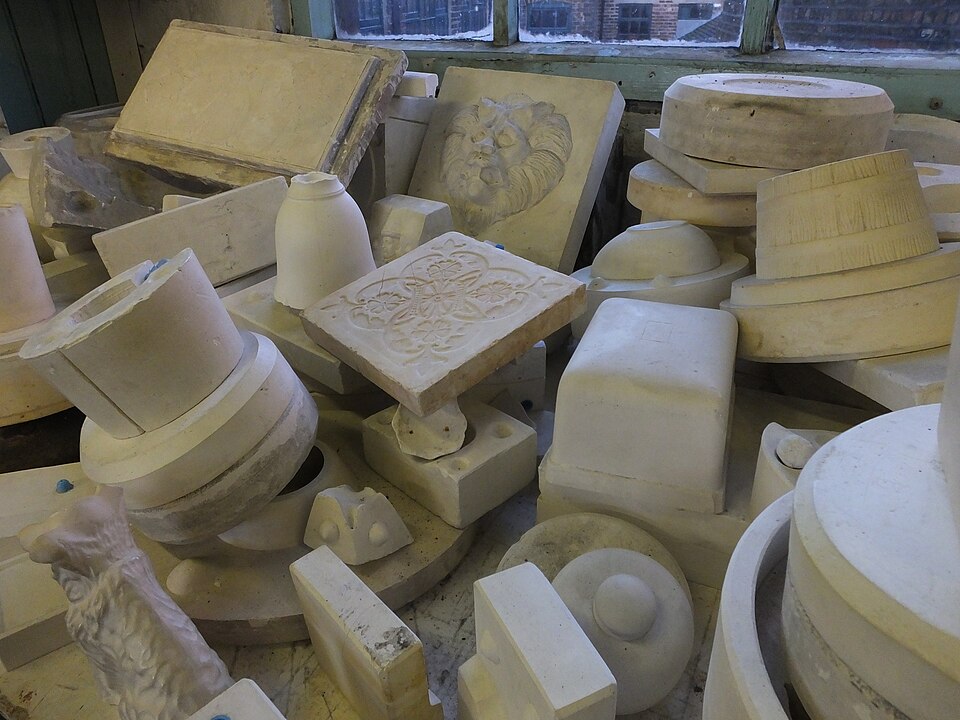
Correct — A, CaSO₄·½H₂O. Plaster of Paris is calcium sulphate hemihydrate — 'hemi' meaning half a water molecule per formula unit of calcium sulphate. It is manufactured by heating gypsum (CaSO₄·2H₂O) to about 100–150 °C, which drives off three-quarters of the water of crystallisation. When water is added back, it rapidly re-sets to hard gypsum, which is why it is used for casts, moulds and statuettes.
Why the others are wrong
- (b)CaSO₄·2 H₂O — This is gypsum, the raw material from which Plaster of Paris is made — not Plaster of Paris itself.
- (c)CaSO₄·5 H₂O — There is no such standard calcium sulphate hydrate; a 5-water hydrate belongs to blue vitriol, CuSO₄·5H₂O, a different compound.
- (d)CaSO₄·4 H₂O — Calcium sulphate does not form a stable tetrahydrate; the common forms are the dihydrate (gypsum) and the hemihydrate (Plaster of Paris).
Concept
Plaster of Paris is calcium sulphate hemihydrate, CaSO₄·½H₂O. It is produced by partially dehydrating gypsum (CaSO₄·2H₂O) by heating. On mixing with water it sets into a hard, solid mass of gypsum, making it valuable for casts, moulds, false ceilings and ornamental work.
The trap is the closely related gypsum, CaSO₄·2H₂O — the raw material and the set product, but not Plaster of Paris. The 'half water' (hemihydrate) formula is the memory hook: heating gypsum removes most of its water, leaving one water molecule per two formula units, written as CaSO₄·½H₂O.
Key facts
- Plaster of Paris = calcium sulphate hemihydrate, CaSO₄·½H₂O.
- Made by heating gypsum (CaSO₄·2H₂O) to about 100–150 °C.
- On adding water it sets back to hard gypsum.
- Used in surgical casts, moulds, statues and as a building material.
Study next
Common traps
- Confusing Plaster of Paris (hemihydrate) with gypsum (dihydrate).
- Guessing a 5-water hydrate, which actually describes blue vitriol (CuSO₄·5H₂O).
Asked directly as the chemical formula of Plaster of Paris, with gypsum offered as the main distractor.
Related PYQs
Consider the following statements: 1. Baking soda is used in fire extinguishers. 2. Quicklime is used in the manufacture of glass. 3. Gypsum is used in the manufacture of Plaster of Paris. Which of the statements given above is/are correct?
- (a) 1 and 2
- (b) 2 and 3
- (c) 1 only
- (d) 1, 2 and 3
Answer(d) 1, 2 and 3
Its statement 3 — that gypsum is used to make Plaster of Paris — is exactly the gypsum-to-PoP relationship behind this question's hemihydrate formula CaSO₄·½H₂O.
Which one of the following statements is NOT correct?
- (a) Water of crystallization is the fixed number of water molecules present in one formula unit of a crystal
- (b) Plaster of Paris has the chemical formula CaSO4·2H2O
- (c) Washing soda is used to remove temporary hardness of water
- (d) The atmosphere of Venus consists of thick white and yellow clouds of sulfuric acid
Answer(b) Plaster of Paris has the chemical formula CaSO4·2H2O
Same fact tested inversely: calling Plaster of Paris CaSO₄·2H₂O is the wrong statement, because that is gypsum — Plaster of Paris is the hemihydrate CaSO₄·½H₂O, the answer to this question.
Practice
- practice — not a real PYQ
Plaster of Paris is obtained by heating which one of the following?
- (a)Limestone
- (b)Gypsum
- (c)Quicklime
- (d)Marble
Answer(b) Gypsum — heating gypsum (CaSO₄·2H₂O) drives off water to give the hemihydrate, Plaster of Paris. - practice — not a real PYQ
The number of water molecules of crystallisation per formula unit of calcium sulphate in Plaster of Paris is
- (a)2
- (b)5
- (c)½
- (d)4
Answer(c) ½ — Plaster of Paris is calcium sulphate hemihydrate, CaSO₄·½H₂O.