
Reverberation is a phenomenon associated with a
- (a)multiple refraction of sound.
- (b)multiple reflection of sound.
- (c)single refraction of sound.
- (d)single reflection of sound.
Answer
Why
Correct — B, multiple reflection of sound. Reverberation is the persistence of sound in a large enclosed space caused by repeated (multiple) reflections of the sound waves from the walls, ceiling and floor. Each reflection reaches the listener a little later, so the sound seems to linger even after the source has stopped. Because it is produced by many reflections, reverberation is a phenomenon of multiple reflection of sound.
Why the others are wrong
- (a)multiple refraction of sound. — Reverberation is caused by reflection, not refraction. Refraction is the bending of sound as it passes between media of different properties and does not cause sound to linger in a hall.
- (c)single refraction of sound. — This is wrong on both counts — reverberation involves reflection (not refraction) and it needs many (multiple) reflections, not a single one.
- (d)single reflection of sound. — A single reflection of sound produces an echo, a distinct repeated sound, not reverberation; reverberation is the blending of many reflections into a persistent sound.
Concept
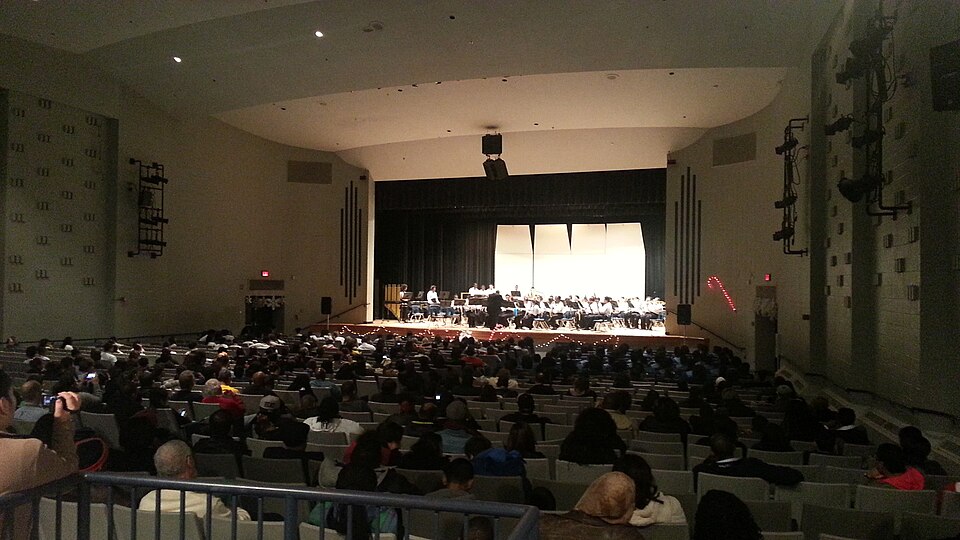
When sound is produced in a closed hall, the waves bounce repeatedly off the surfaces. These many overlapping reflections reach the listener over a short span of time and merge, so the sound persists for a while after the source stops — this persistence is reverberation. A single, well-separated reflection instead gives an echo. Too much reverberation muddies speech and music, which is why auditoriums use sound-absorbing materials.
Distinguish two reflection phenomena: one reflection gives an echo, while many reflections give reverberation. The options also test reflection versus refraction. The right pairing is 'multiple' plus 'reflection', option (b).
Key facts
- Reverberation is the persistence of sound due to multiple reflections in an enclosed space.
- A single reflection heard as a distinct repeat is an echo, not reverberation.
- Excessive reverberation is reduced using sound-absorbing materials on walls and ceilings.
- Reverberation time is the time taken for the sound intensity to fall to one-millionth of its original value.
Study next
Common traps
- Confusing reverberation with an echo — an echo is a single reflection, reverberation is multiple reflections.
- Choosing refraction — reverberation is a reflection phenomenon.
Asked as defining reverberation — pick the pair 'multiple' plus 'reflection' of sound.
Related PYQs
The sound created in a big hall persists because of the repeated reflections. The phenomenon is called
- (a) Reverberation
- (b) Dispersion
- (c) Refraction
- (d) Diffraction
Answer(a) Reverberation
The same phenomenon — that 2021 (I) NDA item defines the persistence of sound in a hall from repeated reflections as reverberation, exactly what this item asks.
Practice
- practice — not a real PYQ
The repeated sound heard due to a single reflection of sound from a distant surface is called
- (a)Reverberation
- (b)Echo
- (c)Resonance
- (d)Refraction
Answer(b) Echo — a single, distinct reflection of sound. - practice — not a real PYQ
To reduce excessive reverberation, the walls of an auditorium are covered with
- (a)Polished mirrors
- (b)Sound-absorbing materials
- (c)Metal sheets
- (d)Glass panels
Answer(b) Sound-absorbing materials — they soak up the reflected sound.