
The major source of vitamins and minerals for vegetarians is
- (a)black gram and wheat.
- (b)rice and mustard.
- (c)vegetables and fruits.
- (d)soya bean and milk.
Answer
Why
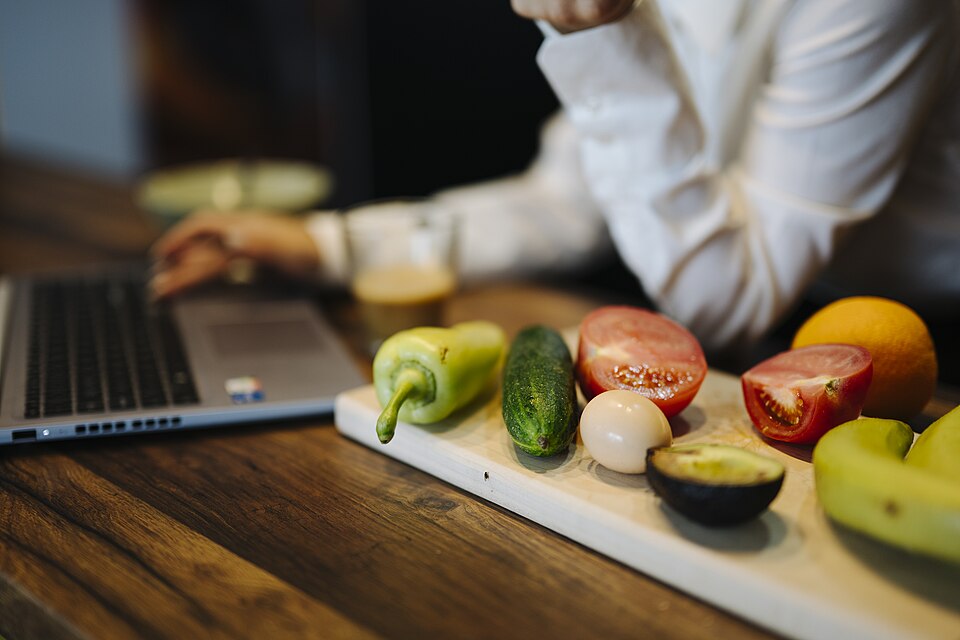
Correct — C, vegetables and fruits. In a vegetarian diet the food groups play different roles: cereals and pulses mainly supply carbohydrates and proteins, while fresh vegetables and fruits are the principal source of vitamins (A, C, folate and others), minerals (iron, potassium, calcium) and dietary fibre. So for vitamins and minerals specifically, vegetables and fruits are the major source.
Why the others are wrong
- (a)black gram and wheat. — Black gram (a pulse) and wheat (a cereal) are chiefly sources of protein and carbohydrate respectively, not the main suppliers of vitamins and minerals.
- (b)rice and mustard. — Rice provides carbohydrate and mustard provides oil/fat; neither is a principal source of vitamins and minerals.
- (d)soya bean and milk. — Soya bean and milk are prized as protein (and, for milk, calcium) sources; they are not the broad-spectrum vitamin-and-mineral source that vegetables and fruits are.
Concept
A balanced diet draws energy-giving foods (carbohydrates, fats), body-building foods (proteins) and protective foods (vitamins, minerals, fibre) from different groups. Vegetables and fruits are classed as the 'protective foods' because they are rich in a wide range of vitamins, minerals and roughage while being low in energy.
Each distractor pairs foods that are strong in carbohydrate, protein or fat but are not the standout vitamin-mineral providers. Recall the diet chart: cereals and pulses for energy and protein, vegetables and fruits for vitamins, minerals and fibre.
Key facts
- Vegetables and fruits are the 'protective foods' — rich in vitamins, minerals and fibre.
- Cereals such as wheat and rice mainly give carbohydrates; pulses and soya give protein.
- Milk is chiefly a protein and calcium source; mustard supplies oil/fat.
- A balanced diet combines energy, body-building and protective foods.
Study next
Common traps
- Picking protein/energy foods (pulses, cereals, milk) as the vitamin-mineral source.
- Overlooking that fruits and vegetables are the classic 'protective foods'.
Asked as the main dietary source of a nutrient group, or by matching foods to the nutrients they chiefly provide.
Related PYQs
Regular intake of fresh fruits and vegetables is recommended in the diet since they are a good source of antioxidants. How do antioxidants help a person maintain health and promote longevity?
- (a) They activate the enzymes necessary for vitamin synthesis in the body and help prevent vitamin deficiency
- (b) They prevent excessive oxidation of carbohydrates, fats and proteins in the body and help avoid unnecessary wastage of energy
- (c) They neutralize the free radicals produced in the body during metabolism
- (d) They activate certain genes in the cells of the body and help delay the ageing process
Answer(c) They neutralize the free radicals produced in the body during metabolism
Same concept — singles out fresh fruits and vegetables as key dietary sources of protective micronutrients (here antioxidants such as vitamins C and E), the same food group identified as the major source of vitamins and minerals.
Consider the following pairs: Vitamin — Deficiency disease 1. Vitamin C : Scurvy 2. Vitamin D : Rickets 3. Vitamin E : Night blindness. Which of the pairs given above is/are correctly matched?
- (a) 1 and 2 only
- (b) 3 only
- (c) 1, 2 and 3
- (d) None
Answer(a) 1 and 2 only
Related — tests the vitamins whose dietary shortfall causes disease (C→scurvy, D→rickets), reinforcing why the vitamin-rich fruit-and-vegetable group matters in the diet.
Which one among the following combinations most appropriately represent the components of balanced diet?
- (a) Carbohydrate, vitamins, proteins, fat, minerals, fibres and water
- (b) Carbohydrate, vitamins, proteins, fat and minerals
- (c) Carbohydrate, vitamins, proteins, minerals and water
- (d) Vitamins, proteins, fat, minerals, fibres and water
Answer(a) Carbohydrate, vitamins, proteins, fat, minerals, fibres and water
Same concept — lists the components of a balanced diet, placing vitamins and minerals alongside the other groups whose main source is fruits and vegetables.
Practice
- practice — not a real PYQ
Which food group is the richest source of dietary fibre (roughage)?
- (a)Cereals
- (b)Fats and oils
- (c)Fruits and vegetables
- (d)Milk
Answer(c) Fruits and vegetables — the protective foods, also rich in fibre. - practice — not a real PYQ
Which nutrient is the main contribution of pulses such as black gram to the diet?
- (a)Carbohydrate
- (b)Protein
- (c)Vitamin C
- (d)Fat
Answer(b) Protein — pulses are an important vegetarian protein source.