
Hydrogenation of vegetable oils using nickel catalyst is an example of
- (a)Substitution reaction.
- (b)Elimination reaction.
- (c)Addition reaction.
- (d)Free-radical polymerization.
Answer
Why
Correct — C, Addition reaction. Vegetable oils are unsaturated — their carbon chains contain C=C double bonds. In hydrogenation, hydrogen atoms add across these double bonds (with finely divided nickel as the catalyst), converting them into single C–C bonds and turning the liquid oil into a semi-solid fat such as vanaspati. Because hydrogen is added across the double bond and nothing is removed or replaced, it is an addition reaction.
Why the others are wrong
- (a)Substitution reaction. — In a substitution reaction one atom or group replaces another; here nothing is displaced — hydrogen is simply added to the double bond, so it is not substitution.
- (b)Elimination reaction. — An elimination reaction removes atoms to create a double bond; hydrogenation does the opposite by saturating a double bond, so it cannot be elimination.
- (d)Free-radical polymerization. — Polymerization joins many small monomer units into a long chain; hydrogenation adds hydrogen to existing oil molecules and forms no polymer.
Concept
Unsaturated compounds contain C=C double (or C≡C triple) bonds, which are reactive sites where extra atoms can be added. Hydrogenation is the addition of hydrogen (H₂) across such a double bond in the presence of a metal catalyst, saturating the bond. It is the industrial route from liquid vegetable oils to semi-solid vanaspati.
The clue is 'across a double bond, with nothing removed', which defines an addition reaction. Students who focus on the catalyst may be tempted by other reaction types, but a catalyst only speeds a reaction up — it does not change what kind of reaction it is.
Key facts
- Hydrogenation adds H₂ across the C=C double bonds of unsaturated compounds — an addition reaction.
- The catalyst used industrially is finely divided nickel (palladium or platinum are used in the laboratory).
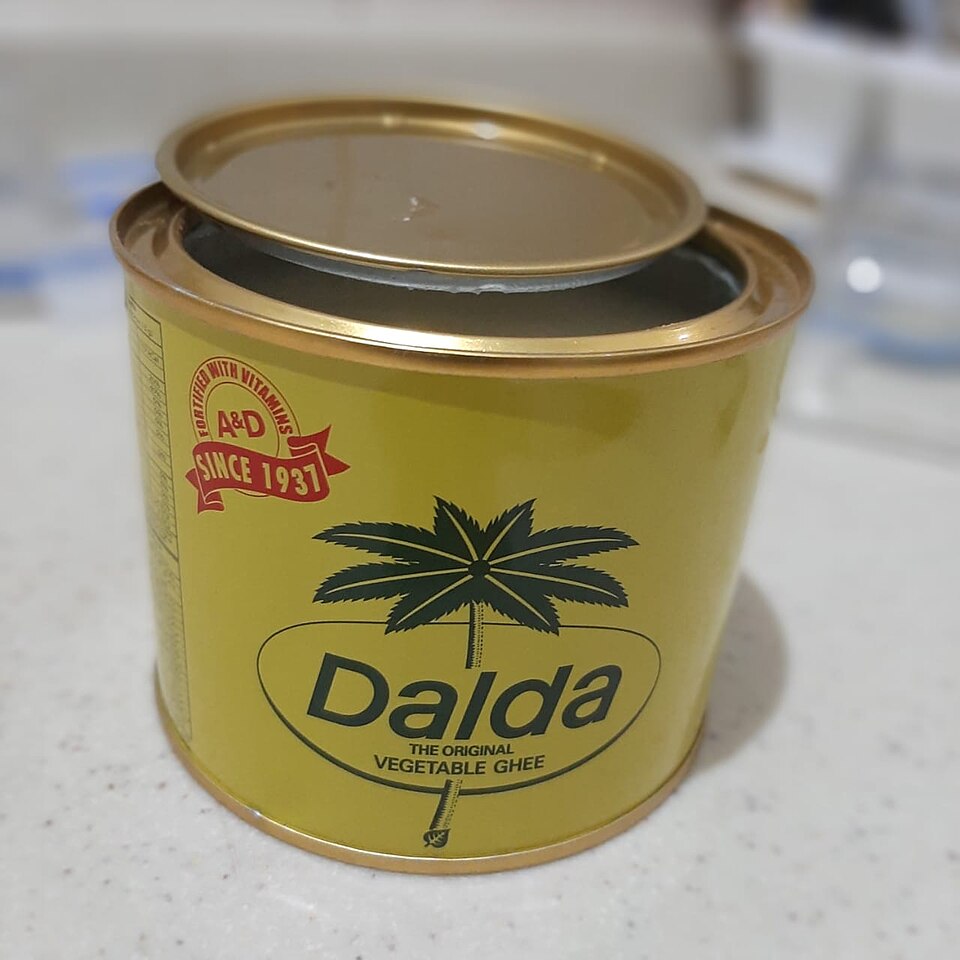
- It converts liquid unsaturated vegetable oils into semi-solid saturated fats (vanaspati or margarine).
- Addition reactions are characteristic of unsaturated compounds, which have double or triple bonds.
Study next
Common traps
- Confusing addition with substitution because both involve extra atoms.
- Thinking the nickel catalyst changes the type of reaction — it only speeds it up.
Asked as the type of reaction in oil hydrogenation, or by naming the catalyst (nickel) and the product (vanaspati).
Related PYQs
Assertion (A): Unsaturated fats are more reactive compared with the saturated fats. Reason (R): Unsaturated fats have only single bonds in their structure.
- (a) Both A and R are individually true and R is the correct explanation of A
- (b) Both A and R are individually true but R is NOT the correct explanation of A
- (c) A is true but R is false
- (d) A is false but R is true
Answer(c) A is true but R is false
Same concept — unsaturation and reactivity. Unsaturated fats are reactive because of their C=C double bonds, the very bonds that hydrogenation saturates in this question.
Practice
- practice — not a real PYQ
The catalyst commonly used in the hydrogenation of vegetable oils is
- (a)iron
- (b)nickel
- (c)copper
- (d)zinc
Answer(b) nickel — finely divided nickel is the industrial catalyst. - practice — not a real PYQ
Adding hydrogen across the C=C double bonds of an unsaturated oil is an example of a/an
- (a)substitution reaction
- (b)addition reaction
- (c)elimination reaction
- (d)displacement reaction
Answer(b) addition reaction — atoms are added across the double bond with nothing removed.