
When light is scattered by a molecule and the frequency of the scattered light is changed, this phenomenon is called
- (a)Rayleigh scattering
- (b)Raman effect
- (c)Photoelectric effect
- (d)Rutherford scattering
Answer
Why
Correct — B, Raman effect. When light is scattered by molecules, most of it keeps its original frequency (elastic, Rayleigh scattering), but a small part is scattered with a shifted frequency because the molecule exchanges a little energy with the photon. This inelastic scattering with a change in frequency (and wavelength) is the Raman effect, discovered by Sir C. V. Raman in 1928.
Why the others are wrong
- (a)Rayleigh scattering — Rayleigh scattering is elastic — the scattered light keeps the same frequency. It explains the blue sky but involves no change in frequency, so it does not match the question.
- (c)Photoelectric effect — The photoelectric effect is the ejection of electrons from a metal surface when light of high enough frequency falls on it; it is not a scattering of light by molecules.
- (d)Rutherford scattering — Rutherford scattering is the deflection of alpha particles (not light) by atomic nuclei; it has nothing to do with a frequency change in scattered light.
Concept
Light scattered by molecules is mostly elastic — the photons keep their energy and hence their frequency (Rayleigh scattering). A tiny fraction is scattered inelastically: the photon gains or loses a small amount of energy to the molecule's vibrations or rotations, so its frequency shifts. That frequency shift is the signature of the Raman effect.
The deciding word in the question is 'frequency is changed', which points straight to inelastic scattering, i.e. the Raman effect. The photoelectric effect and Rutherford scattering are added to distract; only Rayleigh and Raman are true light-scattering phenomena, and only Raman changes the frequency.
Key facts
- The Raman effect is the inelastic scattering of light by molecules, accompanied by a shift in frequency or wavelength.
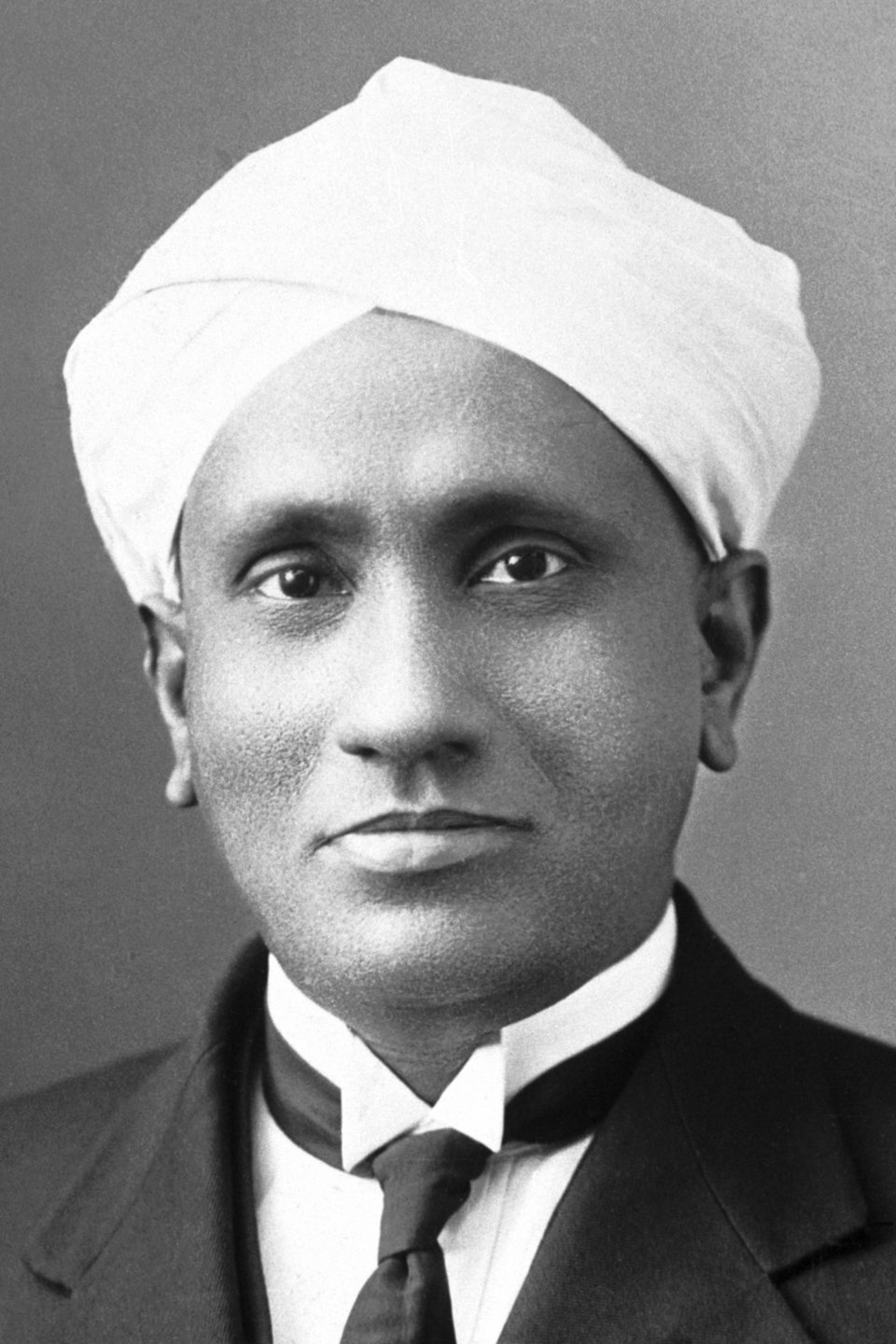
- It was discovered by Sir C. V. Raman (with K. S. Krishnan) in 1928; Raman received the Nobel Prize in Physics in 1930.
- National Science Day is observed on 28 February to mark the discovery of the Raman effect.
- Rayleigh scattering is elastic (no frequency change), is stronger for shorter wavelengths, and explains why the sky looks blue.
Study next
Common traps
- Confusing the Raman effect (frequency changes) with Rayleigh scattering (frequency unchanged).
- Mixing up scattering of light with scattering of particles, as in Rutherford scattering.
Asked as 'inelastic scattering of light with a change in frequency is called…' or through C. V. Raman / National Science Day general knowledge.
Related PYQs
No directly related past PYQ was found.
Practice
- practice — not a real PYQ
The Raman effect is associated with the scattering of
- (a)sound waves in air
- (b)light, with a change in frequency
- (c)alpha particles by nuclei
- (d)electrons by a crystal
Answer(b) light, with a change in frequency — the defining feature of the Raman effect. - practice — not a real PYQ
National Science Day is celebrated in India on 28 February to commemorate the discovery of the
- (a)electron
- (b)Raman effect
- (c)neutron
- (d)X-rays
Answer(b) Raman effect — announced by C. V. Raman on 28 February 1928.