
Neutrons were discovered by
- (a)James Chadwick
- (b)Ernest Rutherford
- (c)J. J. Thomson
- (d)John Dalton
Answer
Why
Correct — A, James Chadwick. In 1932 the British physicist James Chadwick discovered the neutron - a neutral, uncharged particle in the nucleus - by bombarding beryllium with alpha particles and detecting a penetrating, chargeless radiation. He was awarded the Nobel Prize in Physics in 1935 for this discovery.
Why the others are wrong
- (b)Ernest Rutherford — Rutherford discovered the atomic nucleus and is credited with the proton, and he predicted a neutral particle - but it was his student Chadwick who actually discovered the neutron.
- (c)J. J. Thomson — Thomson discovered the electron in 1897 through his cathode-ray experiments, not the neutron.
- (d)John Dalton — Dalton proposed the early atomic theory of indivisible atoms in the 1800s, long before subatomic particles such as the neutron were known.
Concept
The three main subatomic particles were discovered by different scientists - the electron by J. J. Thomson (1897), the nucleus and the proton by Ernest Rutherford, and the neutron by James Chadwick (1932). The neutron was the last of the three to be found because it carries no charge and is hard to detect.
Match the particle to its discoverer. The neutron was discovered in 1932 and is credited to Chadwick, so any option naming an earlier scientist is wrong.
Key facts
- James Chadwick discovered the neutron in 1932 and won the 1935 Nobel Prize in Physics for it.
- The neutron is electrically neutral and sits, alongside protons, in the atomic nucleus.
- J. J. Thomson discovered the electron (1897); Rutherford is credited with the proton and the nuclear model.
- The neutral, penetrating neutron is what makes nuclear fission chain reactions possible.
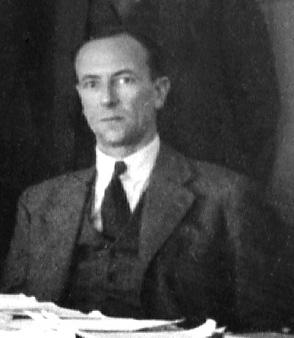
Study next
Common traps
- Crediting Rutherford (who predicted the neutron) rather than Chadwick (who found it).
- Mixing up Thomson (electron) with the neutron.
- Assuming an early theorist like Dalton discovered subatomic particles.
NDA asks 'who discovered the neutron/electron/proton' - pair Chadwick with the neutron, Thomson with the electron, Rutherford with the proton and nucleus.
Related PYQs
Which one of the following particles in the nucleus of an atom was discovered by J. Chadwick?
- (a) Electron
- (b) Proton
- (c) Positron
- (d) Neutron
Answer(d) Neutron
The same fact stated the other way round - that item names Chadwick and asks which nuclear particle he discovered (the neutron).
Which one of the following statements regarding cathode rays is not correct?
- (a) Cathode ray particles are electrons.
- (b) Cathode ray particles start from anode and move towards cathode.
- (c) In the absence of electrical and magnetic fields, cathode rays travel in straight lines.
- (d) Television picture tubes are cathode ray tubes.
Answer(b) Cathode ray particles start from anode and move towards cathode.
Companion 'discovery of subatomic particles' theme - cathode rays are the electrons that J. J. Thomson identified.
Practice
- practice — not a real PYQ
The electron was discovered by
- (a)James Chadwick
- (b)J. J. Thomson
- (c)John Dalton
- (d)Niels Bohr
Answer(b) J. J. Thomson - through his cathode-ray tube experiments in 1897. - practice — not a real PYQ
The neutron carries
- (a)a positive charge
- (b)a negative charge
- (c)no charge
- (d)a variable charge
Answer(c) no charge - the neutron is electrically neutral.