
Which one of the following is the most fundamental characteristic of an element ?
- (a)Melting point
- (b)Atomic number
- (c)Colour
- (d)Atomic weight
Answer
Why
Correct — B, atomic number. The atomic number is the number of protons in an atom's nucleus, and it is what defines the element - change the proton count and you have a different element altogether. Melting point, colour and even atomic weight can vary, but the atomic number is fixed and unique for each element, so it is the most fundamental characteristic.
Why the others are wrong
- (a)Melting point — Melting point is a physical property that varies with the allotrope and conditions and is shared by many substances; it does not identify which element an atom is.
- (c)Colour — Colour changes with allotrope, impurity and physical state (carbon is black as graphite yet transparent as diamond), so it cannot fundamentally define an element.
- (d)Atomic weight — Atomic weight differs between isotopes of the same element and once caused ordering errors; it is the proton count (atomic number), not the weight, that truly defines an element.
Concept
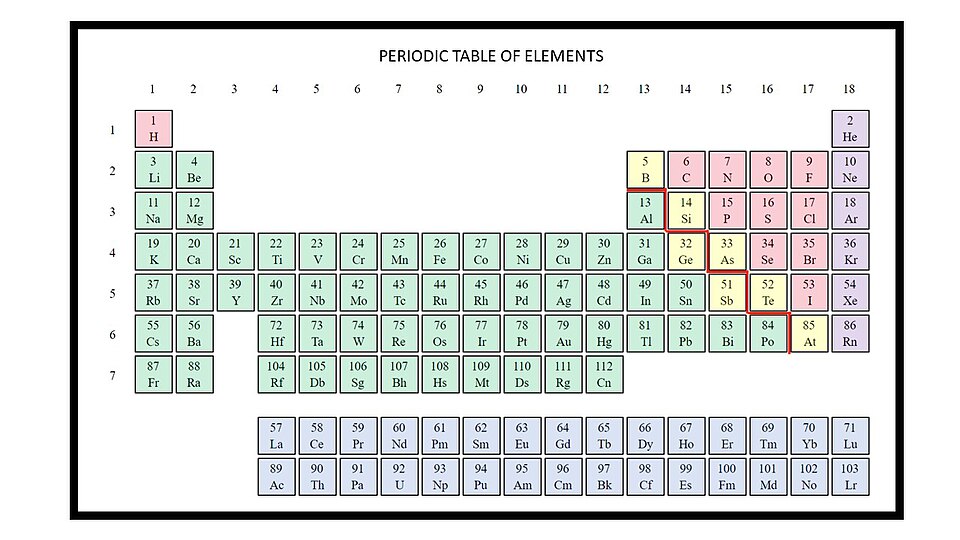
The atomic number (Z) is the number of protons in the nucleus and equals the number of electrons in a neutral atom. It is unique to each element and fixes the element's place in the periodic table. Since Henry Moseley's work, the periodic table is ordered by atomic number rather than atomic weight.
Eliminate quantities that vary - melting point, colour and atomic weight all change with form or isotope. The invariant, element-defining quantity that remains is the atomic number.
Key facts
- Atomic number (Z) is the number of protons in the nucleus and, in a neutral atom, equals the number of electrons.
- Every element has a unique atomic number; changing it changes the element.
- Moseley showed the periodic table is correctly ordered by atomic number, not by atomic weight.
- Isotopes of an element share the same atomic number but have different mass numbers (atomic weights).
Study next
Common traps
- Confusing atomic number (protons) with atomic weight (protons plus neutrons).
- Thinking a physical property such as colour or melting point identifies an element.
- Forgetting that isotopes share an atomic number but differ in mass.
NDA asks which quantity 'defines' or is 'most fundamental' to an element - the answer keys on atomic number, the proton count.
Related PYQs
For Aluminium (Al) (atomic number: 13, mass number: 27), which one among the following statements is NOT correct?
- (a) Number of electrons present in Al is 13
- (b) Number of protons present in Al is 13
- (c) Number of neutrons present in Al is 14
- (d) The valency of Al is 2
Answer(d) The valency of Al is 2
Same atomic-number idea in action - aluminium's atomic number (13) fixes 13 protons and 13 electrons, showing how the atomic number defines the atom's identity.
Practice
- practice — not a real PYQ
The atomic number of an element is equal to the number of
- (a)neutrons
- (b)protons
- (c)protons and neutrons
- (d)electrons and neutrons
Answer(b) protons - the atomic number is the proton count in the nucleus. - practice — not a real PYQ
The modern periodic table arranges elements in order of increasing
- (a)atomic weight
- (b)atomic number
- (c)density
- (d)valency
Answer(b) atomic number - the basis of the modern periodic law (Moseley).