
Which one of the following particles in the nucleus of an atom was discovered by J. Chadwick?
- (a)Electron
- (b)Proton
- (c)Positron
- (d)Neutron
Answer
Why
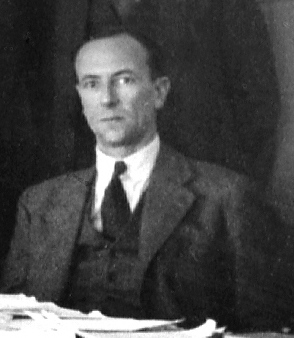
Correct — D, Neutron. James Chadwick discovered the neutron in 1932 by bombarding beryllium with alpha particles and detecting a neutral particle of roughly proton mass. The neutron sits in the nucleus alongside the proton and carries no charge, which is why it had eluded earlier experiments.
Why the others are wrong
- (a)Electron — The electron was discovered by J. J. Thomson in 1897 through cathode-ray experiments; it orbits the nucleus and is not what Chadwick found.
- (b)Proton — The proton was identified by Ernest Rutherford around 1917-19; Chadwick was Rutherford's student but discovered a different, neutral particle.
- (c)Positron — The positron, the electron's antiparticle, was discovered by Carl Anderson in 1932 in cosmic rays — it is not a nuclear particle found by Chadwick.
Concept
The nucleus contains protons (positive) and neutrons (neutral). Because the neutron has no charge, it was the hardest nucleon to detect, and its discovery completed the proton-neutron picture of the nucleus.
The distractors are other sub-atomic particles with different discoverers. The safe anchor is the chain 'Chadwick, neutron, 1932'.
Key facts
- James Chadwick discovered the neutron in 1932 and won the 1935 Nobel Prize in Physics for it.
- The neutron is electrically neutral, with a mass close to that of the proton.
- The proton was identified by Rutherford; the electron by Thomson in 1897.
- The neutron's discovery made the study of nuclear fission possible.
Study next
Common traps
- Attributing the neutron to Rutherford, who found the proton, instead of to Chadwick.
- Confusing the positron (Anderson, 1932) with the neutron.
A direct discovery-attribution item — match the scientist to the particle he discovered.
Related PYQs
Which one of the following scientists mentioned that an electron in an atom could revolve in certain stable orbits without the emission of radiant energy?
- (a) Ernest Rutherford
- (b) J.J. Thomson
- (c) Niels Bohr
- (d) Albert Einstein
Answer(c) Niels Bohr
Same concept — matching a discovery or idea in atomic structure to the right scientist. There it is Bohr's stable-orbit postulate; here it is Chadwick's discovery of the neutron.
Practice
- practice — not a real PYQ
The electron was discovered by
- (a)James Chadwick
- (b)J. J. Thomson
- (c)Ernest Rutherford
- (d)Niels Bohr
Answer(b) J. J. Thomson, in 1897. - practice — not a real PYQ
Which sub-atomic particle carries no electric charge?
- (a)Electron
- (b)Proton
- (c)Neutron
- (d)Positron
Answer(c) Neutron.