
Light enters the eye through a thin membrane called
- (a)retina
- (b)cornea
- (c)pupil
- (d)iris
Answer
Why
Correct — B, cornea. The cornea is the transparent, dome-shaped front membrane of the eye through which light first enters; it does most of the eye's focusing (refraction) before the light passes through the pupil and lens. So light enters the eye through the cornea.
Why the others are wrong
- (a)retina — The retina is the light-sensitive layer at the BACK of the eye where the image forms — light reaches it last, not first.
- (c)pupil — The pupil is the adjustable opening at the centre of the iris that controls how much light enters; it is a hole, not a membrane, and light reaches it only after passing through the cornea.
- (d)iris — The iris is the coloured muscular diaphragm that changes the pupil's size; it regulates light rather than transmitting the entering beam.
Concept
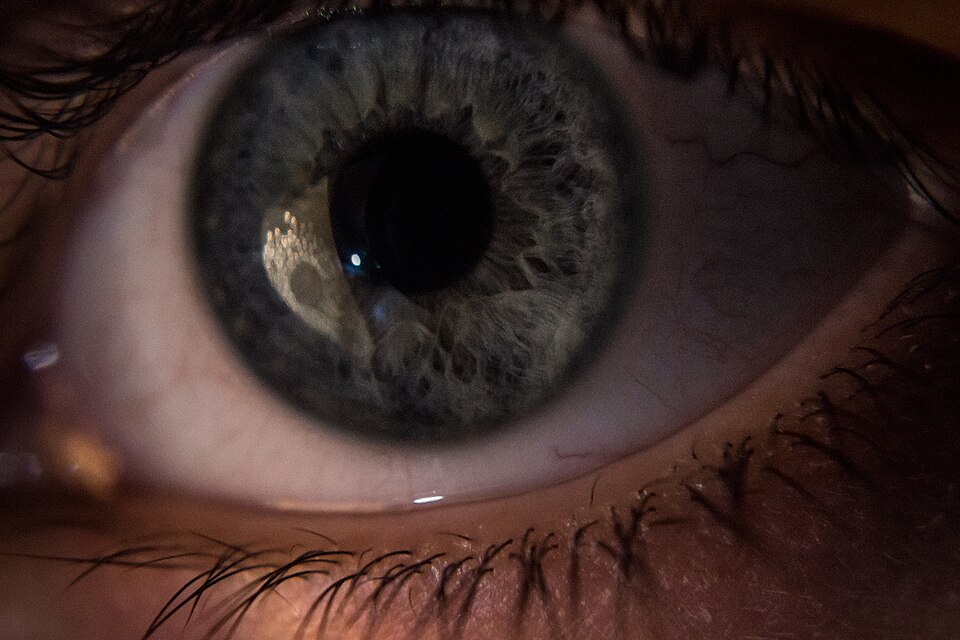
In the human eye, light passes from the cornea to the pupil (the aperture in the iris) to the lens to the vitreous humour and finally to the retina. The cornea is a thin transparent membrane that both admits light and provides most of the eye's fixed refractive power; the lens then fine-tunes the focus.
'Thin membrane through which light enters' points to the outermost transparent part — the cornea. The retina is where light ends up, and the iris and pupil control intensity, so only the cornea fits 'light enters through'.
Key facts
- The cornea is the transparent front membrane and the eye's main refracting surface.
- Light path — cornea, then pupil, then lens, then retina.
- The retina at the back carries the rods and cones that detect the image.
- The iris controls pupil size and hence the amount of light entering.
Study next
Common traps
- Choosing the retina (where light lands) instead of the cornea (where it enters).
- Treating the pupil or iris as the entry membrane — they only regulate light.
Eye questions ask the function or order of parts — 'light enters through' is the cornea, and 'image forms on' is the retina.
Related PYQs
The human eye is like a camera that has a lens with:
- (a) fixed focal length and fixed aperture size.
- (b) variable focal length and fixed aperture size.
- (c) fixed focal length and variable aperture size.
- (d) variable focal length and variable aperture size.
Answer(d) variable focal length and variable aperture size.
Same concept — the optics of the human eye. That NDA item treats the eye as a camera (variable focus via the lens, variable aperture via the iris/pupil); this one asks which part first admits the light (the cornea).
Practice
- practice — not a real PYQ
The image of an object in the human eye is formed on the
- (a)cornea
- (b)iris
- (c)retina
- (d)pupil
Answer(c) retina — the light-sensitive layer at the back of the eye. - practice — not a real PYQ
The amount of light entering the human eye is controlled by the
- (a)lens
- (b)cornea
- (c)retina
- (d)iris (through the pupil)
Answer(d) iris, by adjusting the size of the pupil.