
Which one of the following is the largest composition in biogas?
- (a)Carbon dioxide
- (b)Methane
- (c)Hydrogen
- (d)Hydrogen sulphide
Answer
Why
Correct — B, Methane. Biogas produced by the anaerobic decomposition of organic matter (cattle dung, crop and food waste) is a mixture in which methane (CH4) is the largest component, typically about 50 to 75 percent by volume. This high methane fraction is what makes biogas combustible and useful as a cooking and lighting fuel.
Why the others are wrong
- (a)Carbon dioxide — CO2 is the second-largest component of biogas (about 25 to 50 percent), but it is non-combustible and does not exceed the methane fraction.
- (c)Hydrogen — Hydrogen is present only in traces (usually under 1 percent), not as the major constituent.
- (d)Hydrogen sulphide — Present only in small traces; it gives biogas its foul smell and is corrosive, but it is nowhere near the largest component.
Concept
Biogas is generated when bacteria break down organic waste in the absence of oxygen (anaerobic digestion). The gas mixture is dominated by methane, with carbon dioxide the next most abundant, plus small amounts of hydrogen, hydrogen sulphide and nitrogen. The same combustible methane is also the chief component of natural gas.
The tempting distractor is carbon dioxide, which is present in large amounts, but the question asks for the largest and combustible component, which is methane.
Key facts
- Methane (CH4) is the largest constituent of biogas, roughly 50 to 75 percent by volume.
- Carbon dioxide is next (about 25 to 50 percent); hydrogen, hydrogen sulphide and nitrogen occur only in traces.
- Biogas is produced by anaerobic (oxygen-free) bacterial decomposition of organic waste such as cattle dung.
- Methane is also the major constituent of Compressed Natural Gas (CNG).
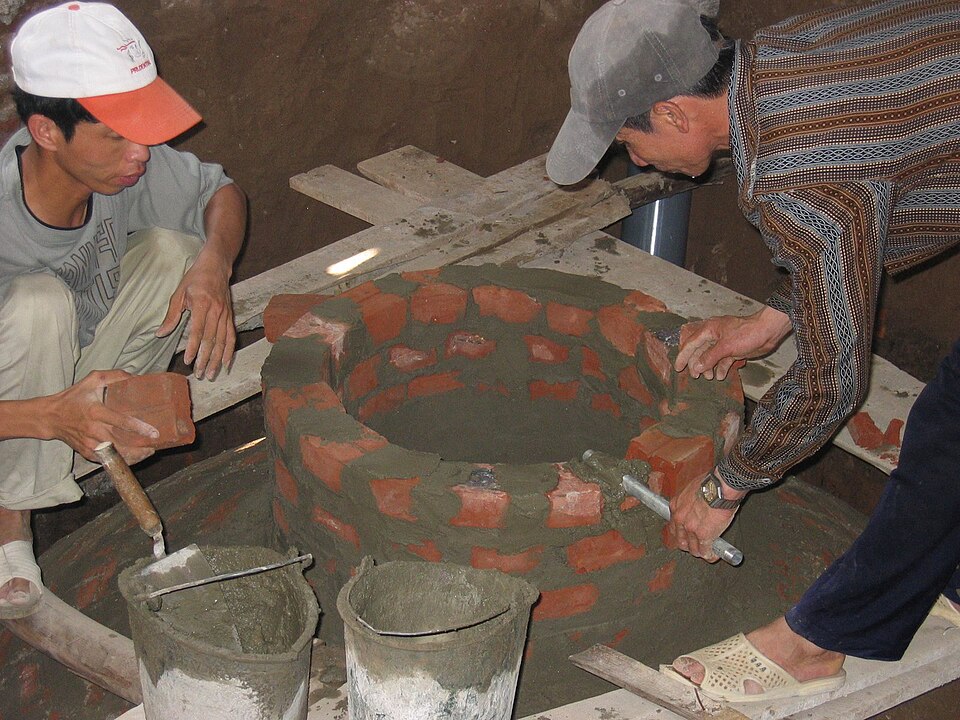
Study next
Common traps
- Choosing carbon dioxide because it is present in large amounts — it is not the largest and is non-combustible.
- Confusing biogas (methane-rich) with LPG (butane and propane) or water gas (carbon monoxide and hydrogen).
Asked as the 'major constituent of biogas' — the answer is methane, while the distractors list the minor gases.
Related PYQs
Match List I (Fuel Gases) with List II (Major Constituents) and select the correct answer using the codes given below: List I: (A) CNG (B) Coal gas (C) LPG (D) Water gas. List II: 1. Carbon monoxide, Hydrogen; 2. Butane, Propane; 3. Methane, Ethane; 4. Hydrogen, Methane, Carbon monoxide.
- (a) A 2 B 1 C 3 D 4
- (b) A 3 B 4 C 2 D 1
- (c) A 2 B 4 C 3 D 1
- (d) A 3 B 1 C 2 D 4
Answer(b) A-3, B-4, C-2, D-1
Same skill of identifying the major constituent of a fuel gas — CNG is chiefly methane, exactly the gas that dominates biogas.
Which one of the following is the major constituent of biogas?
- (a) Carbon dioxide
- (b) Nitrous oxide
- (c) Methane
- (d) Oxygen
Answer(c) Methane
The identical fact asked the previous year — methane is the major constituent of biogas.
Practice
- practice — not a real PYQ
Biogas is produced by which one of the following processes?
- (a)Aerobic decomposition of organic matter
- (b)Anaerobic decomposition of organic matter
- (c)Combustion of coal
- (d)Electrolysis of water
Answer(b) Anaerobic decomposition of organic matter — carried out by bacteria in the absence of oxygen. - practice — not a real PYQ
Methane is also the major constituent of which one of the following?
- (a)LPG
- (b)CNG
- (c)Water gas
- (d)Producer gas
Answer(b) CNG — Compressed Natural Gas is chiefly methane.