
Which one of the following statements regarding viruses is not true?
- (a)Viruses need living cells to reproduce.
- (b)All viruses are parasites.
- (c)Viruses can synthesize their food through photosynthesis.
- (d)Viruses are similar to chemical substances outside the host.
Answer
Why
Correct — C, 'Viruses can synthesize their food through photosynthesis' - this is the FALSE statement, and the question asks which is NOT true. Viruses have no chloroplasts, no cellular machinery and no metabolism of their own, so they cannot photosynthesise or make food in any way. They are obligate parasites that hijack a host cell's machinery to multiply. The other three statements are all true of viruses.
Why the others are wrong
- (a)Viruses need living cells to reproduce. — This statement is TRUE, so it is not the answer. Viruses are obligate intracellular parasites - they can replicate only inside a living host cell, using its machinery.
- (b)All viruses are parasites. — This statement is TRUE. Every virus is an obligate parasite; none can live or multiply independently of a host.
- (d)Viruses are similar to chemical substances outside the host. — This statement is TRUE. Outside a host a virus is metabolically inert and can even be crystallised (as Stanley did with tobacco mosaic virus), behaving like a non-living chemical.
Concept
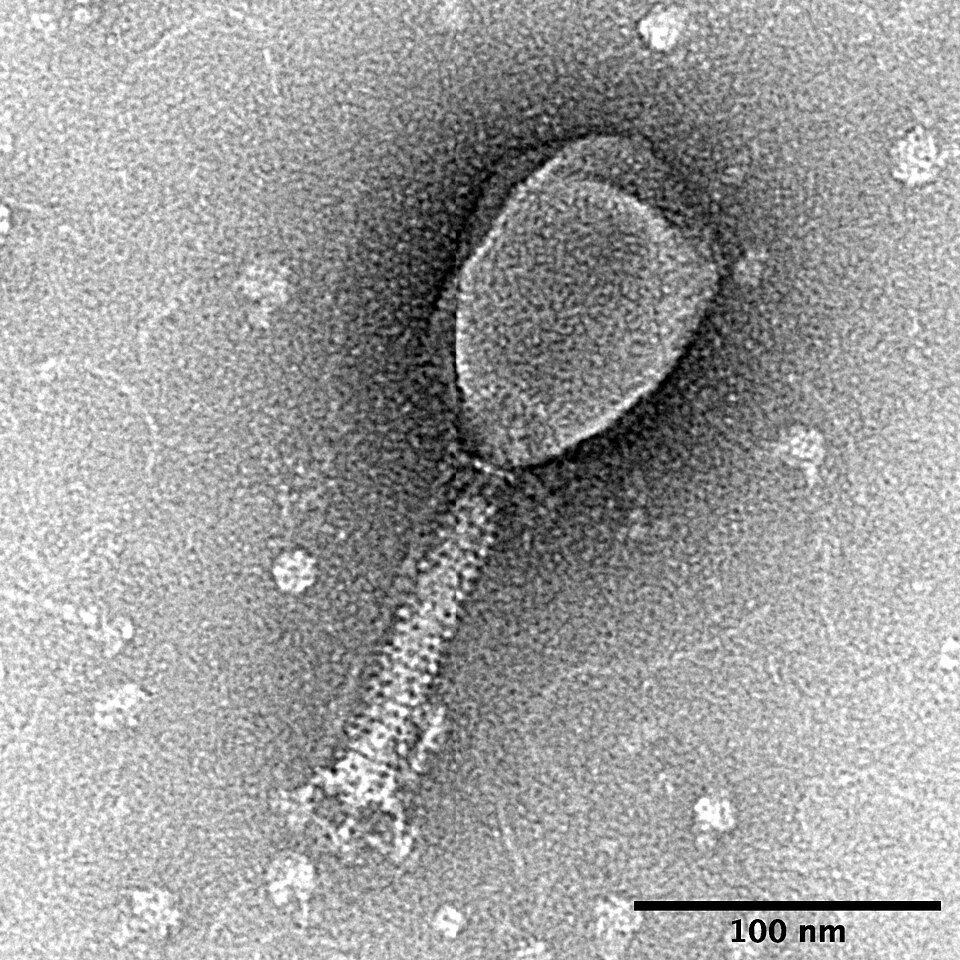
A virus is an acellular infectious particle - a strand of nucleic acid (DNA or RNA) inside a protein coat. It has no cell organelles, no ribosomes and no energy-producing or food-making machinery. Viruses are obligate parasites that multiply only inside living host cells, borrowing the host's apparatus.
In a 'NOT true' question, three statements are correct and only one over-reaches. Options (a), (b) and (d) each describe a genuine feature of viruses. Option (c) invents an ability - photosynthesis - that no virus has, since viruses lack chloroplasts and any metabolism. That is the false statement and hence the answer.
Key facts
- A virus is nucleic acid (DNA or RNA) enclosed in a protein coat (capsid); some also have a lipid envelope.
- Viruses are obligate intracellular parasites - they replicate only inside living host cells.
- Outside a host they are inert and can even be crystallised (they show no metabolism).
- They lack ribosomes, energy enzymes and any food-making apparatus, so they cannot photosynthesise.
Study next
Common traps
- In a 'NOT true' question, three statements are correct - hunt the one over-reaching claim (here, photosynthesis).
- Believing viruses are fully 'living' - they show no life processes outside a host.
Viruses are asked as 'which statement is NOT correct' or 'living or non-living' - remember: no metabolism, obligate parasite, crystallisable.
Related PYQs
Foot-and-mouth disease in animals, a current epidemic in some parts of the world, is caused by
- (a) Bacterium
- (b) Fungus
- (c) Protozoan
- (d) Virus
Answer(d) Virus - foot-and-mouth disease is caused by a virus.
UPSC 2002 on the same concept - identifying the virus as a disease-causing agent and distinguishing it from bacteria/protozoa/fungi.
Practice
- practice — not a real PYQ
Viruses are placed on the borderline of living and non-living because they
- (a)have a cell wall
- (b)can be crystallised yet reproduce inside a host
- (c)carry out photosynthesis
- (d)respire aerobically
Answer(b) can be crystallised yet reproduce inside a host - inert outside, active inside. - practice — not a real PYQ
Which one of the following is NOT a feature of viruses?
- (a)They contain DNA or RNA
- (b)They multiply only inside a host
- (c)They possess their own ribosomes
- (d)They have a protein coat
Answer(c) They possess their own ribosomes - viruses lack ribosomes and all cell organelles.