
At which one of the following place, the World Health Organisation (WHO) is going to establish Global Traditional Medicine Centre ?
- (a)Jaffna (Sri Lanka)
- (b)Jamnagar (India)
- (c)Johannesburg (South Africa)
- (d)Haridwar (India)
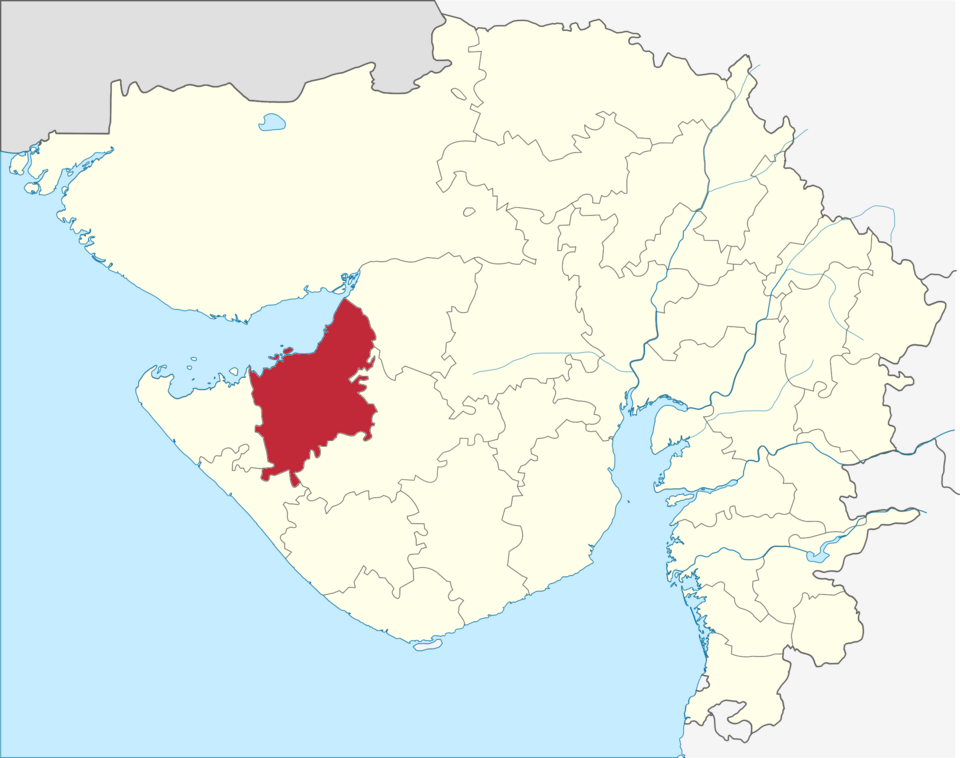
Correct — B, Jamnagar (India). The WHO Global Traditional Medicine Centre is at Jamnagar in Gujarat. Its foundation stone was laid there on 19 April 2022 — less than two months before this examination — by Prime Minister Narendra Modi, with the WHO Director-General Dr Tedros Adhanom Ghebreyesus and the Prime Minister of Mauritius, Pravind Jugnauth, present. WHO describes the Centre as a headquarters department of the Organization, sitting in its Division of Universal Health Coverage and Life Course but outposted to Jamnagar, and established in 2022 with foundational support from the Government of India. Its remit is the evidence base: harnessing the potential of traditional medicine through data, research, standards and appropriate use, rather than promoting any single system. Jamnagar was chosen because the city already hosts the Institute of Teaching and Research in Ayurveda. Two points of emphasis a student should carry: this is WHO's FIRST and so far ONLY global centre for traditional medicine anywhere in the world, and it is an outposted WHO office, not an Indian national institution. The stem's future tense reflects where matters stood at the June-2022 exam, when the foundation stone had just been laid; WHO now describes the Centre as established.
- (a)Jaffna (Sri Lanka) — There is no WHO traditional-medicine centre at Jaffna. The distractor works only on the alliteration with Jamnagar and Johannesburg — all three options begin with 'J', which is the whole design of the trap.
- (c)Johannesburg (South Africa) — Plausible-sounding, because traditional medicine has a large presence across Africa, but wrong on the facts. The Centre is a single global one and it was outposted to Jamnagar; no parallel global centre was set up at Johannesburg.
- (d)Haridwar (India) — The trap aimed at candidates who remember that the Centre came to India but not which city. Haridwar carries a strong popular association with yoga and Ayurveda, which is exactly why it is offered. The agreement and the foundation stone are for Jamnagar, the seat of the Institute of Teaching and Research in Ayurveda.
Traditional medicine is used by a very large share of the world's population, and WHO's problem with it has never been popularity but evidence — inconsistent product quality, weak regulation, little clinical trial data and no common terminology. The Global Traditional Medicine Centre is WHO's institutional answer: a single global knowledge hub working on research methods, data and standards, so that traditional systems can be assessed by the same criteria as any other intervention. India's interest is obvious, since it maintains an entire ministry, AYUSH, covering Ayurveda, Yoga and Naturopathy, Unani, Siddha, Sowa-Rigpa and Homoeopathy, and has pressed for international recognition of these systems for decades. Locating a WHO outposted office at Jamnagar therefore sits at the intersection of a health-governance question and a soft-power one.
This is a current-affairs question anchored to April 2022, and the reasoning is simply recall of the city. What makes it answerable even without recall is the elimination: two of the four options are 'J' cities offered to blur the memory of 'Jamnagar', and the fourth is the wrong Indian city. If you can remember only that the Centre came to India, you are down to Jamnagar and Haridwar, and the discriminator is the institution already on the ground — the Institute of Teaching and Research in Ayurveda is at Jamnagar. For UPSC-style preparation, the more useful layer is the framing: WHO outposted departments, the AYUSH ministry's international agenda, and why standardisation matters more to traditional medicine than promotion.
- The WHO Global Traditional Medicine Centre is located at Jamnagar, Gujarat, India — WHO's first and only global centre for traditional medicine.
- Its foundation stone was laid on 19 April 2022 by Prime Minister Narendra Modi, with WHO Director-General Dr Tedros Adhanom Ghebreyesus and Mauritius Prime Minister Pravind Jugnauth present.
- WHO describes it as a headquarters department in the Division of Universal Health Coverage and Life Course, outposted to Jamnagar and established in 2022 with foundational support from the Government of India.
- Jamnagar was chosen because it already hosts the Institute of Teaching and Research in Ayurveda (ITRA).
- In India the corresponding systems are administered by the Ministry of AYUSH — Ayurveda, Yoga and Naturopathy, Unani, Siddha, Sowa-Rigpa and Homoeopathy.
- Marking Haridwar because it feels like the natural home of Ayurveda in the popular imagination
- Assuming the Centre is an Indian government institute; it is an outposted WHO headquarters department, funded with Indian support
- Repeating a specific dollar figure for India's contribution — the amount is widely reported but is not stated on WHO's own page, so leave the number out
UPPSC asks recent international initiatives as a direct 'where / by whom' recall, usually within a year of the event and with near-miss place names as distractors. UPSC asks the same material as a statement-based question about the body's mandate and membership, so learn each initiative with its host, its parent organisation and what it is meant to do.
No directly related past PYQ was found.
- practice — not a real PYQ
Consider the following statements about the WHO Global Traditional Medicine Centre: 1. It is located at Jamnagar in Gujarat. 2. It is WHO's first global centre dedicated to traditional medicine. Which of the statements given above is/are correct?
- (a)Both 1 and 2
- (b)Only 1
- (c)Neither 1 nor 2
- (d)Only 2
Answer(a) Both 1 and 2 — the Centre is at Jamnagar, and WHO describes it as its first and only global centre for traditional medicine.
- practice — not a real PYQ
Which one of the following systems of medicine is NOT covered by the Ministry of AYUSH?
- (a)Sowa-Rigpa
- (b)Unani
- (c)Allopathy
- (d)Siddha
Answer(c) Allopathy — modern medicine is administered by the Ministry of Health and Family Welfare; AYUSH covers Ayurveda, Yoga and Naturopathy, Unani, Siddha, Sowa-Rigpa and Homoeopathy.