
Medical students of India were brought to India from Ukraine by Indian Government under which of the following operations ?
- (a)Operation Himalaya
- (b)Operation Ganga
- (c)Operation Godawari
- (d)Operation Yamuna
Correct — B, Operation Ganga. When Russia invaded Ukraine on 24 February 2022, several thousand Indians — overwhelmingly students enrolled in Ukrainian medical universities — were stranded in a war zone whose airspace had been closed. India's response, launched on 26 February 2022 and run as its main phase until 11 March 2022, was named Operation Ganga. Because no aircraft could fly into Ukraine, the evacuation worked by land first: students were moved by road and rail to the western borders and crossed into five transit countries — Romania, Hungary, Poland, Moldova and Slovakia — from where they were flown home. The first evacuation flight reached New Delhi on 27 February 2022 carrying 249 nationals; in all, roughly 22,000 to 25,000 Indians were brought back, of whom just over 18,000 were students, along with 147 nationals of eighteen other countries. The airlift used Indian Air Force transports alongside six civil carriers — Air India, Air India Express, IndiGo, SpiceJet, Go First and AirAsia India — and four Union Ministers (Hardeep Singh Puri, Jyotiraditya Scindia, Kiren Rijiju and Gen. V. K. Singh) were sent to the transit countries as special envoys to coordinate the crossings. The exam was held on 12 June 2022, so this was a three-month-old event when candidates faced it.
- (a)Operation Himalaya — No Indian evacuation from Ukraine carried this name. India's overseas rescue missions are named individually for each crisis — Sukoon for Lebanon in 2006, Rahat for Yemen in 2015, the Vande Bharat Mission for the Covid-19 repatriation in 2020, Devi Shakti for Afghanistan in 2021 and Kaveri for Sudan in 2023 — and the 2022 Ukraine operation was Ganga.
- (c)Operation Godawari — A river name, but not the one used. The option set is built by putting three other Indian river names beside the real answer, which is a common UPPSC device: the candidate who half-remembers 'an operation named after a river' still has to know which river. The Ukraine evacuation was Ganga.
- (d)Operation Yamuna — Again a plausible-sounding river name rather than the actual codename. Nothing in the 2022 Ukraine evacuation was designated Yamuna; the operation was announced and reported throughout as Operation Ganga.
Protecting nationals abroad is a standing function of the Ministry of External Affairs, and India has built a recognisable pattern for doing it: a named operation, an inter-ministerial control room, embassies in neighbouring safe countries acting as forward bases, and a mix of Indian Air Force transports and chartered or scheduled civil aircraft. The 2022 Ukraine case had one feature that shaped everything else — the target country's airspace was closed by war, so India could not fly in at all. The operation therefore had to be run as a land evacuation to third countries followed by an airlift, which is why the transit states of Romania, Hungary, Poland, Moldova and Slovakia matter as much to the answer as Ukraine does. The affected population was also unusual: the great majority were medical undergraduates, a consequence of the large numbers of Indian students who study MBBS in eastern Europe because of the cost and competition for seats at home.
This is pure current-affairs recall from the months just before the exam, and the fastest way to hold it is to memorise India's evacuation operations as a chronological chain, since UPPSC and UPSC both recycle them: Sukoon (Lebanon, 2006), Rahat (Yemen, 2015), Vande Bharat Mission with the naval Samudra Setu (Covid-19, 2020), Devi Shakti (Afghanistan, 2021), Ganga (Ukraine, 2022) and Kaveri (Sudan, 2023). Once that chain is in place, an option list of four river names collapses to one. Notice too what the question is not asking: it is not about the war, the sanctions or the students' subsequent transfer to Indian colleges, only the codename — so the whole item turns on a single word.
- Operation Ganga was India's evacuation of its nationals from Ukraine after the Russian invasion of 24 February 2022; the operation ran from 26 February to 11 March 2022, with help continuing afterwards for stragglers.
- Roughly 22,000 to 25,000 Indians were brought home, of whom just over 18,000 were students; 147 nationals of eighteen other countries were also evacuated.
- Because Ukrainian airspace was closed, evacuees crossed by land into Romania, Hungary, Poland, Moldova and Slovakia and were flown home from there.
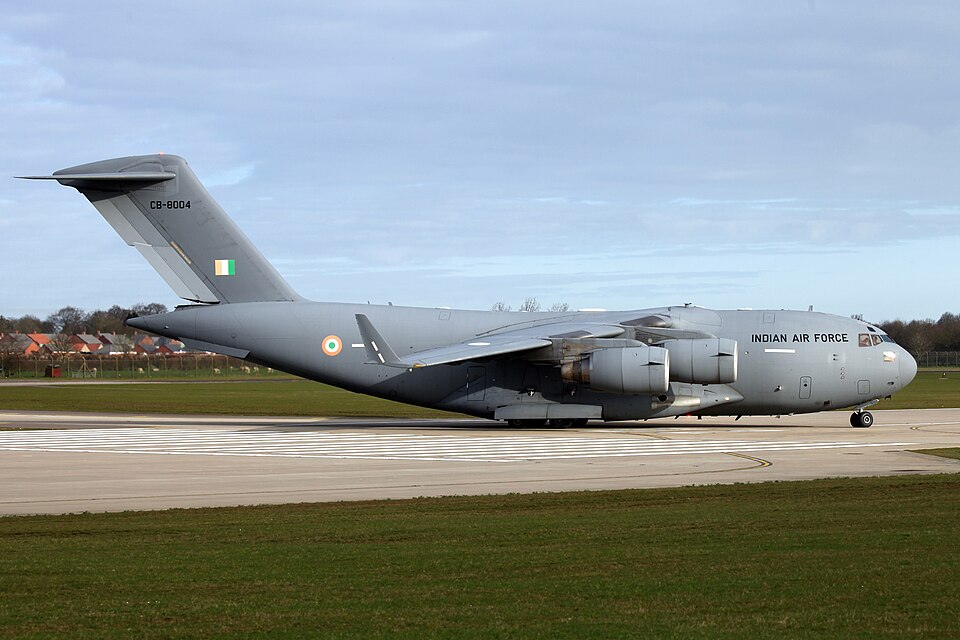
- The first evacuation flight landed in New Delhi on 27 February 2022 with 249 nationals; the airlift used Indian Air Force transports plus Air India, Air India Express, IndiGo, SpiceJet, Go First and AirAsia India.
- Four Union Ministers — Hardeep Singh Puri, Jyotiraditya Scindia, Kiren Rijiju and Gen. V. K. Singh — were deputed to the transit countries as special envoys.
- India's earlier named evacuations include Operation Sukoon (Lebanon, 2006), Operation Rahat (Yemen, 2015), the Vande Bharat Mission (Covid-19, 2020) and Operation Devi Shakti (Afghanistan, 2021); Operation Kaveri (Sudan) followed in 2023.
- Confusing Operation Ganga (Ukraine, 2022) with Operation Kaveri (Sudan, 2023) — both are river names and both are evacuation missions.
- Assuming aircraft flew directly into Ukraine; the airspace was closed, so the evacuation ran overland to five neighbouring countries first.
- Treating the Vande Bharat Mission as a single-country evacuation — it was the global Covid-19 repatriation, a different kind of operation altogether.
UPPSC asks the codename directly — 'students/nationals were brought back under which operation' — and builds the option list from similar-sounding names; UPSC prefers to ask the purpose behind a codename, as it did with Operation Sukoon, or to embed the event in a question on India's foreign-policy response.
What was the purpose of Operation Sukoon launched by the Government of India?
- (a) Helping Indonesia in its efforts to rehabilitate the victims of earthquake in that country
- (b) Evacuating Indian nationals from Lebanon during the conflict in the Middle East
- (c) Assisting United Nations in helping the civil-war victims in the Darfur region of North Africa
- (d) Providing a relief package to farmers after a spate of suicides by farmers in Andhra Pradesh
Answer(b) Evacuating Indian nationals from Lebanon during the conflict in the Middle East
Exactly the same concept a generation earlier — a codenamed Indian evacuation of nationals from a country at war, with the question turning on matching the operation to the crisis.
- practice — not a real PYQ
Operation Kaveri, launched by the Government of India in 2023, was undertaken to evacuate Indian nationals from
- (a)Ukraine
- (b)Afghanistan
- (c)Sudan
- (d)Yemen
Answer(c) Sudan — Ukraine was Operation Ganga (2022), Afghanistan was Operation Devi Shakti (2021) and Yemen was Operation Rahat (2015).
- practice — not a real PYQ
Which one of the following best explains why Indian nationals evacuated under Operation Ganga had first to travel to Romania, Hungary, Poland, Moldova and Slovakia?
- (a)Indian aircraft lacked the range to reach Ukraine directly
- (b)Ukrainian airspace had been closed because of the war, so evacuees had to cross land borders before being flown home
- (c)Those five countries had offered Indian students admission to their own universities
- (d)India had no diplomatic mission in Ukraine at the time
Answer(b) Ukrainian airspace had been closed because of the war, so evacuees had to cross land borders before being flown home — the defining constraint that shaped the whole operation.