
Sulpha drug is which of the following types of drug ?
- (a)Analgesics
- (b)Antibacterial
- (c)Antiseptic
- (d)Antipyretic
Answer
Why
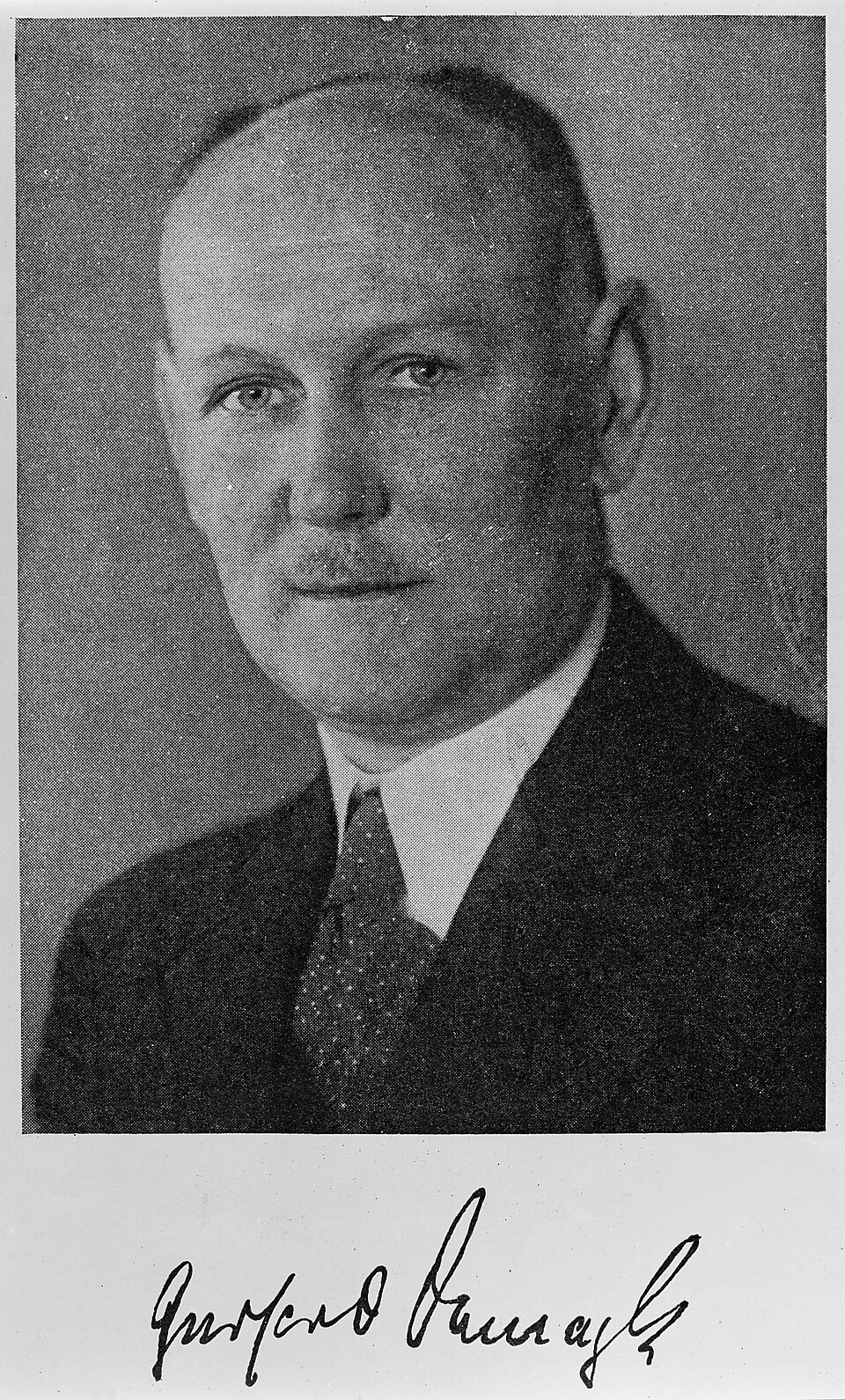
Correct — B, Antibacterial. Sulpha drugs, or sulfonamides, are synthetic antimicrobial agents built around the sulfonamide functional group, and they act on bacteria. The mechanism is the classic textbook case of selective toxicity. Sulfanilamide is a close structural analogue of para-aminobenzoic acid (PABA), the molecule a bacterium uses as a building block in making folate. The sulfa drug competes with PABA for the enzyme dihydropteroate synthase and blocks the pathway, so the bacterium cannot make tetrahydrofolate and cannot make the nucleotides it needs to multiply. Human cells run no such pathway — we take folate in through the diet — so the drug can cripple the bacterium while leaving the host's own metabolism untouched. Because they halt multiplication rather than kill outright, sulfonamides are bacteriostatic, and the body's immune system clears the arrested infection. Note the precision of the word in the option: 'antibacterial', not 'antibiotic'. Antibiotics in the strict sense are substances of microbial origin; sulfa drugs are wholly synthetic, which is why they are described as antibacterial chemotherapeutic agents. The first of them was Prontosil, discovered by a team led by Gerhard Domagk at Bayer in 1932; Domagk was awarded the Nobel Prize in Physiology or Medicine in 1939 for the work, and sulfonamides became the first widely effective systemic antibacterials, in use before penicillin could be mass-produced.
Why the others are wrong
- (a)Analgesics — Analgesics relieve pain by acting on the pathways that generate or transmit the pain signal — aspirin and ibuprofen through prostaglandin synthesis, morphine through opioid receptors. Sulfa drugs have no such action; they interfere with a bacterium's folate synthesis and do nothing for pain.
- (c)Antiseptic — The most tempting wrong answer, because both fight microbes. But an antiseptic is a chemical applied to a living surface — skin or a wound — to kill or check microbes non-selectively there; tincture of iodine and hydrogen peroxide are typical. Sulfa drugs are systemic: they are taken internally, travel through the bloodstream and act on a specific bacterial enzyme. That precise target is what makes them safe to swallow, which no antiseptic is.
- (d)Antipyretic — An antipyretic lowers body temperature by acting on the hypothalamic set-point — paracetamol is the standard example. A sulfa drug may end a fever, but only indirectly, by clearing the bacterial infection that caused it; it has no antipyretic action of its own, and the class is defined by what the drug does, not by what improves afterwards.
Concept
Drugs are classified in prelims by therapeutic action, and the four standard classes in this family are worth holding apart precisely. Antibacterials kill or arrest bacteria inside the body; antiseptics are applied to living surfaces to check microbes there, while disinfectants do the same on non-living surfaces; analgesics relieve pain; antipyretics reduce fever. Within antibacterials, a further distinction matters: 'antibiotic' strictly means a substance produced by a micro-organism — penicillin from Penicillium, streptomycin from Streptomyces — whereas sulfonamides are made in the laboratory. Their selectivity comes from targeting a pathway the pathogen has and the host does not, which is the general principle behind every safe antimicrobial.
The trap in this question is the word 'antiseptic', which many candidates read as a synonym for 'germ-killing'. Fix the difference by where the drug works, not by what it works on: an antiseptic works on a surface and is not swallowed, a sulfa drug is swallowed and works throughout the body. The other two options are decoys from a completely different pharmacological family, and a candidate who knows that sulfa drugs treat infections rather than symptoms will discard them at once. It also helps to remember the historical place of these drugs: they are the beginning of modern chemotherapy of infection, the bridge between Ehrlich's arsenical compounds and the antibiotic era, and examiners often set them alongside penicillin to test whether you know that one is synthetic and the other is not.
Key facts
- Sulfonamides — sulpha or sulfa drugs — are synthetic antimicrobial agents containing the sulfonamide group; they are antibacterials, not antibiotics, because antibiotics are of microbial origin.
- They act as competitive inhibitors of dihydropteroate synthase, being structural analogues of para-aminobenzoic acid (PABA), and so block bacterial folate synthesis.
- They are selectively toxic because bacteria must synthesise folate themselves while humans obtain folate from the diet; they are bacteriostatic, arresting growth and multiplication rather than killing.
- Prontosil, the first sulfa drug, was discovered by a team led by Gerhard Domagk at Bayer in 1932; Domagk was awarded the Nobel Prize in Physiology or Medicine in 1939.
- Antiseptics act on living surfaces and disinfectants on non-living ones; analgesics act on pain pathways and antipyretics on the hypothalamic temperature set-point — four distinct classes examiners rotate through the same option slots.
Study next
Common traps
- Reading 'antiseptic' as a general word for anything that fights germs. An antiseptic acts on a living surface; a sulfa drug acts systemically after being absorbed.
- Calling sulfa drugs antibiotics. They are synthetic, so the correct umbrella term is antibacterial or antimicrobial — and prelims options are often written to test exactly that distinction.
- Assuming an antibacterial must kill bacteria. Sulfonamides are bacteriostatic: they stop multiplication and leave the killing to the immune system.
UPPSC asks this area as a one-line classification — name the compound, pick its class — or as a four-row match of substances to uses. UPSC prefers application-style questions: why a drug is effective, why resistance develops, or why a particular agent works on bacteria but not on viruses, so learn the mechanism and not just the label.
Related PYQs
Consider the following statements: 1. Every individual in the population is equally susceptible host for Swine Flu. 2. Antibiotics have no role in the primary treatment of Swine Flu. 3. To prevent the future spread of Swine Flu in the epidemic area, the swine (pigs) must all be culled. Which of the statements given above is/are correct ?
- (a) 1 and 2 only
- (b) 2 only
- (c) 2 and 3 only
- (d) 1, 2 and 3
Answer(a) 1 and 2 only
The same idea from the negative side — an antibacterial agent works on a bacterial target, so it has no role against a viral disease. Knowing what a drug class acts on is exactly what both questions reward.
Match List - I with List - II and select the correct answer from the codes given below the lists : List - I A. Kevlar B. Taxol C. Zinc Phosphide D. Nitrocellulose List - II 1. Explosive 2. Synthetic fibre 3. Anticancer drug 4. Rodenticide Codes :
- (a) A-2, B-4, C-3, D-1
- (b) A-2, B-3, C-4, D-1
- (c) A-4, B-3, C-1, D-2
- (d) A-3, B-1, C-2, D-4
Answer(b) A-2, B-3, C-4, D-1
The same skill in match form — classify a named chemical by the function it performs. UPPSC returns to compound-to-use classification in almost every Paper-I, so build the habit of storing each substance with its class attached.
Practice
- practice — not a real PYQ
Sulpha drugs act against bacteria because they are structural analogues of
- (a)Folic acid
- (b)Para-aminobenzoic acid
- (c)Peptidoglycan
- (d)Nicotinamide
Answer(b) Para-aminobenzoic acid — sulfanilamide competes with PABA for dihydropteroate synthase and so blocks bacterial folate synthesis; humans, who take folate from the diet, are unaffected. - practice — not a real PYQ
Which one of the following is NOT correctly matched?
- (a)Paracetamol – Antipyretic
- (b)Tincture of iodine – Antiseptic
- (c)Sulfanilamide – Analgesic
- (d)Penicillin – Antibiotic
Answer(c) Sulfanilamide – Analgesic — sulfanilamide is an antibacterial; it has no pain-relieving action.