
The trial of the Officers of the I.N.A. was held in
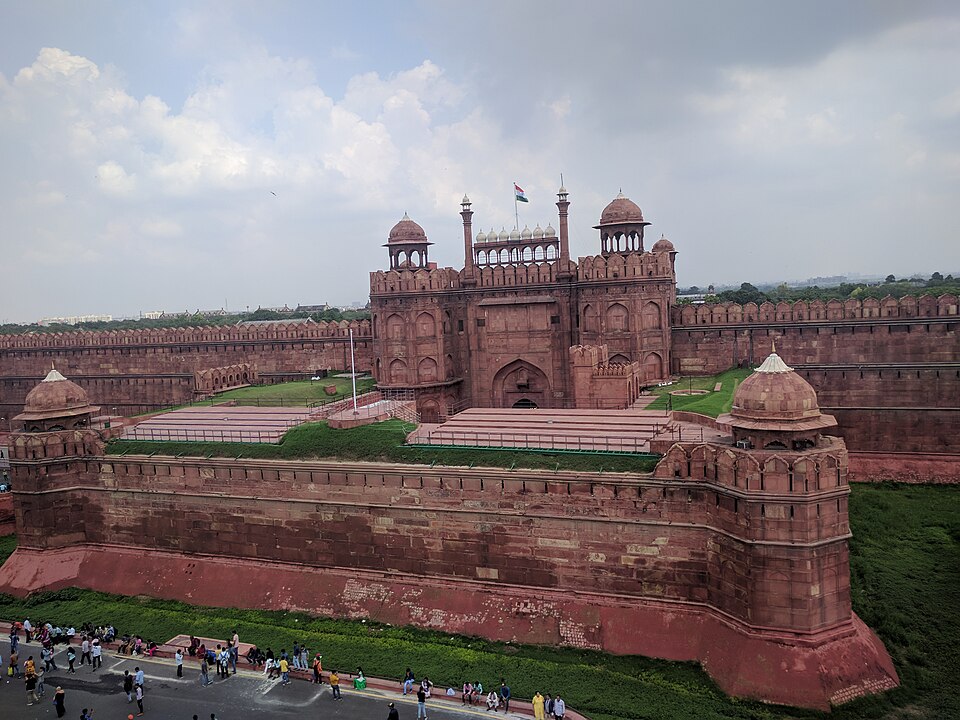
- (a)Red Fort, Delhi
- (b)Gwalior Fort
- (c)Amer Fort, Jaipur
- (d)Agra Fort
Answer
Why
Correct — A, Red Fort, Delhi. After Japan's surrender in August 1945 the British began court-martialling captured officers of Subhas Chandra Bose's Indian National Army, and the government deliberately staged the first trial inside the Red Fort in Delhi — the Mughal seat of power and, since 1857, a British garrison. The first and most famous of these trials ran from November into December 1945 and put three officers in the dock together: Major-General Shah Nawaz Khan, Colonel Prem Kumar Sahgal and Colonel Gurbaksh Singh Dhillon — a Muslim, a Hindu and a Sikh. They were charged under section 121 of the Indian Penal Code with waging war against the King, with additional counts of murder or abetment of murder. The choice of venue backfired spectacularly: 'Red Fort trials' became a national slogan, the Congress set up an INA Defence Committee that brought Bhulabhai Desai, Tej Bahadur Sapru, Jawaharlal Nehru, Asaf Ali and Kailash Nath Katju into court together, and the country erupted in demonstrations. All three were convicted and sentenced to transportation for life, but Commander-in-Chief General Claude Auchinleck (he was promoted field marshal only on 1 June 1946) remitted the sentences and set them free. Further INA trials followed at the Red Fort into 1946.
Why the others are wrong
- (b)Gwalior Fort — Gwalior belongs to a different chapter of the freedom struggle. The fort and the town are remembered for the last phase of the Revolt of 1857 — Rani Lakshmibai of Jhansi died fighting near Gwalior in June 1858 and Tatya Tope operated in that theatre. Gwalior Fort had no role in the 1945-46 courts-martial, which were conducted by the British Indian Army in Delhi.
- (c)Amer Fort, Jaipur — Amer (Amber) Fort is a Kachhwaha Rajput palace-fort near Jaipur, associated with Raja Man Singh and with Rajput-Mughal alliance politics of the sixteenth and seventeenth centuries; it is today part of the UNESCO-listed Hill Forts of Rajasthan. It was never a British military or judicial establishment and had no connection with the INA.
- (d)Agra Fort — The strongest decoy, because Agra Fort is the other great Mughal red-sandstone fort and is genuinely famous as a place of confinement — Shah Jahan spent his last years imprisoned there by Aurangzeb. But the INA courts-martial were held in Delhi, at the Red Fort, and a candidate who has stored only 'a red Mughal fort' rather than 'Red Fort, Delhi' will land here.
Concept
The Indian National Army was formed from Indian prisoners of war and civilians in Southeast Asia and was reorganised under Subhas Chandra Bose from 1943, fighting alongside the Japanese in Manipur and Burma. When the Japanese collapsed in 1945, the British treated captured INA personnel as deserters and traitors and put them on public trial. The trials, held in the Red Fort in Delhi from November 1945, produced the last great mass upsurge before independence: student strikes, hartals, and a rare pooling of Congress, Muslim League and Communist sympathy behind the accused. The unrest fed directly into the Royal Indian Navy ratings' revolt of February 1946, and the sight of the Indian Army's own loyalty in question was one of the considerations that pushed the British towards a rapid transfer of power.
Fix the venue by the political logic, not by memory alone. The British wanted the trial staged at the symbolic seat of Indian sovereignty in the imperial capital, which is why it went to the Red Fort in Delhi rather than to a routine cantonment court. Every wrong option here is a fort a student already associates with some other story — Gwalior with 1857, Amer with the Rajputs, Agra with Shah Jahan's imprisonment — so the trap is a vague memory of 'a fort'. The associated cluster of facts that UPPSC and UPSC both mine is: the three accused, the charge of waging war against the King, the Congress defence committee, the conviction, and Auchinleck's remission of the sentences.
Key facts
- The first INA court-martial was held at the Red Fort, Delhi, from November to December 1945; more INA trials followed there in 1946.
- The three officers tried together were Major-General Shah Nawaz Khan, Colonel Prem Kumar Sahgal and Colonel Gurbaksh Singh Dhillon.
- The main charge was waging war against the King under section 121 of the Indian Penal Code, with added counts of murder or abetment of murder.
- The Congress-backed INA Defence Committee included Bhulabhai Desai, Tej Bahadur Sapru, Jawaharlal Nehru, Asaf Ali and Kailash Nath Katju.
- All three were convicted and sentenced to transportation for life, but Commander-in-Chief Claude Auchinleck remitted the sentences in the face of nationwide agitation.
Study next
Common traps
- Confusing the Red Fort at Delhi with Agra Fort — both are Mughal red-sandstone forts, but the INA trials were in Delhi.
- Assuming the accused were executed; they were convicted and sentenced to transportation for life, and the sentences were then remitted.
- Dating the INA trials to 1946 alone — the first and most famous trial opened in November 1945; the RIN revolt is the February 1946 event.
UPPSC keeps this area to sharp one-liners — the venue of the trial, the name of the women's regiment, the year the INA was formed — while UPSC prefers to test whether you can identify the personalities (as in its 2021 question on Shah Nawaz Khan, Sahgal and Dhillon) or place the INA trial correctly in a chronological sequence.
Related PYQs
In the context of Colonial India, Shah Nawaz Khan, Prem Kumar Sehgal and Gurbaksh Singh Dhillon are remembered as
- (a) leaders of Swadeshi and Boycott Movement
- (b) members of the Interim Government in 1946
- (c) members of the Drafting Committee in the Constituent Assembly
- (d) officers of the Indian National Army
Answer(d) officers of the Indian National Army
The same event from the other side — UPSC asks who the accused were, UPPSC asks where they were tried; the three named men are precisely the defendants in the Red Fort trial of 1945.
What is the correct sequence of the following events? I. The August Offer II. The I.N.A. trial III. The Quit India Movement IV. The Royal Indian Naval Ratings’ Revolt Select the correct answer using the codes given below:
- (a) I, III, II, IV
- (b) III, I, II, IV
- (c) I, III, IV, II
- (d) II, IV, I, III
Answer(a) I, III, II, IV
Places the INA trial in the endgame chronology — August Offer 1940, Quit India 1942, the Red Fort trial from November 1945, and the naval ratings' revolt of February 1946 that the trial helped ignite.
What was the name of the female Regiment constituted as a part of the Azad Hind Fauj by Netaji Subhash Chandra Bose?
- (a) Rani Jhansi Regiment
- (b) Veerangana Regiment
- (c) Bharat Mata Regiment
- (d) Rani Bhabani Regiment
Answer(a) Rani Jhansi Regiment
The same organisation four years later — UPPSC returns to the Azad Hind Fauj repeatedly, asking one crisp identification at a time (here the women's regiment, in 2019 the venue of the trial of its officers).
Practice
- practice — not a real PYQ
The three officers tried together in the first Indian National Army court-martial at the Red Fort in 1945 were
- (a)Shah Nawaz Khan, Prem Kumar Sahgal and Gurbaksh Singh Dhillon
- (b)Mohan Singh, Rash Behari Bose and A. M. Nair
- (c)Lakshmi Sahgal, Janaki Thevar and Gurbaksh Singh Dhillon
- (d)Shah Nawaz Khan, Mohan Singh and Prem Kumar Sahgal
Answer(a) Shah Nawaz Khan, Prem Kumar Sahgal and Gurbaksh Singh Dhillon — deliberately a Muslim, a Hindu and a Sikh, which made the trial a national rather than a communal cause. - practice — not a real PYQ
Which one of the following was the principal charge framed against the INA officers in the Red Fort trials?
- (a)Sedition under section 124A of the Indian Penal Code
- (b)Waging war against the King under section 121 of the Indian Penal Code
- (c)Contravention of the Defence of India Rules
- (d)Conspiracy under the Rowlatt Act
Answer(b) Waging war against the King under section 121 of the Indian Penal Code — with additional counts of murder or abetment of murder against individual accused.