
Given below are two statements, one is labelled as Assertion (A) and the other as Reason (R) Assertion (A) : The Asiatic Society of Bengal was established in the period of Warren Hastings and he modestly declined the offer of Presidentship of that learned body in favour of Sir William Jones. Reason (R) : Warren Hastings was himself a great scholar and an ardent orientalist who used to encourage the study of Sanskrit, Persian and Arabic. Select the correct answer from the codes given below : Codes :
- (a)Both (A) and (R) are true and (R) is the correct explanation of (A)
- (b)Both (A) and (R) are true, but (R) is not the correct explanation of (A)
- (c)(A) is true, but (R) is false
- (d)(A) is false, but (R) is true
Correct — B, Both (A) and (R) are true, but (R) is not the correct explanation of (A). Assertion: the Asiatic Society was founded on 15 January 1784 at Calcutta by the philologist and Supreme Court judge Sir William Jones — squarely within Warren Hastings' term as Governor-General of Fort William (1772-1785) — and Hastings supported its foundation. The further detail in the assertion, that Hastings was offered the president's chair and declined it in favour of Jones, is the account carried in the Society's own tradition and in standard textbooks, and the paper treats the assertion as true. Reason: this is also true, and independently so. Hastings spoke good Bengali and Urdu and fluent literary Persian, founded the Calcutta Madrasa (Madrasa 'Aliya) in 1781 for Arabic and Persian learning, backed the compilation and translation of Hindu law that became Halhed's Code of Gentoo Laws, and personally wrote the introduction to Charles Wilkins' 1785 English translation of the Bhagavad Gita — the first into any European language. So both halves stand. Why (R) does not explain (A): the reason accounts for Hastings' patronage of oriental learning in general, but the specific fact the assertion turns on is a decision about an office — his stepping aside so that Jones could preside. Being a learned orientalist is, if anything, a reason to accept the chair; the declining is explained by his own modesty and by Jones's standing as the Society's founder and moving spirit, which is a fact about temperament and about Jones, not a consequence of Hastings' scholarship. Both true, no causal link — hence (b).
- (a)Both (A) and (R) are true and (R) is the correct explanation of (A) — The tempting choice, because both statements are indeed true and both are about the same man. But an assertion-reason item asks whether the reason *causes* the assertion. Hastings' erudition explains why he encouraged the Society and oriental studies; it does not explain why he refused its presidency. A scholar's love of learning is not a reason to decline a learned body's highest office — the declining is attributed to modesty and to Jones's primacy as founder.
- (c)(A) is true, but (R) is false — The reason is not false. Hastings is the textbook example of the 'orientalist' school of colonial administrators: fluent in Persian and Bengali, founder of the Calcutta Madrasa in 1781, patron of the first English rendering of the Bhagavad Gita, and a supporter of translating Sanskrit and Persian legal texts so that Indians could be governed by their own laws.
- (d)(A) is false, but (R) is true — The assertion is not false. The Asiatic Society was founded on 15 January 1784, well inside Hastings' governor-generalship (1772-1785), and Jones — not Hastings — presided over it. Choosing this option usually comes from mixing up the founder: the Society was founded by William Jones, while Hastings was its patron, and it is Fort William College (1800) that belongs to Lord Wellesley, not to Hastings.
The Asiatic Society, founded at Calcutta on 15 January 1784 by Sir William Jones, was the first modern institution devoted to the systematic study of Asian languages, history, law, religion and science. It began as the 'Asiatick Society', was renamed the Asiatic Society of Bengal in 1832, became the Royal Asiatic Society of Bengal in 1936, and took its present name in 1951. Its journal, Asiatick Researches, and its scholars founded Indology as a discipline: Jones's demonstration of the kinship of Sanskrit with Greek and Latin opened up comparative philology, Charles Wilkins translated the Gita, and in 1837 James Prinsep, working from the Society, deciphered Brahmi and read Ashoka's edicts — which is how India recovered a chronology for its ancient past.
Two skills are being tested at once. First, straightforward orientalist-phase history: who founded the Asiatic Society, under which Governor-General, and what Hastings personally did for oriental learning. Second, the discipline of the assertion-reason format — read the assertion for its *specific* claim, not its general theme. Here the assertion's operative clause is 'he declined the presidentship in favour of Jones'; the reason talks about Hastings' scholarship. Test the link by asking 'does R answer the question *why* A happened?' It does not, so the answer drops from (a) to (b). Remember the wider setting too: Hastings and Jones belong to the orientalist policy that Macaulay's Minute of 1835 and the anglicist turn later displaced.
- The Asiatic Society was founded on 15 January 1784 at Calcutta by Sir William Jones, during Warren Hastings' governor-generalship (1772-1785).
- Warren Hastings founded the Calcutta Madrasa in 1781 and wrote the introduction to Charles Wilkins' 1785 English translation of the Bhagavad Gita.
- Hastings spoke Bengali and Urdu and was fluent in literary and court Persian; he sponsored translation of Hindu and Muslim legal texts for use in the courts.
- The Society was renamed the Asiatic Society of Bengal in 1832 and carries its present name since 1951; its scholars included James Prinsep, who deciphered Ashoka's Brahmi edicts in 1837.
- In assertion-reason questions, both statements can be true and still unlinked — (R) must explain (A), not merely relate to it.
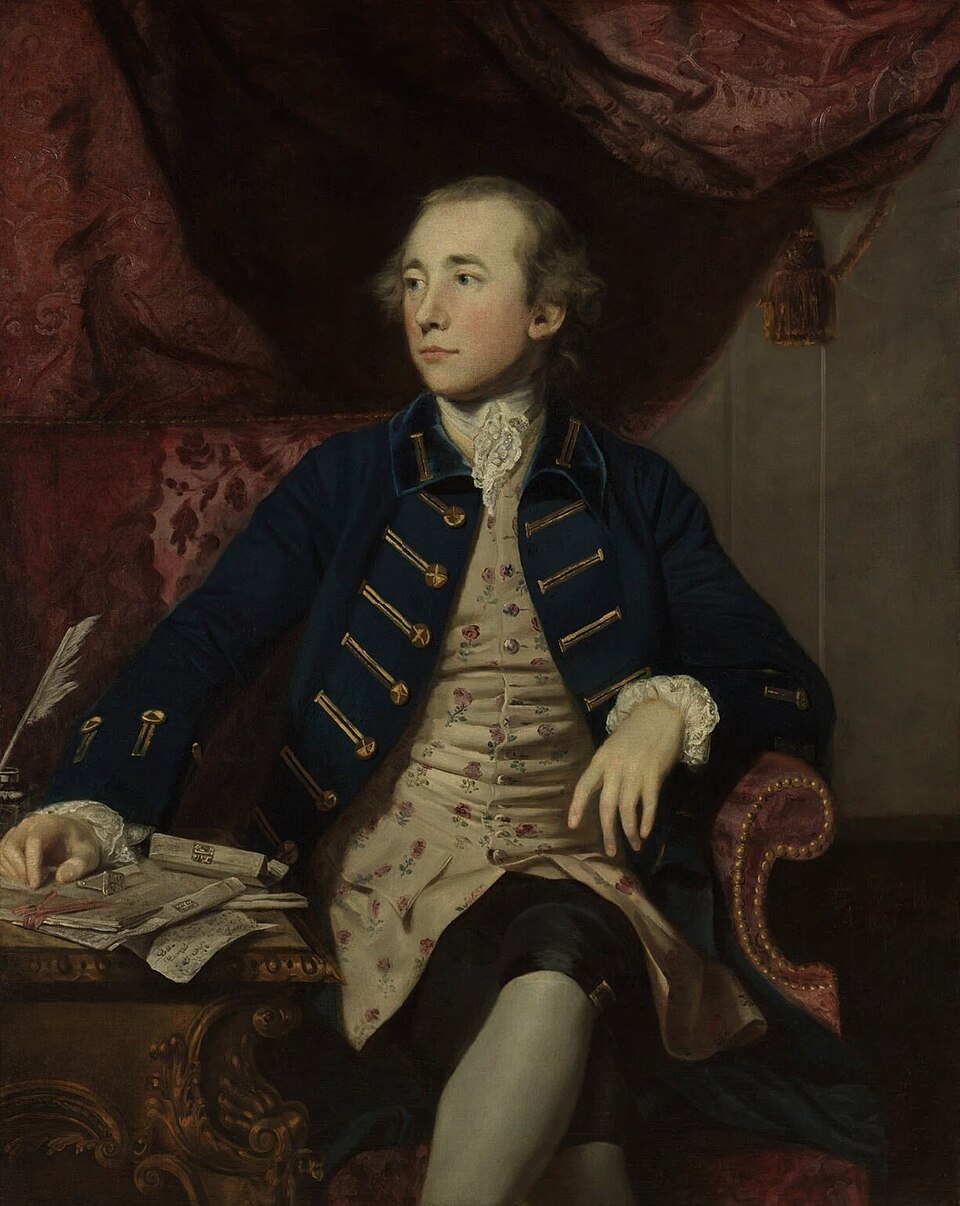
- Naming Warren Hastings as the founder of the Asiatic Society; he was its patron, and Sir William Jones founded it.
- In assertion-reason items, marking (a) simply because both statements are true — the format asks specifically whether (R) is the cause of (A).
- Confusing Warren Hastings with Lord Hastings (Marquess of Hastings, Governor-General 1813-1823), a different person from a different era.
UPPSC likes the assertion-reason wrapper for this period, forcing you to judge the link and not just the facts, and has also asked the plain 'who founded the Asiatic Society of Bengal' one-liner; UPSC prefers institution-to-founder matching pairs and questions on who translated or deciphered what.
Who amongst the following Englishmen first translated the Bhagavad-Gita into English?
- (a) William Jones
- (b) Charles Wilkins
- (c) Alexander Cunningham
- (d) John Marshall
Answer(b) Charles Wilkins
Tests the same orientalist circle under the same patron — Wilkins' 1785 Gita was produced under Warren Hastings' patronage and carried Hastings' own introduction, which is exactly the evidence for the reason statement here.
With reference to educational institutions during colonial rule in India, consider the following pairs: Institution — Founder 1. Sanskrit College at Benaras — William Jones 2. Calcutta Madarsa — Warren Hastings 3. Fort William College — Arthur Wellesley Which of the pairs given above is/are correct?
- (a) 1 and 2
- (b) 2 only
- (c) 1 and 3
- (d) 3 only
Answer(b) 2 only
The same institution-to-founder discipline, and it confirms the reason statement directly: the Calcutta Madrasa was Warren Hastings' own foundation for Arabic and Persian study.
Who was the founder of the 'Asiatic Society of Bengal'?
- (a) Jonathan Duncan
- (b) Sir William Jones
- (c) Warren Hastings
- (d) William Bentinck
Answer(b) Sir William Jones
UPPSC returned to the very same body two years later in its plainest form — and its answer, Jones and not Hastings, is the fact that makes this 2019 assertion true.
- practice — not a real PYQ
Which one of the following pairs is correctly matched?
- (a)Calcutta Madrasa — Lord Wellesley
- (b)Asiatic Society, 1784 — Sir William Jones
- (c)Fort William College — Warren Hastings
- (d)Benares Sanskrit College — William Jones
Answer(b) Asiatic Society, 1784 — Sir William Jones. The Calcutta Madrasa (1781) was Warren Hastings', Fort William College (1800) was Wellesley's, and the Benares Sanskrit College (1791) was Jonathan Duncan's.
- practice — not a real PYQ
The first English translation of the Bhagavad Gita, published in 1785 with an introduction by Warren Hastings, was made by
- (a)Sir William Jones
- (b)Charles Wilkins
- (c)Nathaniel Halhed
- (d)James Prinsep
Answer(b) Charles Wilkins — his 1785 rendering was the first translation of the Gita into any European language; Halhed compiled the Code of Gentoo Laws and Prinsep later deciphered Brahmi.