
With which of the following was the Bretton Woods System NOT associated
- (a)International Monetary Fund
- (b)Economic recovery after the Second World War
- (c)International Bank for Reconstruction and Development
- (d)Establishment of a monetary system based on floating exchange rate
Answer
Why
Correct — D, the Bretton Woods System was NOT associated with a floating exchange rate. The 1944 Bretton Woods conference set up a system of fixed, pegged exchange rates, with currencies tied to the US dollar and the dollar convertible to gold. It created the International Monetary Fund and the International Bank for Reconstruction and Development (the World Bank) and was aimed at rebuilding the world economy after the Second World War. Options (a), (b) and (c) are therefore all associated with it, while a floating-rate system — which arrived only after Bretton Woods collapsed in 1971-73 — is not.
Why the others are wrong
- (a)International Monetary Fund — The IMF was created at the Bretton Woods conference in 1944 to oversee the new monetary system, so it is closely associated with it — not the exception.
- (b)Economic recovery after the Second World War — The conference's very purpose was to rebuild and stabilise the post-war economy, so this too is associated with Bretton Woods.
- (c)International Bank for Reconstruction and Development — The IBRD — the original World Bank institution — was also created at Bretton Woods, so it is associated with the system rather than being the odd one out.
Concept
The Bretton Woods System, agreed in 1944, set up the post-war international monetary order — fixed exchange rates anchored to a gold-convertible US dollar — and founded the International Monetary Fund and the World Bank (IBRD). It is the opposite of a floating-rate regime.
The trap is that today's world runs on floating exchange rates managed partly through the IMF, so students wrongly associate 'floating' with Bretton Woods. In reality Bretton Woods was a fixed-rate system, and floating rates came only after it broke down in the early 1970s.
Key facts
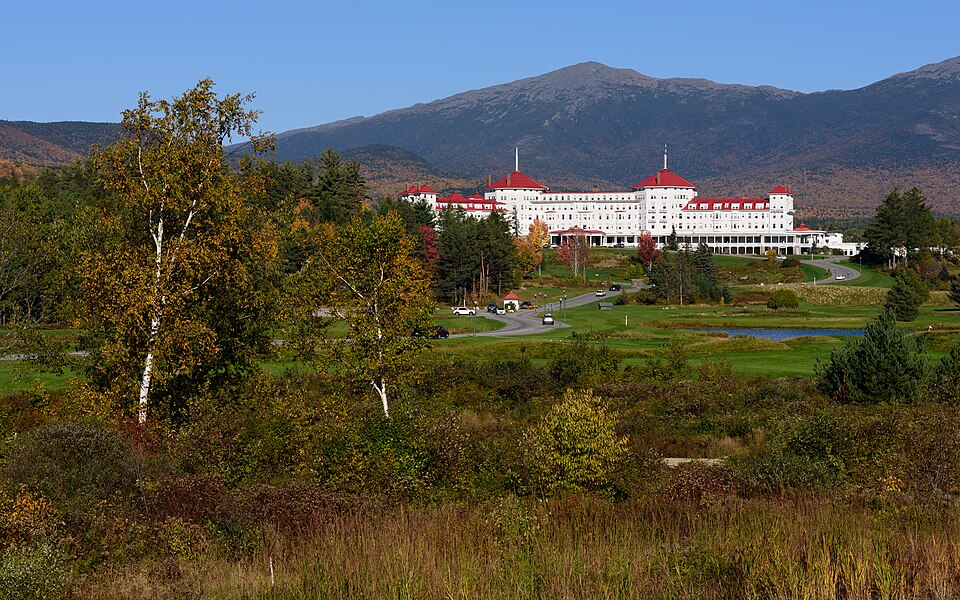
- The conference was held at Bretton Woods, New Hampshire, in July 1944, with 44 nations taking part.
- It created the IMF and the IBRD (World Bank) — the 'Bretton Woods twins', both headquartered in Washington D.C.
- It fixed exchange rates by pegging currencies to the US dollar, which was itself convertible to gold at 35 dollars an ounce.
- The system collapsed in 1971-73 when the United States ended dollar-gold convertibility, ushering in floating exchange rates.
Study next
Common traps
- Assuming Bretton Woods used floating exchange rates, when it was a fixed, pegged system.
- Confusing the IMF (short-term monetary stability) with the World Bank (long-term development finance).
Asked as 'which is NOT associated with Bretton Woods' or as a match of institutions and features to the 1944 conference.
Related PYQs
How is the United Nations Monetary and Financial Conference wherein the agreements were signed to set up IBRD, GATT and IMF, commonly known?
- (a) Bandung Conference
- (b) Bretton Woods Conference
- (c) Versailles Conference
- (d) Yalta Conference
Answer(b) Bretton Woods Conference
Same 1944 conference. There you name the meeting that set up the IMF and IBRD; here you use the same knowledge to see that fixed institutions and post-war recovery belong to Bretton Woods, while a floating-rate system does not.
Practice
- practice — not a real PYQ
The Bretton Woods Conference of 1944 led to the creation of which institutions?
- (a)The IMF and the World Bank
- (b)The WTO and the United Nations
- (c)The Asian Development Bank and the New Development Bank
- (d)OPEC and the G20
Answer(a) The IMF and the World Bank — the two 'Bretton Woods twins'. - practice — not a real PYQ
Under the Bretton Woods System, exchange rates were
- (a)fixed and pegged to the US dollar
- (b)freely floating
- (c)set by daily gold auctions
- (d)determined by the WTO
Answer(a) fixed and pegged to the US dollar, which was convertible to gold.