
How many rural districts does Mahatma Gandhi National Rural Employment Guarantee Act cover as on 2024-25?
- (a)600
- (b)740
- (c)700
- (d)680
Answer
Why
Correct — B, 740. MGNREGA is a universal rural scheme: since 1 April 2008 it has extended to every rural district of the country. As the number of districts grew through reorganisation, its coverage reached about 740 rural districts by 2024-25 — the most complete figure among the options.
Why the others are wrong
- (a)600 — An undercount. MGNREGA's rural coverage runs well beyond 600 districts, since it applies to all rural districts of India.
- (c)700 — Closer, but still short of the roughly 740 rural districts covered by 2024-25.
- (d)680 — An undercount — the scheme's rural coverage exceeds 680 districts.
Concept
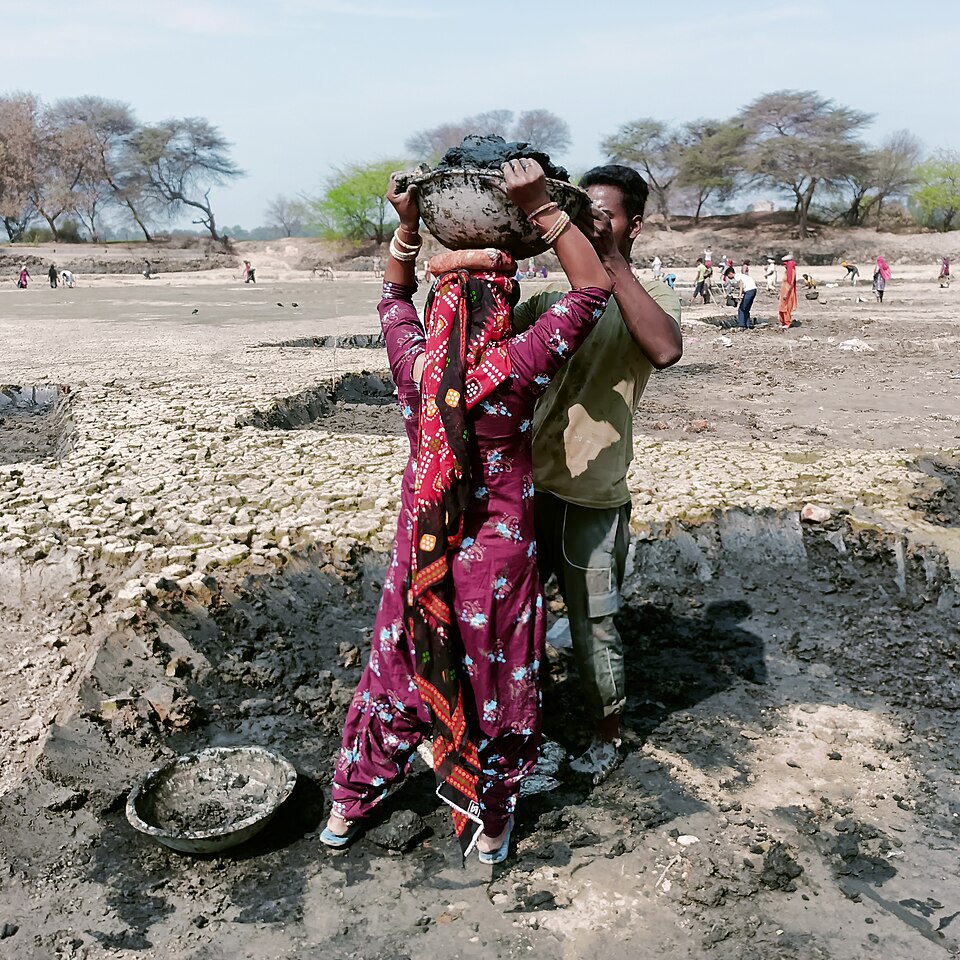
MGNREGA (2005) guarantees at least 100 days of unskilled manual wage employment in a financial year to every rural household whose adult members volunteer for it. It was rolled out in phases — 200 districts in February 2006, 130 more in 2007, and all remaining rural districts from 1 April 2008 — so it now covers all rural districts of India, about 740 as of 2024-25.
Because the scheme is universal to rural India, the question effectively asks roughly how many rural districts there are. The answer is the near-complete figure, not a partial count. Exact numbers shift over the years as states create new districts.
Key facts
- MGNREGA guarantees up to 100 days of wage employment per year to every rural household on demand.
- It became universal to all rural districts of India from 1 April 2008.
- Its coverage stood at roughly 740 rural districts as of 2024-25.
- At least one-third of the beneficiaries are to be women, and wages are paid into bank or post-office accounts.
Study next
Common traps
- MGNREGA is universal to rural households — it is not limited to BPL or SC/ST families.
- The exact district count changes as new districts are carved out, so treat such numbers as approximate.
MGNREGA is asked on its coverage, eligibility (any rural household) and the 100-day guarantee.
Related PYQs
Among the following who are eligible to benefit from the “Mahatma Gandhi National Rural Employment Guarantee Act”?
- (a) Adult members of only the scheduled caste and scheduled tribe households
- (b) Adult members of below poverty line (BPL) households
- (c) Adult members of households of all backward communities
- (d) Adult members of any household
Answer(d) Adult members of any household
Same scheme, same universality — UPSC established that MGNREGA benefits any rural household (not just BPL/SC-ST). That universal-coverage principle is exactly why the NDA answer here is the near-complete count of rural districts (740).
Consider the following statements in respect of the National Rural Employment Guarantee Act, 2005: 1. Under the provisions of the Act, 100 days of employment in a year to every household whose adult members volunteer to do unskilled manual work has become a fundamental right. 2. Under the provisions of the Act, women are to get priority to the extent that one-half of persons who are given employment are women who have asked for work.
- (a) 1 only
- (b) 2 only
- (c) Both 1 and 2
- (d) Neither 1 nor 2
Answer(d) Neither 1 nor 2
Same Act, probing its fine print — the 100-day guarantee is a legal entitlement (not a Fundamental Right) and the women's share is one-third (not one-half). Useful companion detail to the coverage figure asked in the NDA question.
Practice
- practice — not a real PYQ
Under MGNREGA, guaranteed wage employment is provided for a minimum of how many days in a financial year?
- (a)50
- (b)100
- (c)150
- (d)200
Answer(b) 100 — the Act guarantees at least 100 days of unskilled manual wage work per household per year. - practice — not a real PYQ
MGNREGA guarantees employment to which of the following?
- (a)Only BPL rural households
- (b)Only SC/ST households
- (c)Any rural household whose adults volunteer for unskilled manual work
- (d)Only the urban poor
Answer(c) Any rural household whose adults volunteer for unskilled manual work — the entitlement is universal in rural areas.