
Which one of the following is NOT a chemical change?
- (a)Burning of coal
- (b)Rusting of metal
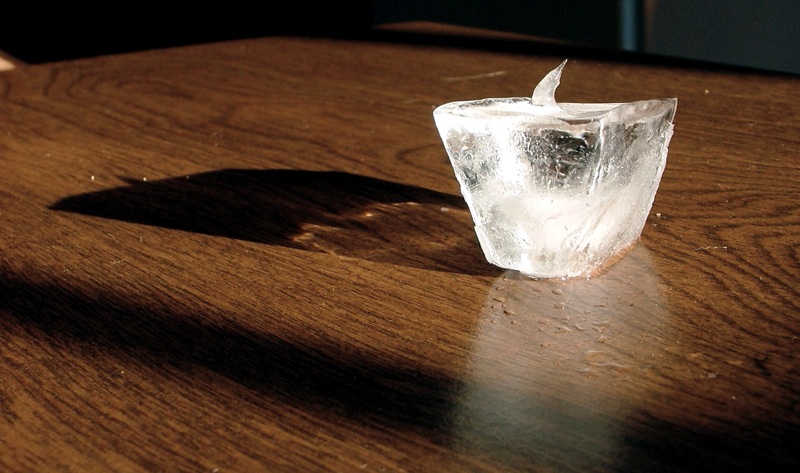
- (c)Melting of ice
- (d)Reaction of acid with base
Answer
Why
Correct — C, melting of ice. Melting is a change of state — solid ice becomes liquid water — with no new substance formed and the chemical identity (H2O) unchanged; it is a physical change and is easily reversed by freezing. The other three all form new substances: burning coal produces carbon dioxide and ash, rusting forms hydrated iron oxide, and an acid reacting with a base gives a salt and water.
Why the others are wrong
- (a)Burning of coal — A chemical change — combustion converts carbon into carbon dioxide and other products, releasing heat and light; new substances are formed and it cannot be reversed.
- (b)Rusting of metal — A chemical change — iron reacts with oxygen and moisture to form a new substance, hydrated iron(III) oxide (rust).
- (d)Reaction of acid with base — A chemical change — neutralisation produces new substances, a salt and water.
Concept
A physical change alters only the physical state or appearance of a substance (its shape, size or state), forms no new substance and is usually reversible. A chemical change forms one or more new substances of different composition and is usually hard to reverse. Melting, freezing, boiling and dissolving are physical; burning, rusting, cooking and neutralisation are chemical.
Three options describe reactions that make new substances — combustion, corrosion and neutralisation; only melting ice merely changes state. Ask 'is a new substance formed?' — if the answer is no, the change is physical.
Key facts
- Melting of ice is a physical change (a state change of H2O), reversible by freezing.
- Burning of coal is a chemical change (combustion produces CO2 and ash).
- Rusting of iron is a chemical change (formation of hydrated iron oxide).
- An acid reacting with a base gives a salt and water (neutralisation), a chemical change.
Study next
Common traps
- Treating any change that involves heat as chemical — melting uses heat but is physical.
- Assuming reversibility alone proves a physical change — use the 'is a new substance formed?' test.
Asked as identifying the physical change among chemical ones (or vice versa), often using melting, rusting, burning and neutralisation.
Related PYQs
Which of the following is/are the example/examples of chemical change? 1. Crystallization of sodium chloride 2. Melting of ice 3. Souring of milk Select the correct answer using the code given below.
- (a) 1 and 2 only
- (b) 3 only
- (c) 1, 2 and 3
- (d) None
Answer(b) 3 only
Same physical-versus-chemical test, with the very same 'melting of ice' example — there it is one of the physical changes (only souring of milk is chemical); here melting of ice is again the physical odd-one-out among chemical changes.
Which one among the following is an example of chemical change?
- (a) Sublimation of camphor
- (b) Melting of ice
- (c) Heating of an iron rod
- (d) Mixing of NaOH and HCl
Answer(d) Mixing of NaOH and HCl
Mirror image of this item — there you pick the chemical change (acid-base neutralisation) and reject 'melting of ice' as physical; here you pick the physical change ('melting of ice') and reject the chemical ones.
Practice
- practice — not a real PYQ
Which one of the following is a chemical change?
- (a)Melting of wax
- (b)Souring of milk
- (c)Boiling of water
- (d)Breaking of glass
Answer(b) souring of milk — fermentation forms new substances (lactic acid). - practice — not a real PYQ
Rusting of iron is an example of
- (a)a physical change
- (b)sublimation
- (c)a chemical change (oxidation)
- (d)melting
Answer(c) a chemical change — iron is oxidised to hydrated iron oxide.