
Which one of the following statements is correct?
- (a)A neutron is formed by combination of an electron and a proton. Therefore, it is neutral
- (b)The mass of an electron is about 1/2000 times that of a proton
- (c)An isotope of cobalt is used in the treatment of goiter
- (d)J. J. Thomson proposed that the nucleus of an atom contains only neutrons
Answer
Why
Correct — B, the electron's mass. An electron's mass — about 1/1836 of a proton's — is roughly 1/2000 that of a proton, so it is nearly negligible next to the nucleons. Statement (b) is therefore the one that is correct.
Why the others are wrong
- (a)A neutron is formed by combination of an electron and a proton. Therefore, it is neutral — A neutron is a fundamental nucleon, not literally an electron stuck onto a proton; describing it that way is incorrect, even though its net charge is zero.
- (c)An isotope of cobalt is used in the treatment of goiter — Cobalt-60 is used to treat cancer by radiotherapy, not goitre; goitre and thyroid disorders are treated with Iodine-131.
- (d)J. J. Thomson proposed that the nucleus of an atom contains only neutrons — Thomson proposed the plum-pudding model — electrons embedded in a positive sphere; he never said the nucleus holds only neutrons, and the neutron was found only later, by Chadwick in 1932.
Concept
An atom has a tiny dense nucleus of protons and neutrons, with electrons around it. A proton and a neutron each weigh about one atomic mass unit, while the electron is roughly 1836 times lighter.
Each wrong option hides a familiar mistake — a false model of the neutron, a swapped medical isotope, or a mis-attributed atomic model. Only the electron-mass figure survives scrutiny.
Key facts
- An electron's mass is about 1/1836 (roughly 1/2000) that of a proton.
- A proton and a neutron each have a mass of about one atomic mass unit.
- Cobalt-60 is used in cancer radiotherapy; Iodine-131 is used for the thyroid and goitre.
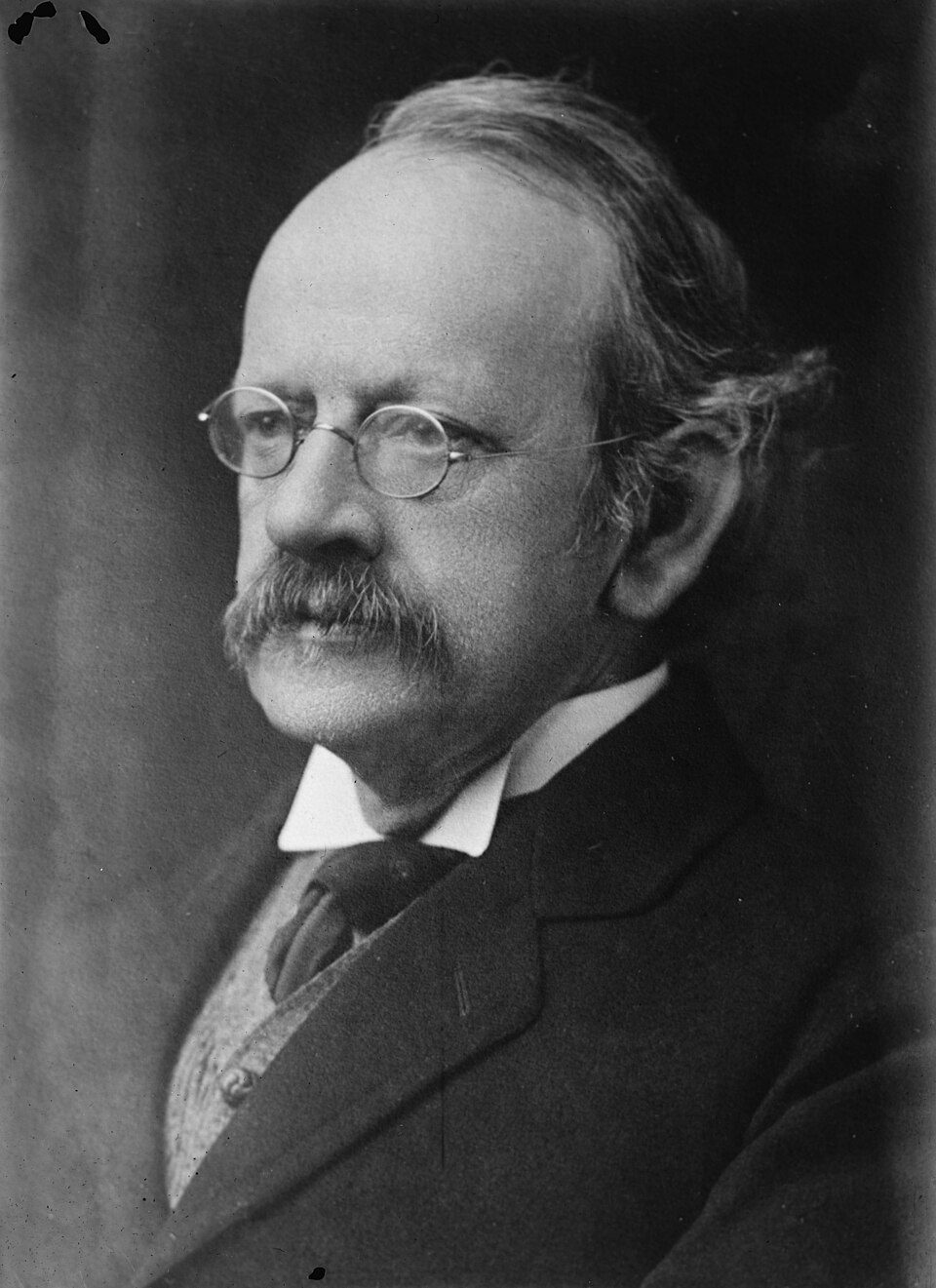
- J. J. Thomson discovered the electron in 1897 and gave the plum-pudding model.
Study next
Common traps
- Confusing Cobalt-60 (cancer) with Iodine-131 (thyroid and goitre).
- Treating the neutron as a bound electron-proton pair.
A 'which statement is correct' item mixing particle masses, medical isotopes and atomic-model attributions.
Related PYQs
The relative atomic mass of boron (which exists in two isotopic forms 10B and 11B) is 10·81. What will be the abundance of 10B and 11B, respectively (consider a sample of 100 atoms) ?
- (a) 19% and 81%
- (b) 81% and 19%
- (c) 38% and 62%
- (d) 62% and 38%
Answer(a) 19% and 81%
Same atomic-structure family — isotopes and relative atomic mass. It connects to statement (c) here about a cobalt isotope, and both rest on understanding masses of atoms and their particles.
Practice
- practice — not a real PYQ
Which radioisotope is commonly used in the treatment of goitre and other thyroid disorders?
- (a)Cobalt-60
- (b)Iodine-131
- (c)Carbon-14
- (d)Uranium-235
Answer(b) Iodine-131 — it is taken up by the thyroid gland. - practice — not a real PYQ
The mass of a proton is approximately how many times that of an electron?
- (a)200
- (b)1836
- (c)92
- (d)6
Answer(b) About 1836 times.