
Which one among the following elements is known to be discovered the earliest?
- (a)Copper
- (b)Gold
- (c)Oxygen
- (d)Uranium
Answer
Why
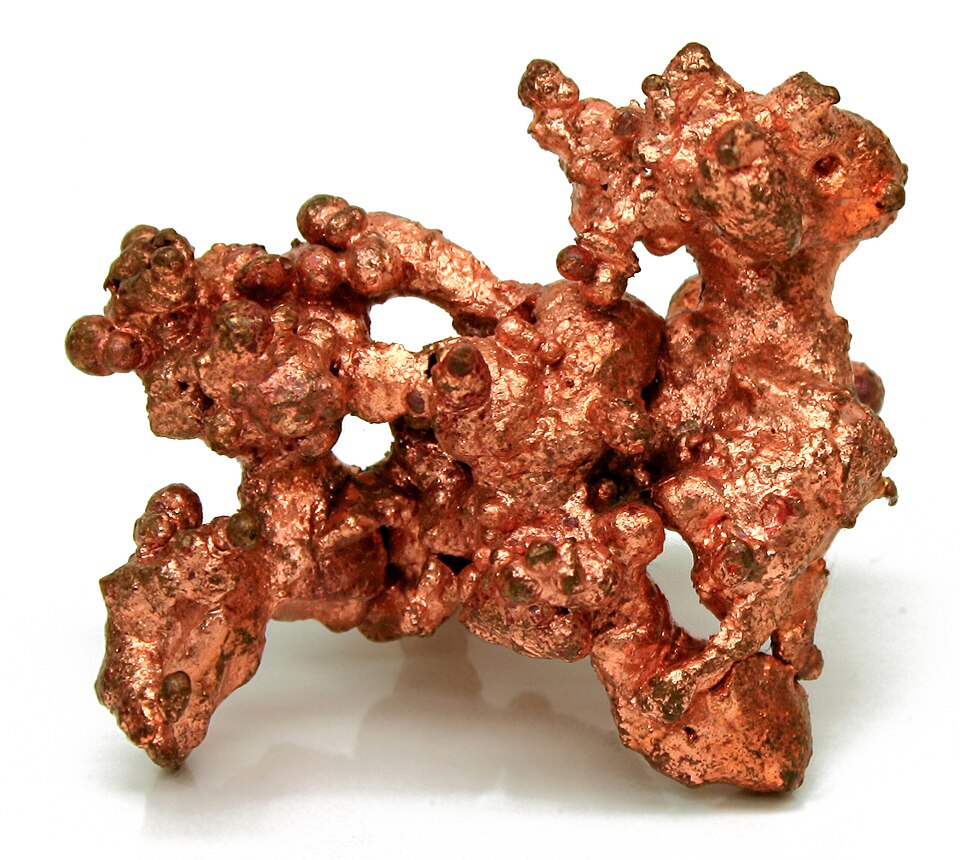
Correct — A, Copper. Copper is one of the handful of metals found in native (free) form and worked by humans in prehistory: the earliest copper artefacts date to roughly 9000–8700 BCE, and the Chalcolithic (Copper Age) precedes the Bronze and Iron Ages. Oxygen (1774) and uranium (1789) are far later, laboratory-era discoveries, so the real contest is copper versus gold, both ancient. Some texts do call gold 'the first metal known to man', but the earliest documented metallurgy — the deliberate working and later smelting of a metal — is credited to copper, which is why it is the conventional choice here.
Why the others are wrong
- (b)Gold — Gold was certainly known in antiquity and is sometimes called the first metal noticed by humans, but the earliest evidence of worked metallurgy and an entire named age (the Copper/Chalcolithic Age) belongs to copper — so copper is taken as the earliest 'discovered' here.
- (c)Oxygen — Oxygen is a modern discovery, isolated only in 1774 (Scheele and Priestley, explained by Lavoisier), thousands of years after the metals were in use.
- (d)Uranium — Uranium was discovered even later, by M. H. Klaproth in 1789; its radioactivity was not even known until 1896.
Concept
The elements humans knew first were the native metals — copper, gold, silver, tin, lead, iron (partly from meteorites) — which occur naturally in usable form and needed no chemistry to isolate. Copper and gold sit at the very start of this list. Most other elements, including the gases and the heavy metals, were identified only after the chemical revolution from the eighteenth century onward.
The question separates ancient native metals from modern chemical discoveries. Ruling out oxygen (1774) and uranium (1789) is easy; distinguishing copper from gold is the subtle step, and the exam takes copper as the earliest because of its documented metallurgical record and the eponymous Copper Age.
Key facts
- Copper artefacts are dated to about 9000–8700 BCE; the Chalcolithic (Copper Age) precedes the Bronze Age.
- Copper, gold, silver, tin, lead, iron, mercury, carbon and sulphur were all known before the modern era.
- Oxygen was isolated in 1774; uranium was discovered in 1789 — both long after the ancient metals.
- Gold is sometimes described as the first metal noticed by humans, so the copper-versus-gold ranking is not fully settled.
Study next
Common traps
- Assuming a common element like oxygen was 'always known' — it was isolated only in 1774.
- Being unsure between copper and gold; the exam takes copper for its documented early metallurgy.
Asked as which element/metal was discovered or used earliest, or by pairing a discovery with its approximate date.
Related PYQs
No directly related past PYQ was found.
Practice
- practice — not a real PYQ
Which one of the following elements was NOT known to ancient civilisations (discovered only in the modern era)?
- (a)Gold
- (b)Silver
- (c)Oxygen
- (d)Copper
Answer(c) Oxygen — isolated in 1774, long after the ancient native metals were in use. - practice — not a real PYQ
The prehistoric age named after the first metal widely worked by humans is the
- (a)Bronze Age
- (b)Iron Age
- (c)Chalcolithic (Copper) Age
- (d)Stone Age
Answer(c) Chalcolithic (Copper) Age — it precedes the Bronze and Iron Ages.