
Where is the Coriolis Effect the largest?
- (a)At the Equator
- (b)At the Tropic of Capricorn and Tropic of Cancer
- (c)At the North Pole
- (d)At 45 degree latitude in each hemisphere
Answer
Why
Correct — C, At the North Pole. The Coriolis force is proportional to the sine of the latitude (F = 2 x omega x v x sin(phi)). Since sin(phi) is 0 at the equator (0 degrees) and rises to 1 at the poles (90 degrees), the deflecting effect is zero at the equator and greatest at the poles — so among the options given it is largest at the North Pole.
Why the others are wrong
- (a)At the Equator — sin(0 degrees) = 0, so the Coriolis effect is actually zero at the equator — the minimum, not the maximum.
- (b)At the Tropic of Capricorn and Tropic of Cancer — sin(23.5 degrees) is about 0.40 — an intermediate value, far below the maximum reached at the poles.
- (d)At 45 degree latitude in each hemisphere — sin(45 degrees) is about 0.71 — larger than at the tropics but still short of the pole's value of 1; '45 degrees' only tempts because it seems 'halfway'.
Concept
The Coriolis effect is the apparent deflection of freely moving objects (winds, ocean currents) caused by the Earth's rotation. Its magnitude per unit mass equals 2 x omega x v x sin(phi), where omega is the Earth's angular velocity, v the object's speed, and phi the latitude. It therefore grows with latitude (zero at the equator, maximum at the poles) and with the object's speed.
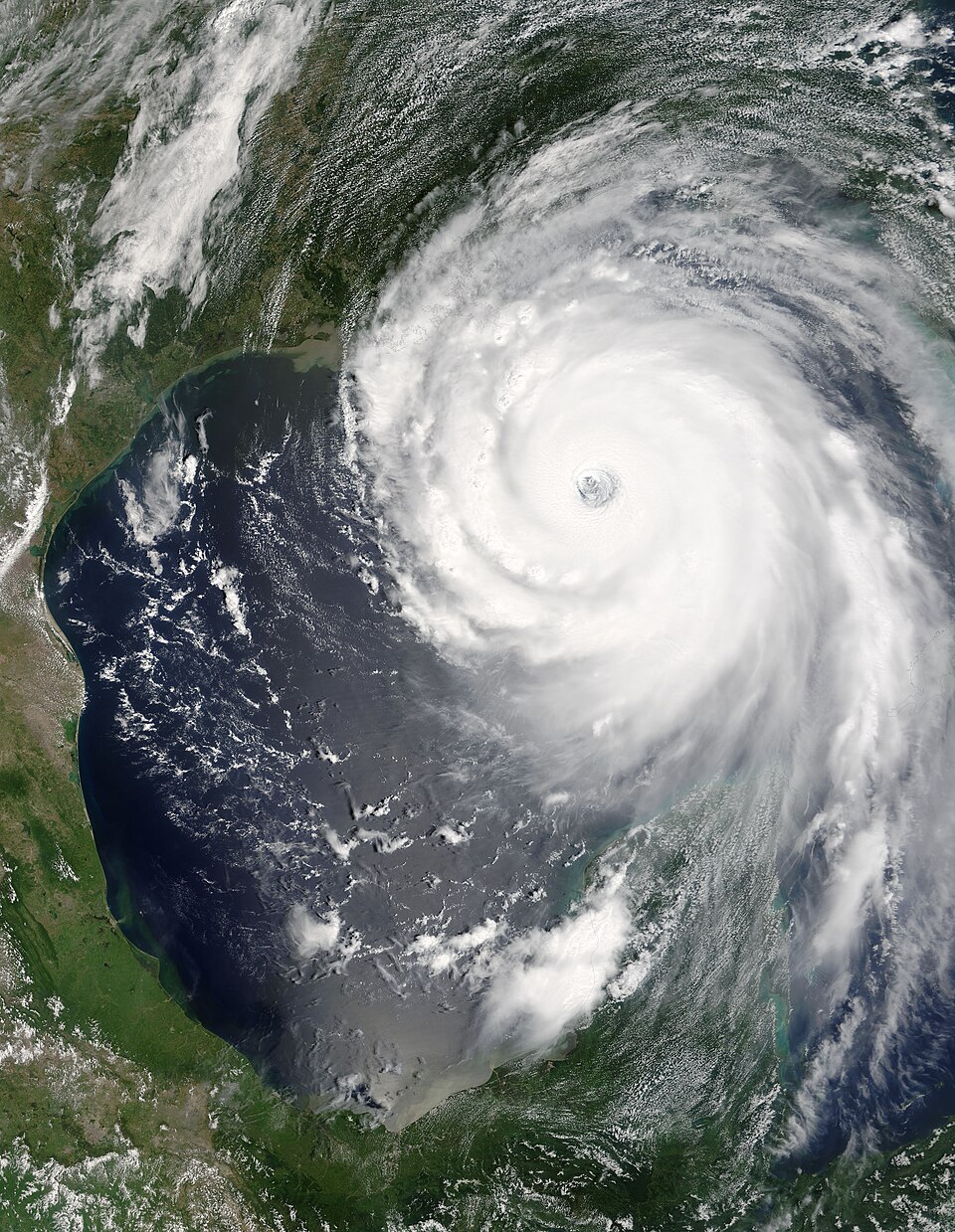
The tempting wrong answer is 45 degrees, which sounds like a natural midpoint. But because the force scales with sin(phi), it keeps increasing all the way to 90 degrees, so the pole wins. The vanishing of the Coriolis force near the equator is exactly why tropical cyclones do not form within a few degrees of it.
Key facts
- Coriolis force per unit mass = 2 x omega x v x sin(phi): omega is the Earth's rotation rate, v the speed, phi the latitude.
- It is zero at the equator and maximum at the poles.
- It deflects moving objects to the right in the Northern Hemisphere and to the left in the Southern Hemisphere (Ferrel's law).
- Because it is near-zero close to the equator, tropical cyclones do not form within about 5 degrees of the equator.
Study next
Common traps
- Choosing 45 degrees because it 'sounds balanced' — the force keeps rising to the pole.
- Forgetting the Coriolis effect also increases with the speed of the moving air.
- Reversing the deflection direction (it is right in the Northern Hemisphere, left in the Southern).
Asked as where the Coriolis effect is maximum/minimum, or as statements linking it to latitude and wind speed.
Related PYQs
With reference to "Coriolis force", which of the following statements is/are correct? 1. It increases with increase in wind velocity. 2. It is maximum at the poles and is absent at the equator. Select the answer using the code given below:
- (a) 1 only
- (b) 2 only
- (c) Both 1 and 2
- (d) Neither 1 nor 2
Answer(c) Both 1 and 2
Same concept, explicitly stated — UPSC confirms the Coriolis force is maximum at the poles and absent at the equator (and grows with wind speed), exactly the latitude dependence this NDA question tests.
Practice
- practice — not a real PYQ
The Coriolis force is zero at which of the following?
- (a)The poles
- (b)The Tropic of Cancer
- (c)The Equator
- (d)45 degree latitude
Answer(c) The Equator — sin(0 degrees) = 0, so there is no Coriolis deflection there. - practice — not a real PYQ
In the Northern Hemisphere, the Coriolis effect deflects moving winds to their:
- (a)Left
- (b)Right
- (c)Downward
- (d)Upward
Answer(b) Right — by Ferrel's law winds deflect to the right in the Northern Hemisphere.