
Freedom Fighter Kanaklata Barua sacrificed her life while participating in
- (a)Rowlatt Satyagraha
- (b)Non-Cooperation Movement
- (c)Civil Disobedience Movement
- (d)Quit India Movement
Correct — D, Quit India Movement. Kanaklata Barua was a 17-year-old freedom fighter from Assam who was shot dead by police on 20 September 1942 while leading a procession of volunteers to hoist the national flag at the Gohpur police station, during the Quit India Movement of 1942.
- (a)Rowlatt Satyagraha — The Rowlatt Satyagraha was in 1919 — five years before Kanaklata Barua was even born (1924); she could not have taken part in it.
- (b)Non-Cooperation Movement — The Non-Cooperation Movement (1920-22) also predates her; her martyrdom came two decades later, in 1942.
- (c)Civil Disobedience Movement — The Civil Disobedience Movement (1930-34) took place when she was still a child; she was martyred in the 1942 Quit India Movement, not this one.
The Quit India Movement, launched on 8 August 1942 at Bombay's Gowalia Tank with Gandhi's call of 'Do or Die', turned into a mass uprising. In Assam, volunteers tried to seize police stations and hoist the tricolour; at Gohpur, 17-year-old Kanaklata Barua was shot leading such a procession, becoming one of the youngest women martyrs of the freedom struggle.
Anchor the martyr to the year of the movement: Kanaklata Barua died in September 1942, which places her firmly in the Quit India Movement. The earlier movements listed (Rowlatt 1919, Non-Cooperation 1920-22, Civil Disobedience 1930-34) can all be ruled out because she was born only in 1924.
- Kanaklata Barua (1924-1942) was from Gohpur in present-day Assam; she was martyred at the age of 17.
- She was shot on 20 September 1942 while leading a procession to hoist the national flag at the Gohpur police station during the Quit India Movement.
- She was part of a local volunteer band (the Mrityu Bahini / 'death squad') of the 1942 upsurge in Assam.
- The Quit India Movement began on 8 August 1942 with Gandhi's 'Do or Die' call at Gowalia Tank, Bombay.
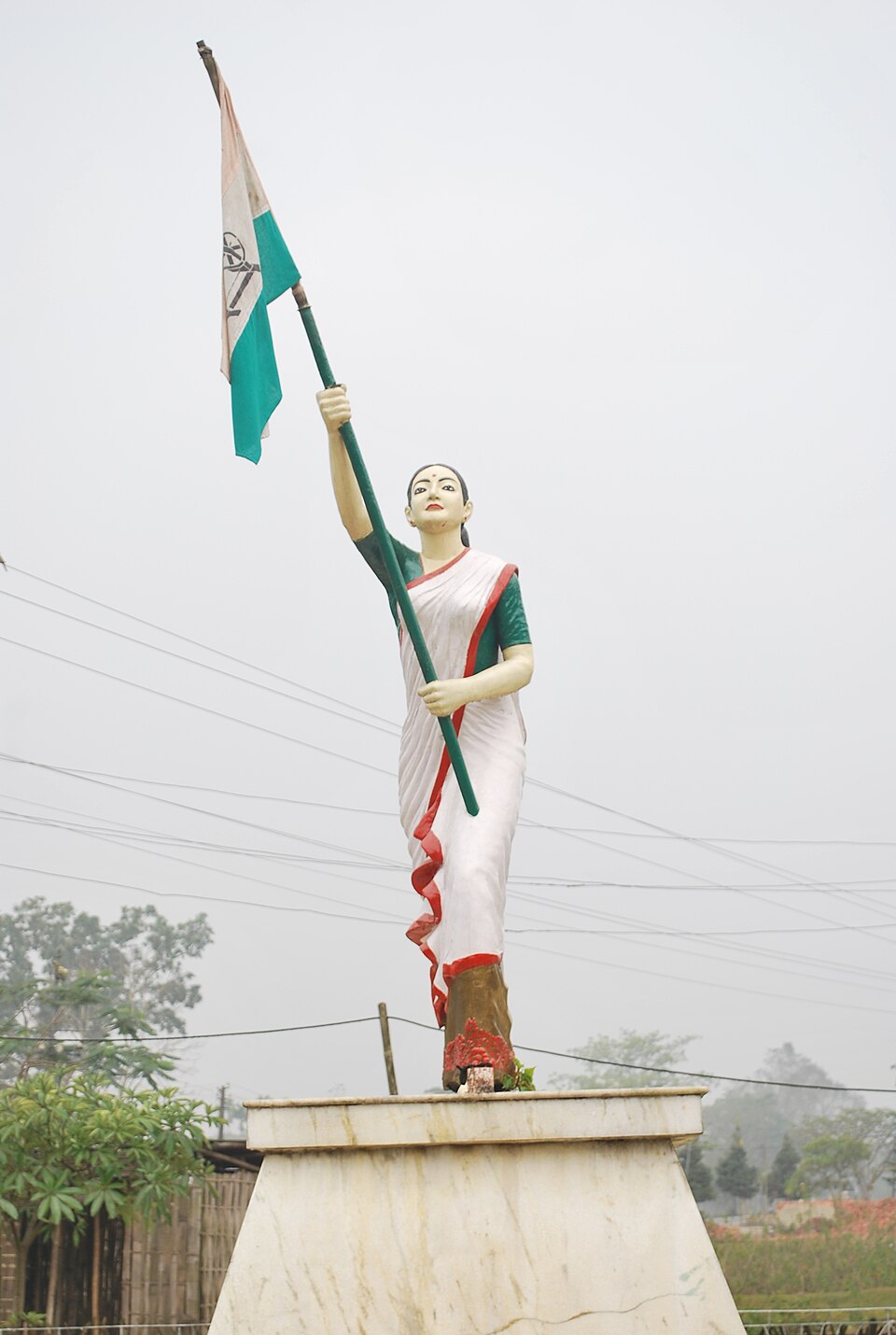
- Dating Kanaklata Barua to an earlier movement — she was born only in 1924.
- Confusing her with Matangini Hazra (Bengal), also martyred in 1942.
- Assuming any Assam-based freedom episode belongs to the Non-Cooperation years.
Asked as which movement a named martyr belonged to — anchor the martyr to the year (1942 = Quit India Movement).
With which one of the following movements is the slogan "Do or die" associated?
- (a) Swadeshi Movement
- (b) Non-Cooperation Movement
- (c) Civil Disobedience Movement
- (d) Quit India Movement
Answer(d) Quit India Movement
Same movement — the 1942 Quit India Movement, whose 'Do or Die' call set off the flag-hoisting protests in which Kanaklata Barua was martyred. Same set of four distractor movements as the NDA question.
With reference to 8th August, 1942 in Indian history, which one of the following statements is correct?
- (a) The Quit India Resolution was adopted by the AICC
- (b) The Viceroy's Executive Council was expanded to include more Indians.
- (c) The Congress ministries resigned in seven provinces.
- (d) Cripps proposed an Indian Union with full Dominion Status once the Second World War was over.
Answer(a) The Quit India Resolution was adopted by the AICC
Same movement dated to 8 August 1942 — the Quit India Resolution that launched the upsurge in which Kanaklata Barua died the following month at Gohpur.
- practice — not a real PYQ
Kanaklata Barua, martyred in 1942 at Gohpur, belonged to which present-day state?
- (a)West Bengal
- (b)Assam
- (c)Odisha
- (d)Bihar
Answer(b) Assam — she was shot at Gohpur, Assam, during the Quit India Movement.
- practice — not a real PYQ
Matangini Hazra and Kanaklata Barua are both associated with which movement?
- (a)Non-Cooperation Movement
- (b)Civil Disobedience Movement
- (c)Quit India Movement
- (d)Swadeshi Movement
Answer(c) Quit India Movement — both were martyred in 1942 leading flag processions.