
Consider the following statements regarding soils: 1. Soils having a very high content of sodium and calcium and pH of more than 7.0 are alkaline soils. 2. Black cotton soil had developed on the Deccan basaltic lava under hot and humid conditions. 3. Laterite soils are characterised by a deep weathered layer from which silica has been leached. Which of the statements given above is/are correct?
- (a)1 only
- (b)1 and 2 only
- (c)2 and 3 only
- (d)1, 2 and 3
Answer
Why
Correct — D, all three (1, 2 and 3). Statement 1 is true — soils with a high content of sodium and calcium salts and a pH above 7.0 are alkaline (saline-alkali) soils. Statement 2 is true — black cotton (regur) soil developed on the Deccan basaltic (trap) lava. Statement 3 is true — laterite soils have a deep, intensely weathered profile from which silica has been leached, leaving iron and aluminium oxides behind. All three statements are correct.
Why the others are wrong
- (a)1 only — This omits the two correct statements about black cotton soil and laterite.
- (b)1 and 2 only — This drops statement 3, but laterite genuinely has a deep weathered layer from which silica has been leached.
- (c)2 and 3 only — This drops statement 1, yet soils rich in sodium/calcium salts with a pH above 7 are correctly called alkaline soils.
Concept
This item spans three Indian soil types. Alkaline (saline/'usar') soils carry a high salt load of sodium and calcium and a pH above 7, and occur in poorly drained arid and semi-arid tracts. Black cotton (regur) soil derives from Deccan Trap basalt and suits cotton. Laterite forms under heavy tropical rain with alternating wet and dry seasons, where intense leaching removes silica and bases and concentrates insoluble iron and aluminium oxides, so it hardens on exposure.
All three statements are standard textbook descriptions, so recognising each as correct gives 1, 2 and 3. The one worth sanity-checking is laterite — remember that leaching removes SILICA, not iron, leaving the red, iron-and-aluminium-rich residue behind.
Key facts
- Alkaline/saline soils (locally 'usar' or 'reh') carry excess sodium and calcium salts and have a pH above 7; they are reclaimed with gypsum and leaching.
- Black (regur) soil forms from weathered Deccan basaltic lava and is clayey and highly moisture-retentive.
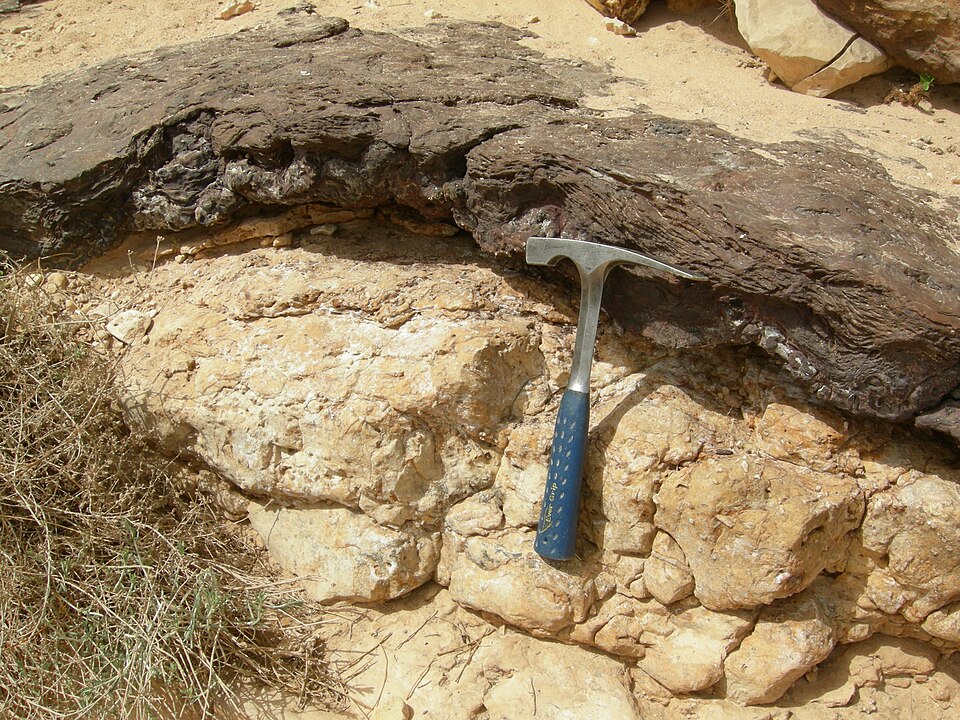
- Laterite forms by intense leaching under a hot, wet-and-dry climate — silica is washed out, iron and aluminium oxides remain, and it hardens into brick-like blocks.
- Black-soil country is in fact hot and semi-arid, even though statement 2 phrases the conditions loosely as 'hot and humid'.
Study next
Common traps
- Thinking leaching removes iron from laterite — it removes silica, concentrating iron and aluminium oxides.
- Assuming alkaline soils have a pH below 7 — alkaline means a pH above 7.
- Confusing laterite (humid tropics) with the saline/alkaline soils of arid tracts.
Soil questions test each type's parent material, formation climate, chemistry (pH and nutrients) and best-suited crop.
Related PYQs
Which of the following statements regarding laterite soils of India are correct? 1. They are generally red in colour. 2. They are rich in nitrogen and potash. 3. They are well-developed in Rajasthan and UP. 4. Tapioca and cashew nuts grow well on these soils. Select the correct answer using the codes given below.
- (a) 1, 2 and 3
- (b) 2, 3 and 4
- (c) 1 and 4
- (d) 2 and 3 only
Answer(c) 1 and 4
Near-identical concept — the UPSC item tests the characteristics of laterite soils (colour, nutrients, crops), exactly the soil type named in statement 3 of this NDA question.
Practice
- practice — not a real PYQ
In laterite soils, intense leaching under a hot, wet climate mainly removes which constituent?
- (a)Iron oxide
- (b)Aluminium oxide
- (c)Silica
- (d)Manganese
Answer(c) Silica — leaching washes out silica and bases, leaving iron and aluminium oxides behind. - practice — not a real PYQ
A soil with a high sodium-salt content and a pH well above 7 is best described as
- (a)Acidic soil
- (b)Alkaline (saline) soil
- (c)Peaty soil
- (d)Neutral soil
Answer(b) Alkaline (saline) soil — excess sodium and calcium salts raise the pH above 7.