
Which one of the following is NOT a cause of depletion in groundwater?
- (a)Afforestation
- (b)Loss of forests
- (c)Excessive pumping of groundwater
- (d)Construction of large scale concrete buildings
Answer
Why
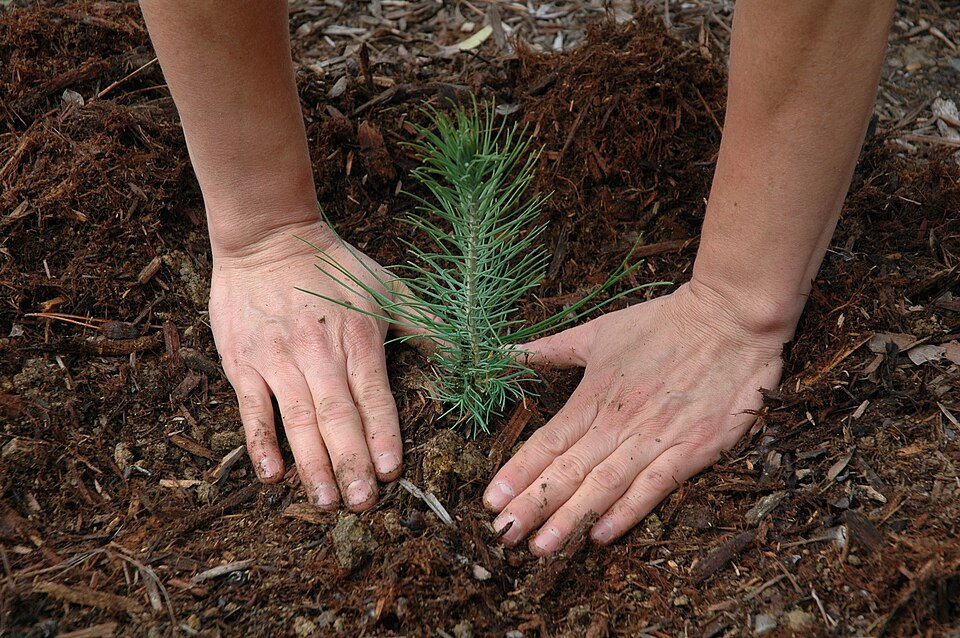
Correct — A, afforestation. Planting trees increases infiltration and slows surface run-off: roots loosen the soil and leaf litter helps rainwater soak in, so afforestation improves groundwater RECHARGE. It therefore helps groundwater rather than depleting it, making it the odd one out. The other three all reduce the water table — loss of forests cuts recharge, excessive pumping withdraws water faster than nature replenishes it, and large concrete structures seal the ground so rain runs off instead of percolating down.
Why the others are wrong
- (b)Loss of forests — Removing forest cover increases run-off and reduces the infiltration that recharges aquifers, so it does deplete groundwater.
- (c)Excessive pumping of groundwater — Over-pumping draws water out faster than rainfall can refill the aquifer, directly lowering the water table — a clear cause of depletion.
- (d)Construction of large scale concrete buildings — Concrete and paving create impervious surfaces that block rain from soaking in, so recharge falls and groundwater is depleted.
Concept
Groundwater sits in aquifers below the water table and is replenished (recharged) when rainwater infiltrates the soil. The balance tips toward depletion when withdrawal exceeds recharge, or when the land surface loses its ability to let water soak in. Vegetation and permeable ground favour recharge; sealed or bare, compacted surfaces and heavy pumping favour depletion.
The 'NOT a cause' framing hides a recharge-promoting activity (afforestation) among three that lower the water table. Afforestation is in fact a standard groundwater-conservation measure because tree cover boosts infiltration — the exact opposite of a cause of depletion.
Key facts
- Groundwater is recharged when rainwater infiltrates the soil into aquifers.
- Afforestation increases infiltration and recharge, conserving groundwater.
- Impervious surfaces (concrete, paving) block percolation and cut recharge.
- Depletion occurs when withdrawal (pumping) exceeds natural recharge.
Study next
Common traps
- The 'NOT a cause' wording flips the logic — afforestation is a solution, not a cause.
- Assuming all human land activity harms groundwater; tree planting actually aids recharge.
Asked as an odd-one-out — separate the one recharge-promoting action from three that lower the water table.
Related PYQs
What are the benefits of implementing the 'Integrated Watershed Development Programme'? 1. Prevention of soil runoff 2. Linking the country's perennial rivers with seasonal rivers 3. Rainwater harvesting and recharge of groundwater table 4. Regeneration of natural vegetation. Select the correct answer using the code given below.
- (a) 1 and 2 only
- (b) 2, 3 and 4 only
- (c) 1, 3 and 4 only
- (d) 1, 2, 3 and 4
Answer(c) 1, 3 and 4 only
Same conservation logic. UPSC 2014 lists rainwater harvesting, groundwater recharge and regenerating vegetation as benefits of watershed development; this NDA item tests that such vegetation-based measures (afforestation) aid recharge rather than deplete groundwater.
Practice
- practice — not a real PYQ
Which of the following most directly increases groundwater recharge?
- (a)Paving over open ground with concrete
- (b)Rainwater harvesting and recharge pits
- (c)Excessive borewell pumping
- (d)Large-scale deforestation
Answer(b) Rainwater harvesting and recharge pits — they capture rain and let it percolate into aquifers. - practice — not a real PYQ
Groundwater depletion occurs mainly when
- (a)recharge exceeds withdrawal
- (b)withdrawal exceeds recharge
- (c)rainfall increases sharply
- (d)forest cover expands
Answer(b) withdrawal exceeds recharge — the water table falls when extraction outpaces replenishment.