
Which one of the following is NOT a reason of decrease in biodiversity?
- (a)Large scale deforestation
- (b)Exploitation of forest produce
- (c)Maintaining sacred groves
- (d)Encroachment in forest areas
Answer
Why
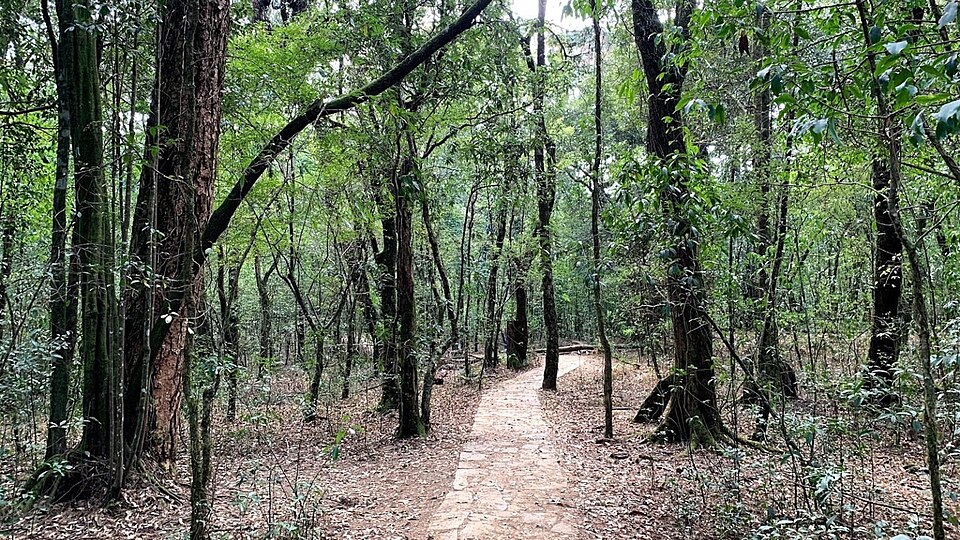
Correct — C, maintaining sacred groves. Sacred groves are patches of forest that local communities protect on religious and cultural grounds, and they act as a traditional form of in-situ conservation — refuges where native trees, plants and animals survive undisturbed. Maintaining them therefore protects biodiversity rather than reducing it, so it cannot be a reason for a decrease. The other three all destroy or degrade habitat and drive biodiversity loss.
Why the others are wrong
- (a)Large scale deforestation — Clearing forests on a large scale destroys habitat wholesale and is one of the biggest causes of biodiversity loss — so it is a genuine reason for a decrease.
- (b)Exploitation of forest produce — Over-harvesting timber, medicinal plants and other produce depletes populations faster than they can recover, reducing biodiversity.
- (d)Encroachment in forest areas — Encroachment for settlement or farming fragments and shrinks natural habitat, pushing species out and lowering biodiversity.
Concept
Biodiversity is the variety of life at genetic, species and ecosystem levels. It declines chiefly through habitat loss and fragmentation, over-exploitation, invasive species, pollution and climate change. Conservation is either in-situ (protecting species in their natural home — national parks, wildlife sanctuaries, biosphere reserves and sacred groves) or ex-situ (zoos, botanical gardens, seed banks).
The 'NOT a reason' framing hides a conservation measure among three destructive activities. Sacred groves are a well-known community-led in-situ conservation practice in India (found across the Western Ghats, the North-East, Rajasthan and elsewhere), so maintaining them supports biodiversity — the opposite of a cause of decline.
Key facts
- Sacred groves are community-protected forest patches — a form of in-situ conservation.
- Major causes of biodiversity loss: habitat loss, over-exploitation, invasive species, pollution, climate change.
- In-situ conservation protects species in their natural habitat; ex-situ does so outside it.
- India has thousands of sacred groves, richest in the Western Ghats and the North-East.
Study next
Common traps
- The 'NOT a reason' wording flips the logic — the conservation measure is the odd one out.
- Overlooking sacred groves as a recognised conservation practice and treating all forest activity as harmful.
Asked as an odd-one-out — separate the one protective/conservation action from three habitat-destroying causes.
Related PYQs
Consider the following statements: 1. Biodiversity hotspots are located only in tropical regions. 2. India has four biodiversity hotspots i.e., Eastern Himalayas, Western Himalayas, Western Ghats and Andaman and Nicobar Islands. Which of the statements given above is/are correct?
- (a) 1 only
- (b) 2 only
- (c) Both 1 and 2
- (d) Neither 1 nor 2
Answer(d) Neither 1 nor 2
Same theme of biodiversity and its conservation. UPSC 2010 tests hotspots (areas of high, threatened biodiversity worth protecting); this NDA item tests recognising a conservation measure (sacred groves) among causes of biodiversity loss.
Practice
- practice — not a real PYQ
Sacred groves are best described as an example of
- (a)ex-situ conservation
- (b)in-situ conservation
- (c)a cause of deforestation
- (d)commercial plantation forestry
Answer(b) in-situ conservation — species are protected within their natural habitat by the community. - practice — not a real PYQ
Which of the following is the single largest cause of biodiversity loss worldwide?
- (a)Habitat loss and fragmentation
- (b)Establishing national parks
- (c)Maintaining seed banks
- (d)Community sacred groves
Answer(a) Habitat loss and fragmentation — chiefly from deforestation and land-use change.