
“The sum of emfs and potential differences around a closed loop equals zero” is a consequence of
- (a)Ohm’s law.
- (b)Conservation of charge.
- (c)Conservation of momentum.
- (d)Conservation of energy.
Answer
Why
Correct - D, conservation of energy. The statement 'the sum of emfs and potential differences around any closed loop is zero' is Kirchhoff's voltage law, the loop rule. It holds because a charge carried once around a complete loop returns to its starting potential, so the net work done per unit charge - the algebraic sum of energy gains at sources (emf) and drops across components - must be zero. That is a direct statement of energy conservation. (Kirchhoff's other rule, the junction rule, expresses conservation of charge.)
Why the others are wrong
- (a)Ohm’s law. — Ohm's law (V = IR) relates the voltage and current of a resistor; on its own it does not force the sum of voltages around a loop to be zero.
- (b)Conservation of charge. — Conservation of charge underlies Kirchhoff's CURRENT (junction) rule - current in equals current out - not the voltage loop rule in the question.
- (c)Conservation of momentum. — Conservation of momentum is a mechanical law with no role in setting the potentials around an electric-circuit loop.
Concept
Kirchhoff's two circuit laws each rest on a conservation principle. The voltage law - the algebraic sum of emfs and IR drops around any closed loop is zero - follows from conservation of energy, because electric potential is single-valued and a round trip returns to the same potential. The current law - currents into a junction equal currents out - follows from conservation of charge.
Pair each rule with its conservation law: the loop or voltage rule maps to energy, and the junction or current rule maps to charge. The wording 'around a closed loop equals zero' is the giveaway for the loop rule and hence for energy conservation.
Key facts
- Kirchhoff's voltage law states that the sum of emfs and potential differences around a closed loop is zero.
- The voltage law is a consequence of conservation of energy.
- Kirchhoff's current law states that current into a junction equals current out, following from conservation of charge.
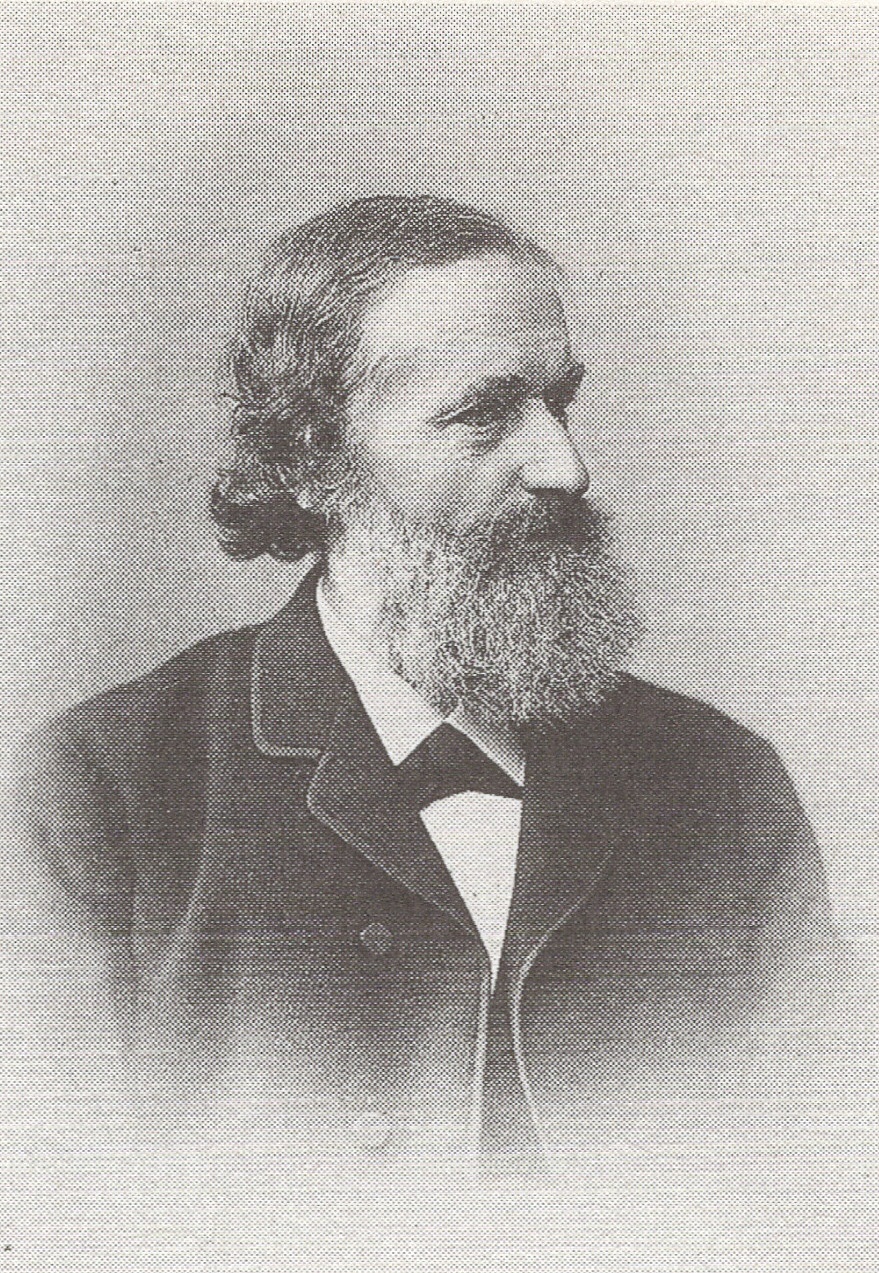
- Both laws were stated by the German physicist Gustav Kirchhoff in 1845.
Study next
Common traps
- Swapping the two conservation laws - the voltage rule is energy, the current rule is charge.
- Thinking the loop rule follows from Ohm's law; Ohm's law is not even needed for it to hold.
Asked by naming the conservation principle behind a stated Kirchhoff rule, or by identifying which rule a description refers to.
Related PYQs
No directly related past PYQ was found.
Practice
- practice — not a real PYQ
Kirchhoff's current (junction) rule is a consequence of the conservation of
- (a)energy
- (b)charge
- (c)momentum
- (d)mass
Answer(b) charge - current into a junction equals current out. - practice — not a real PYQ
Which law states that the algebraic sum of currents meeting at a junction is zero?
- (a)Ohm's law
- (b)Kirchhoff's voltage law
- (c)Kirchhoff's current law
- (d)Faraday's law
Answer(c) Kirchhoff's current law - the junction rule.