
Loktak lake is situated in the State of
- (a)Sikkim
- (b)Manipur
- (c)Odisha
- (d)Mizoram
Answer
Why
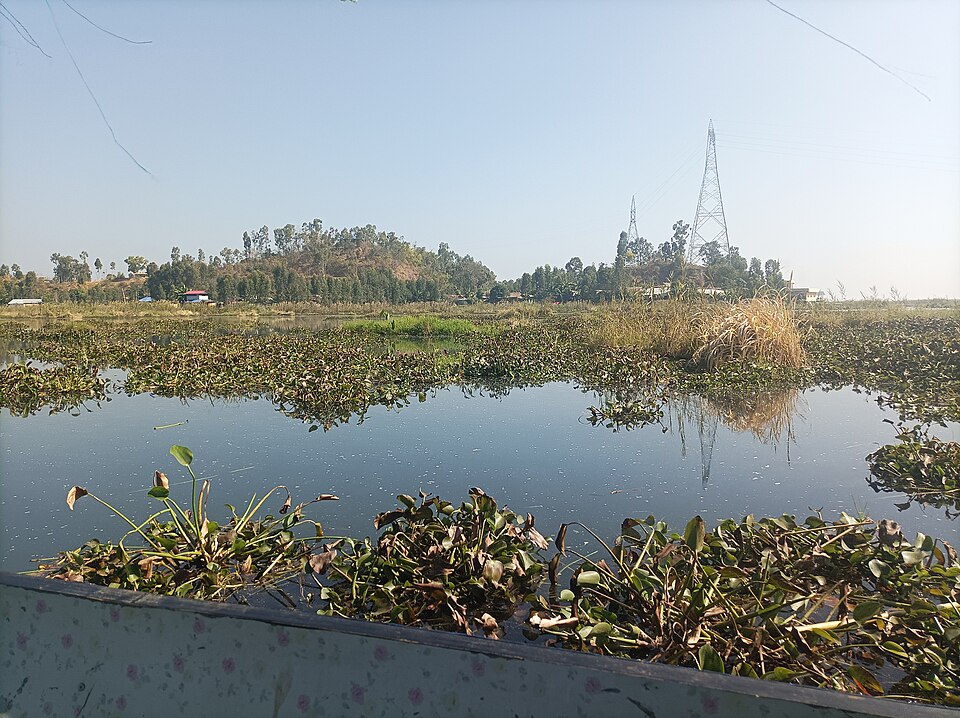
Correct — B, Manipur. Loktak is the largest freshwater lake in North-East India, lying in the Imphal (Manipur) valley. It is famous for its phumdis — floating masses of vegetation and soil — the largest of which carries Keibul Lamjao, the world's only floating national park and the last refuge of the endangered sangai deer. Loktak was designated a Ramsar wetland of international importance in 1990 and placed on the Montreux Record in 1993.
Why the others are wrong
- (a)Sikkim — Sikkim's well-known lakes are the glacial Tsomgo (Changu) and Gurudongmar high in the Himalaya, not Loktak.
- (c)Odisha — Odisha's famous water body is Chilika, a brackish coastal lagoon on the Bay of Bengal, not the freshwater Loktak.
- (d)Mizoram — Mizoram's largest natural lakes are Palak and Tamdil; Loktak lies in neighbouring Manipur.
Concept
Loktak Lake is a large freshwater lake occupying the low centre of the Manipur (Imphal) valley, a lacustrine plain that is the remnant of a much larger ancient lake. Its defining feature is the phumdi — a floating heterogeneous mat of soil, vegetation and organic matter — on which sits Keibul Lamjao National Park.
The trap is to pair the lake with another scenic hill state. Anchor Loktak to Manipur through its unique associations — phumdis, the floating national park, and the sangai deer found nowhere else.
Key facts
- Loktak is the largest freshwater lake in North-East India, in Manipur's Imphal valley.
- Phumdis are the floating islands of vegetation and soil that cover much of the lake.
- Keibul Lamjao, on the largest phumdi, is the world's only floating national park and home of the sangai (brow-antlered deer).
- Loktak became a Ramsar site in 1990 and was placed on the Montreux Record in 1993.
Study next
Common traps
- Matching a famous lake to the wrong state — Chilika is Odisha, Tsomgo is Sikkim, Loktak is Manipur.
- Confusing Loktak (freshwater) with Chilika (brackish lagoon).
Usually a direct 'which state' item, or a match-the-lake-to-state / lake-and-national-park pairing.
Related PYQs
Consider the following pairs: 1. Nokrek Biosphere Reserve : Garo Hills 2. Loktak Lake : Barail Range 3. Namdapha National Park : Dafla Hills. Which of the above pairs is/are correctly matched?
- (a) 1 only
- (b) 2 and 3 only
- (c) 1, 2 and 3
- (d) None
Answer(a) 1 only
Same location trap. UPSC deliberately mispairs Loktak with the Barail Range (Assam); the correct home of Loktak is Manipur, which is exactly what this NDA item tests.
Which of the following National Parks is unique in being a swamp with floating vegetation that supports a rich biodiversity?
- (a) Bhitarkanika National Park
- (b) Keibul Lamjao National Park
- (c) Keoladeo Ghana National Park
- (d) Sultanpur National Park
Answer(b) Keibul Lamjao National Park
Tests Loktak's signature feature — the floating national park (Keibul Lamjao) that sits on the lake's phumdis in Manipur.
Practice
- practice — not a real PYQ
Keibul Lamjao, the world's only floating national park, is located on which lake?
- (a)Chilika Lake
- (b)Loktak Lake
- (c)Wular Lake
- (d)Sambhar Lake
Answer(b) Loktak Lake — its phumdis form the floating base of Keibul Lamjao National Park. - practice — not a real PYQ
The endangered sangai (brow-antlered deer), found on floating phumdis, is the state animal of
- (a)Mizoram
- (b)Sikkim
- (c)Manipur
- (d)Nagaland
Answer(c) Manipur — the sangai survives only around Loktak's Keibul Lamjao National Park.