 View answer copy →
Ranga ManjuRank 24CSE 2024
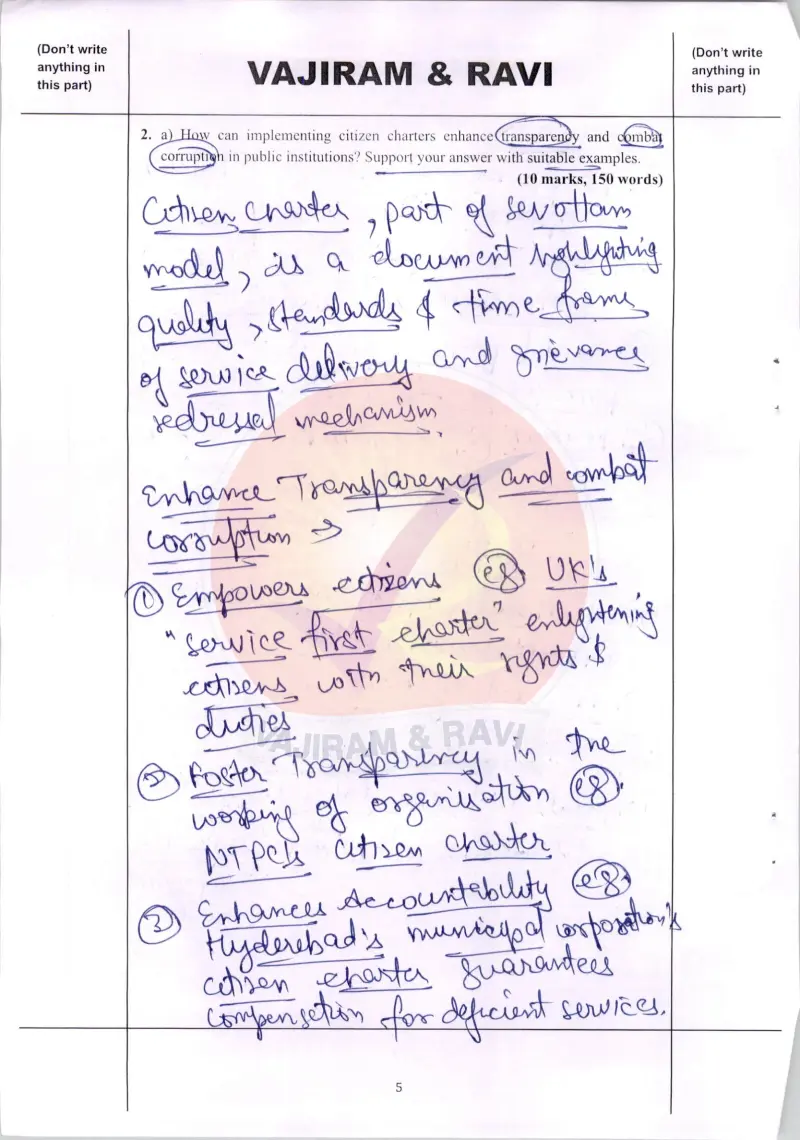
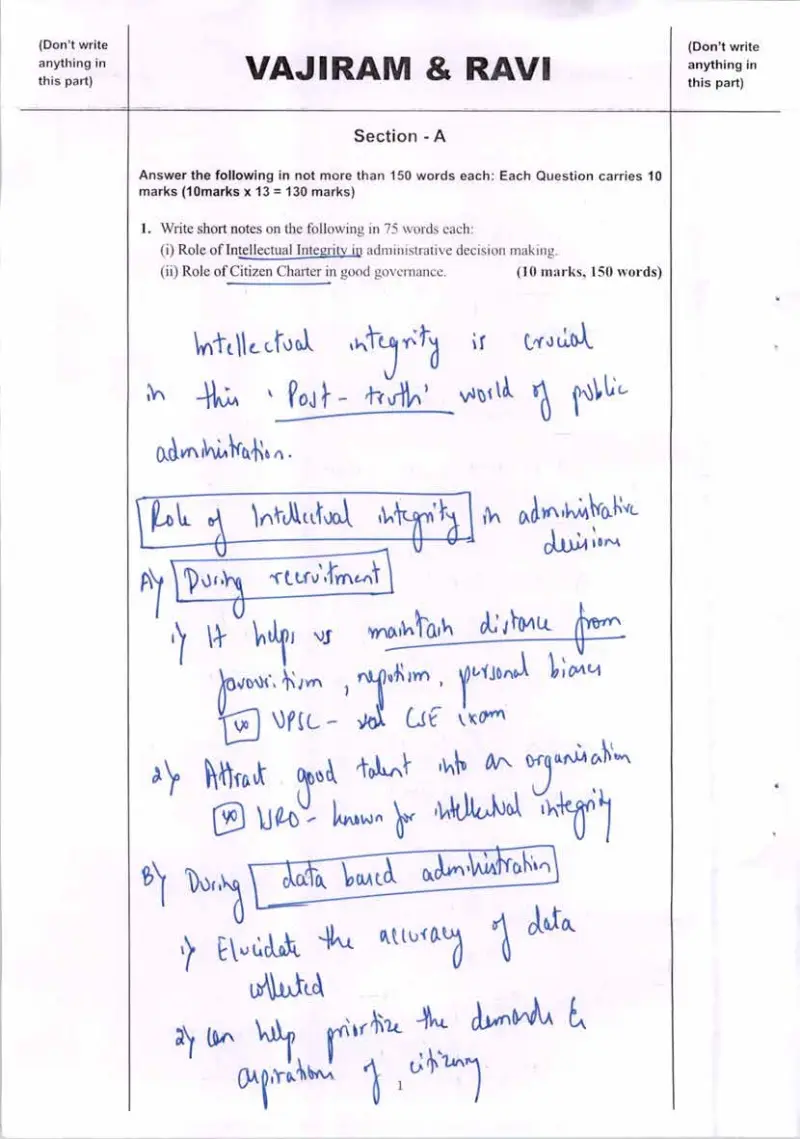
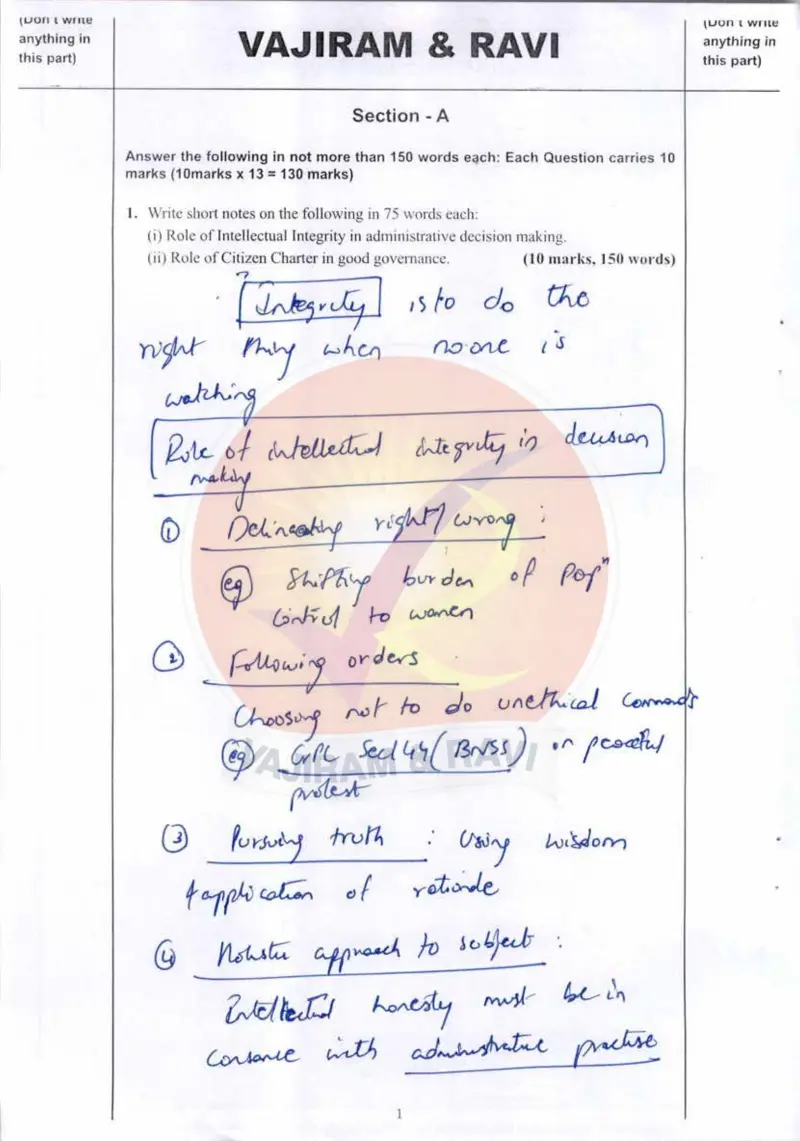
Answered a very similar question
Their question: “Short notes (75 words each): (i) Role of intellectual integrity in administrative decision-making; (ii) Role of Citizen's Charter in good governance”
The (ii) sub-part on the Citizen's Charter tests exactly the same concept as this PYQ (principles and importance of the citizens charter movement), and the topper's short note plus the Railways charter example transfer directly.
Key learnings from their answer
- ›Every answer ran a consistent template: a quotation/proverb hook opening (e.g., "Integrity is to do the right thing when no one is watching" for Q1, "Family is the first school" for Q2) into a framing line, then underlined sub-headers, closing on a one-line takeaway -> a repeatable intro-body-conclusion skeleton lets you write fast and uniformly under time pressure across 19 attempts without reinventing structure each time.
- ›Current affairs were woven in as concrete data points, not name-drops, Oxfam 2024 (1% holds ~40% of wealth) for the rich-poor gap (Q8), the Kamakoti panel for AI policy (Q14), plus Puja Khedkar, the cough-syrup export crisis, PM-LiFE and SEBI BRSR -> ground ethics arguments in dated, specific contemporary references to show the answer is current and rooted in real governance, not timeless platitude.
What they cited: Indian Railways Citizen's Charter — toll-free numbers and complaint-escalation (Q1)