 View answer copy →
Sandeep BadadRank 82CSE 2025
Answered a very similar question
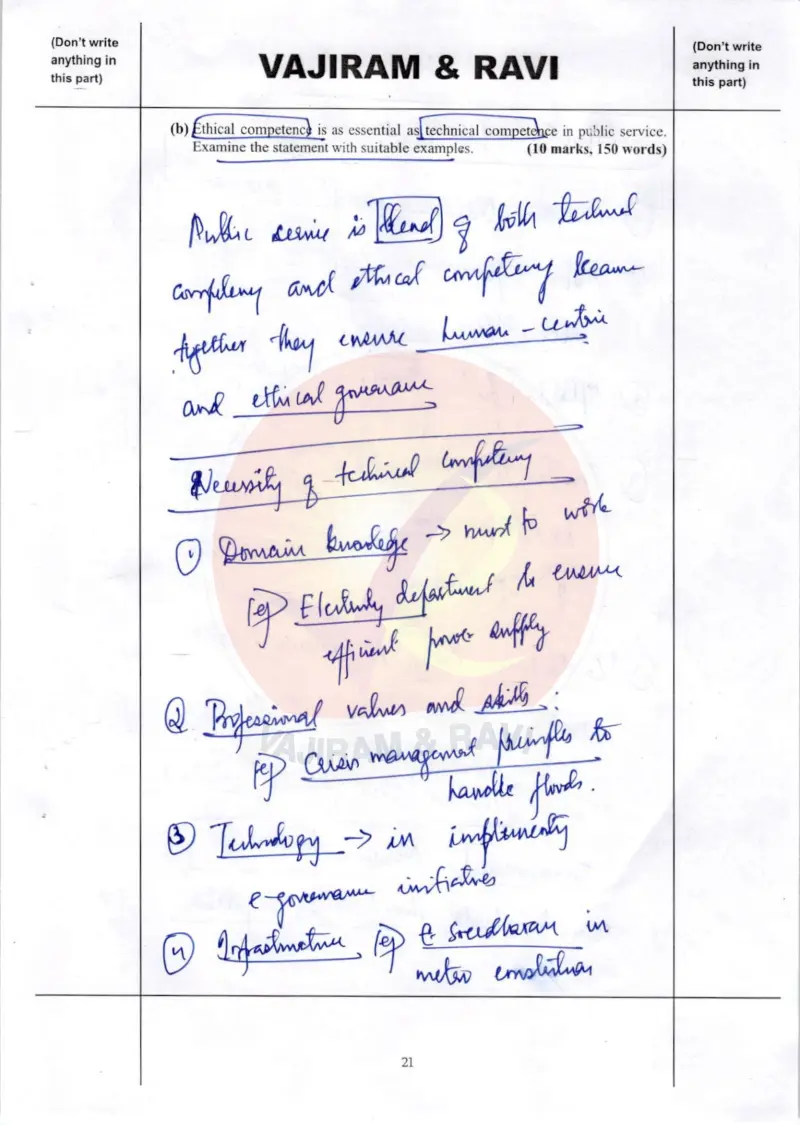
Their question: “'Ethical competence is as essential as technical competence in public service' — examine with examples”
The topper argues exactly why an officer must be ethical alongside being technically/professionally competent, using E. Sreedharan as proof, the core demand of 2013 Q1.
Key learnings from their answer
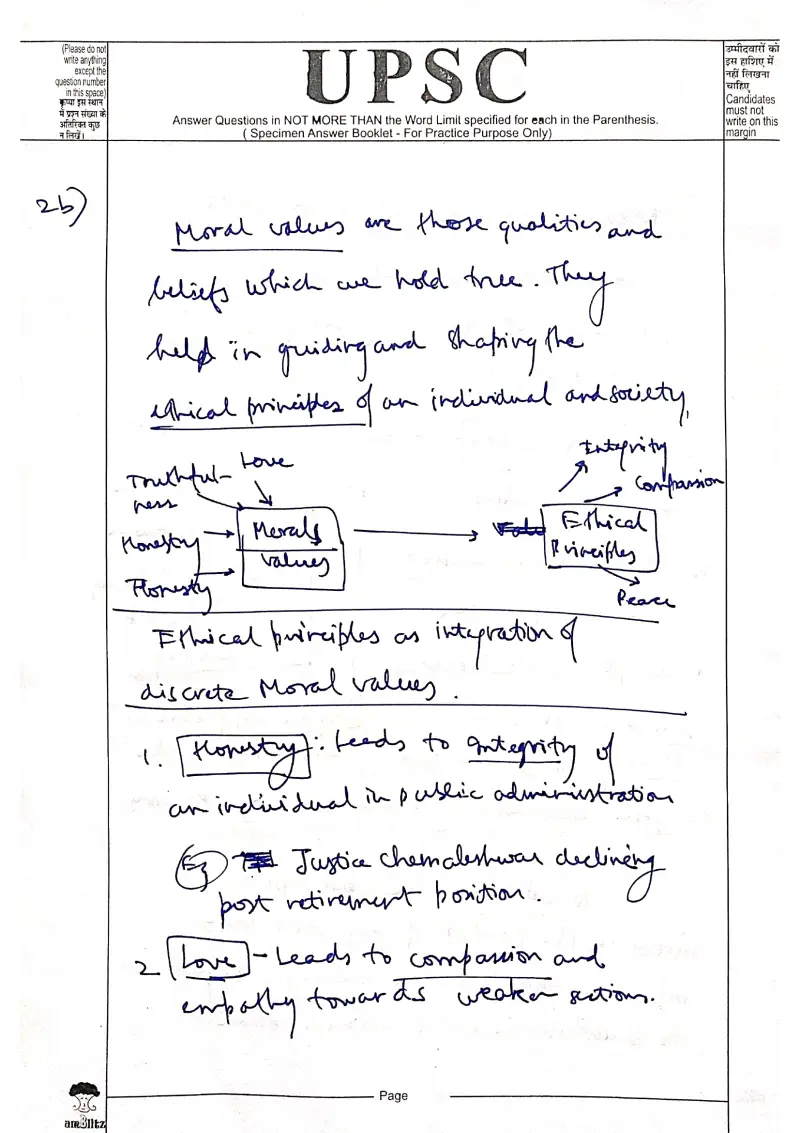
- ›He matched specific named exemplars to specific demands instead of recycling one hero everywhere: E. Sreedharan + Delhi Metro to show ethical AND technical competence together (Q5b), Satyendra Dubey/whistleblower protection in the corruption answers, Davinder Singh and Rawls' 'treating the weakest specially is not discrimination' for impartiality-vs-compassion (Q2b) -> build a tagged mental bank where each example is filed against the exact concept it proves, so you deploy the right illustration for the right sub-part rather than a generic all-purpose name.
- ›He grounded administrative answers in cited governance machinery, not vague reform-talk: c-Vigil (ECI), MGNREGA social audit, Gram Sabha and Mission Karmayogi for participative vigilance (Q4b/Q8), and Nolan Committee principles + Operation Sindoor (emotional intelligence) for public-service ethics (Q5b) -> back every ethical prescription with a real, nameable scheme/committee so 'transparency' and 'accountability' read as concrete mechanisms an officer can actually invoke.
What they cited: E. Sreedharan — Delhi Metro (ethical + technical competence) — Q5(b) · Nolan Committee principles of public life — Q5(b) · Operation Sindoor — need for emotional intelligence — Q5(b)