
 View answer copy →
Shakti DubeyAIR 1CSE 2024
Answered a closely related question
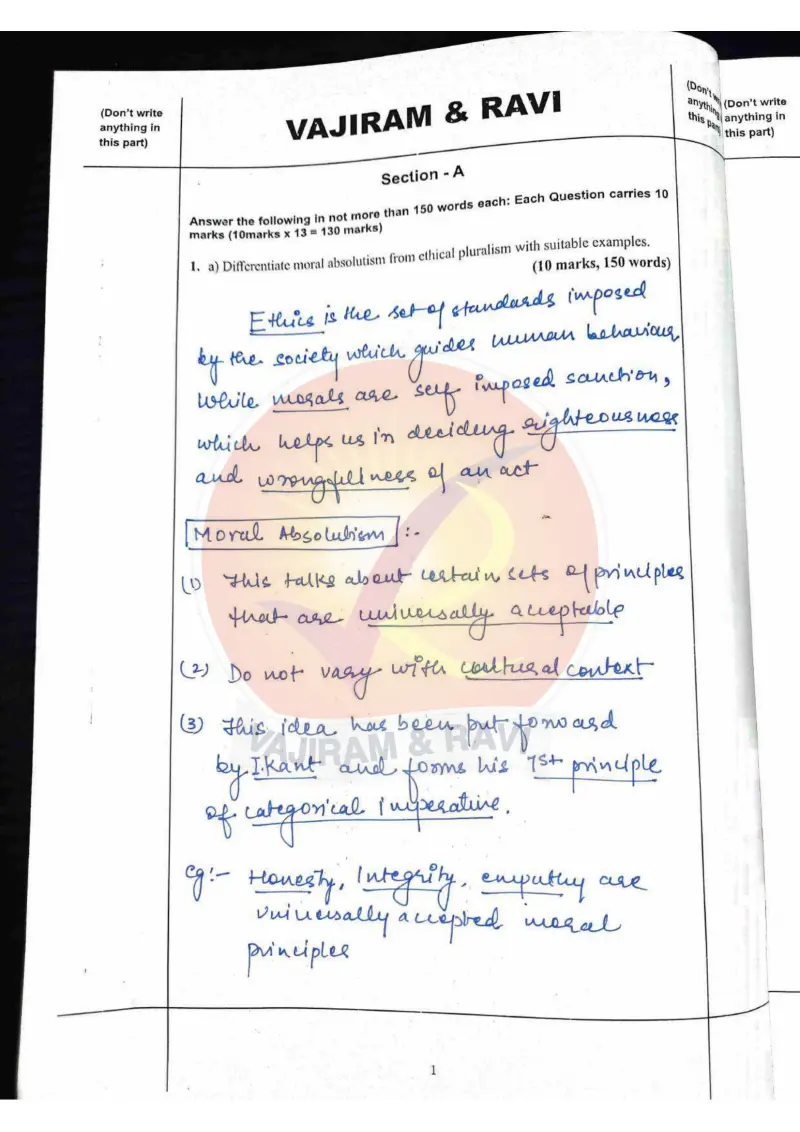
Their question: “Differentiate moral absolutism from ethical pluralism, with examples”
Her absolutism-vs-pluralism distinction (universal fixed morality vs multiple valid frameworks) is the same debate as 2013 Q3's changing values vs universal, eternal human values.
Key learnings from their answer
- ›Shakti's signature move is pairing a Western ethics thinker with a concrete Indian instance, Kant's categorical imperative (1a), Rawls' Difference Principle, Plato's cardinal virtues, Bentham-Mill utilitarianism, and Bhagavad Gita's Nishkama Karma, then grounding values in named role models like Kiran Bedi (Tihar), Chhavi Rajawat (Soda Sarpanch), Satyendra Dubey, U. Sagayam, Ela Bhatt (SEWA) and Dashrath Manjhi -> Build a fixed 'thinker + Indian example' bench so abstract ethics points always land on a real referent instead of staying theoretical.
- ›Every 10-marker opens with a 'hook' before the term is even defined, a quotation (e.g. 'Sunlight is the best disinfectant' to open the citizen-charter/transparency answer 2a, Greta Thunberg's 'act as if our house is on fire' to open the climate-finance answer 5a, Gandhi's 'court above the court of law' to open the conscience answer 6a) OR an authority/data anchor (2nd ARC, IPCC 6th AR, WEF) -> Bank one or two relevant hooks per ethics theme and lead with them, so the examiner sees framing before content; an authority/report works just as well as a quote when you don't have one.
What they cited: Immanuel Kant — categorical imperative (1a)

