 View answer copy →
Raghav JhunjhunwalaRank 4CSE 2025
Answered a very similar question
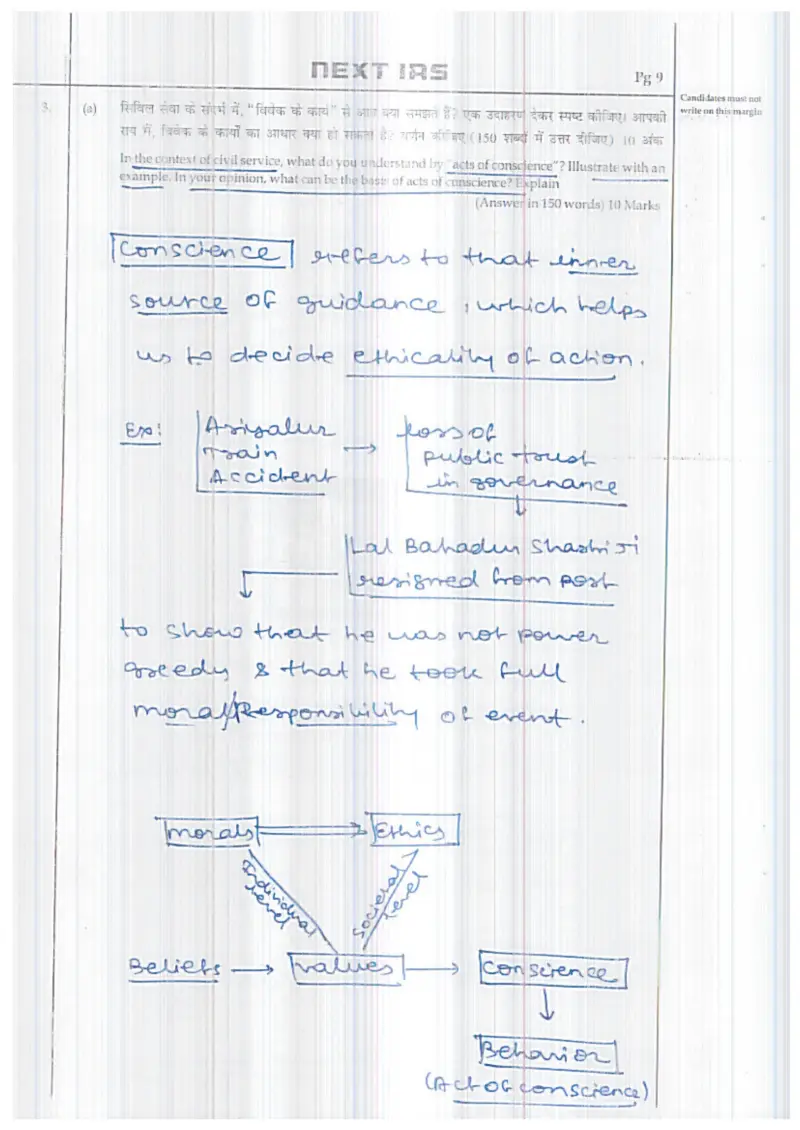
Their question: “'Acts of conscience' in civil service - meaning, example, basis”
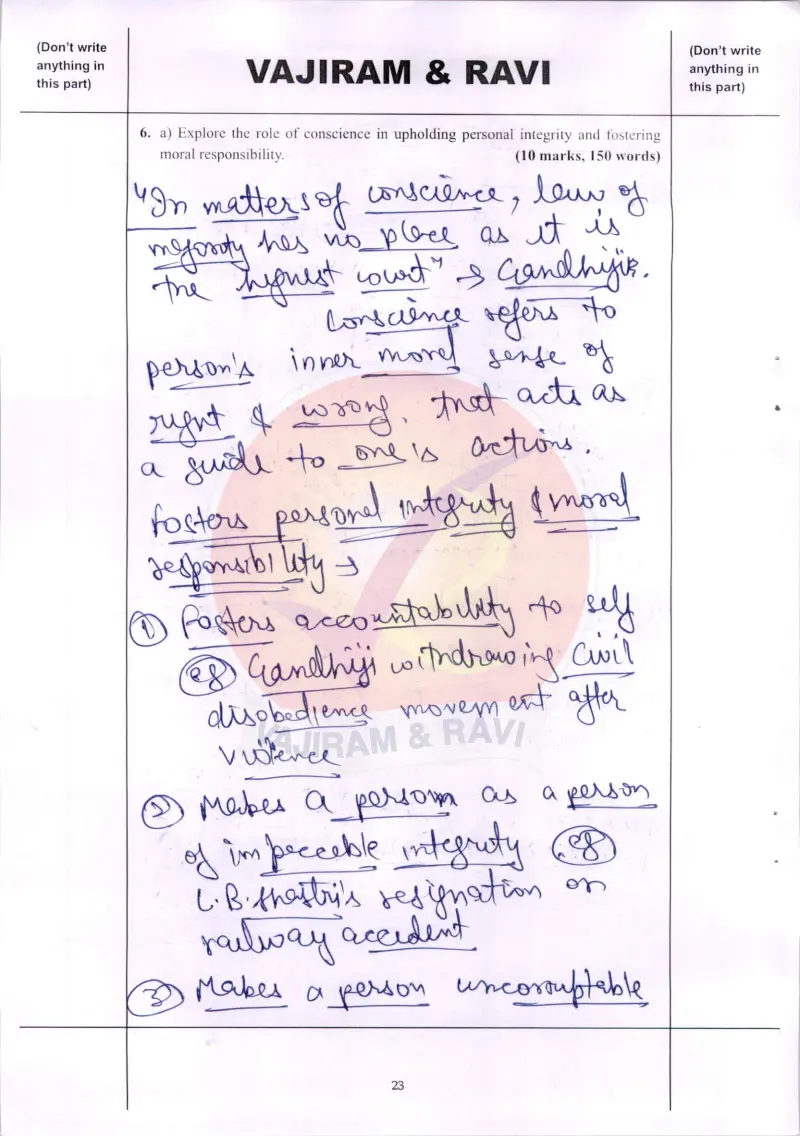
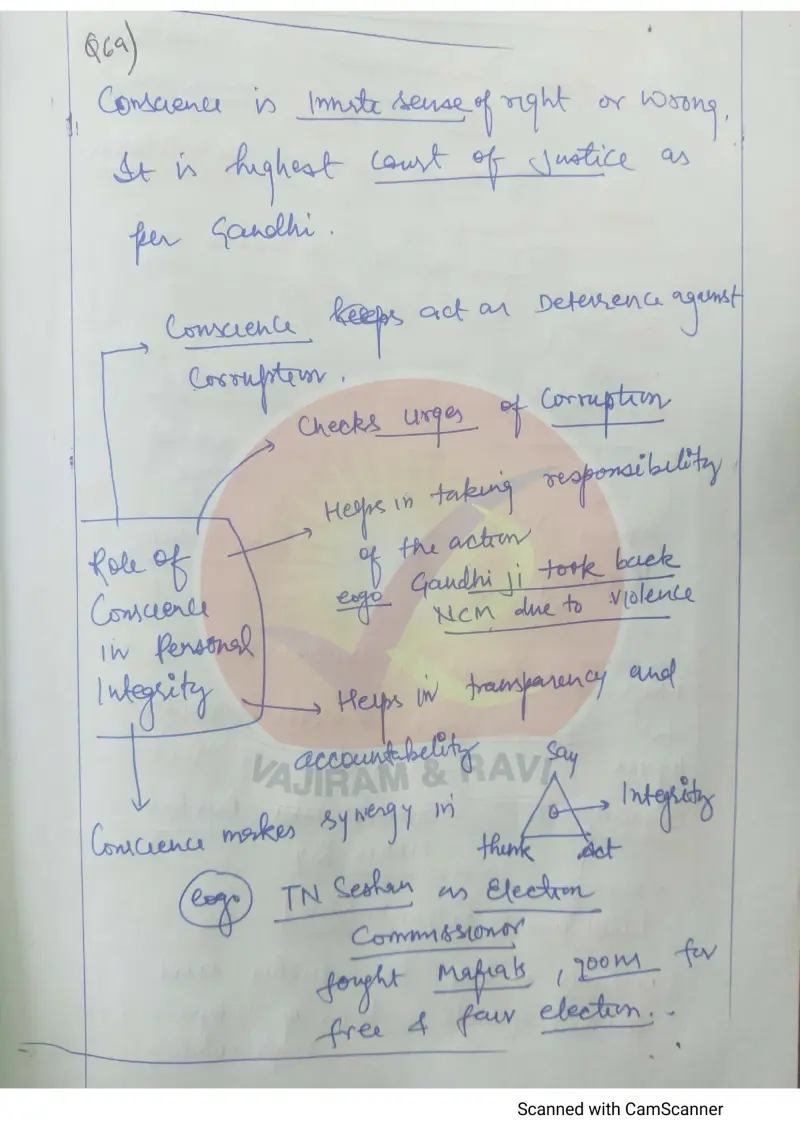
Gives a crisp definition-anchor for conscience (Gandhi: 'the softest pillow and the highest court') plus a real act-of-conscience example (Shastri's resignation), directly serving the 2013 'voice of conscience / crisis of conscience' question.
Key learnings from their answer
- ›For 'ends justify means' (Q1a) Raghav reached for a hard, debatable case - Subhas Chandra Bose joining the Axis powers for the freedom struggle - rather than a safe textbook line, and paired role-models like Lal Bahadur Shastri resigning after the Ariyalur train accident and Shastri-type conscience cases with the constraint-violation theme -> Mine history for the genuinely contested example that fits the exact wording of the question; a well-chosen real instance does the arguing for you.
- ›Nearly every answer opens with a hook (film, Sanskrit maxim, or quote) and closes with a thinker's line - a deliberate, repeatable answer-writing rhythm.
What they cited: Lal Bahadur Shastri resigning after the Ariyalur train accident (moral responsibility / conscience)
Quotes used: “'Conscience is the softest pillow and the highest court' - attributed to Gandhi (Q3a)”