 View answer copy →
Aayushi BansalAIR 7CSE 2024
Answered a very similar question
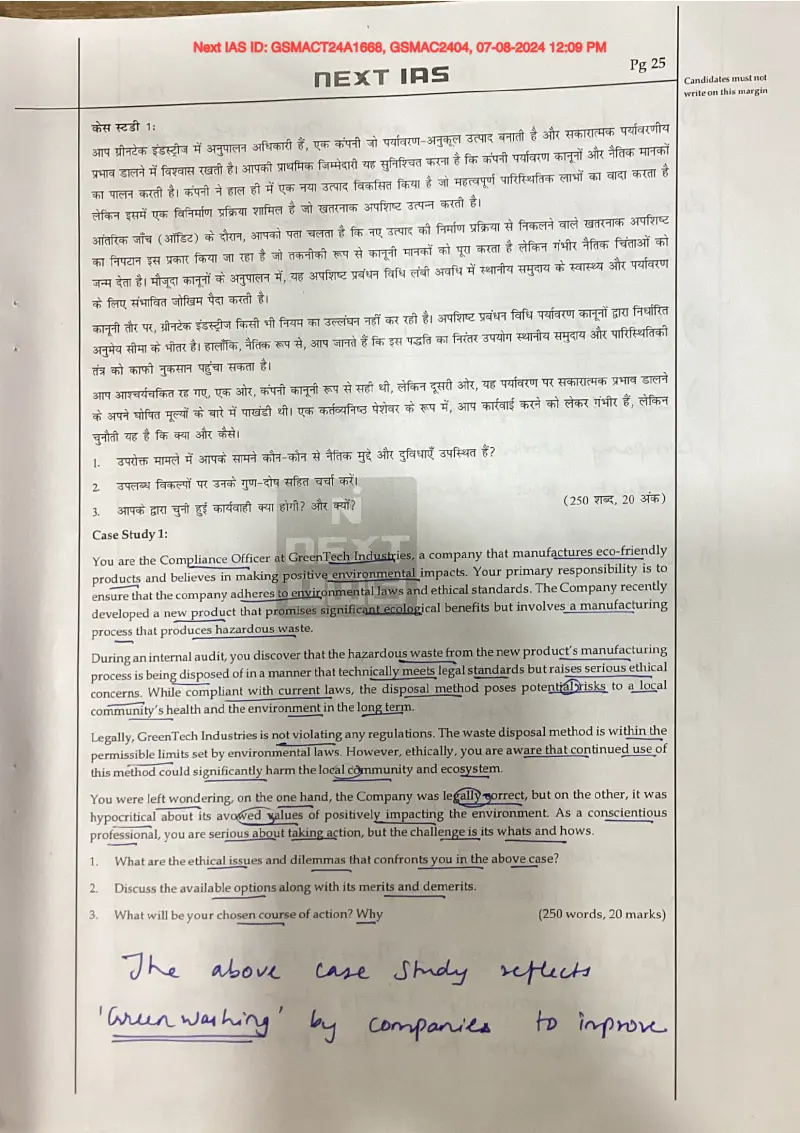
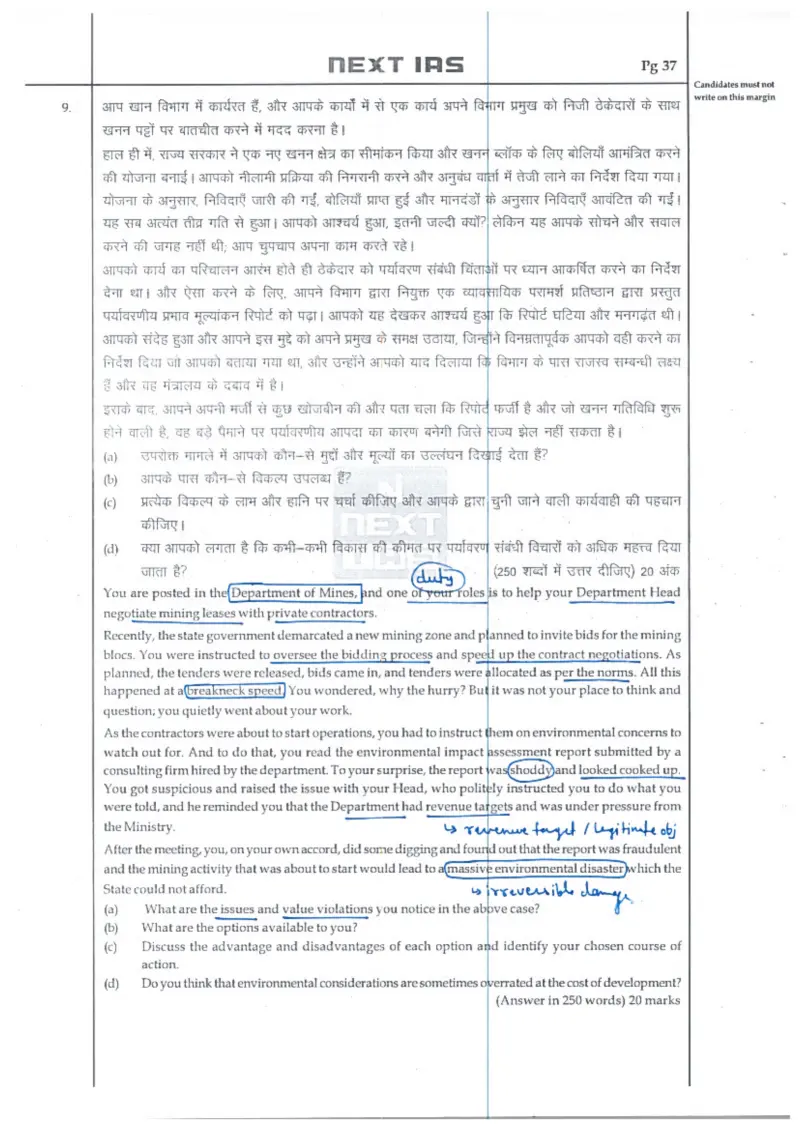
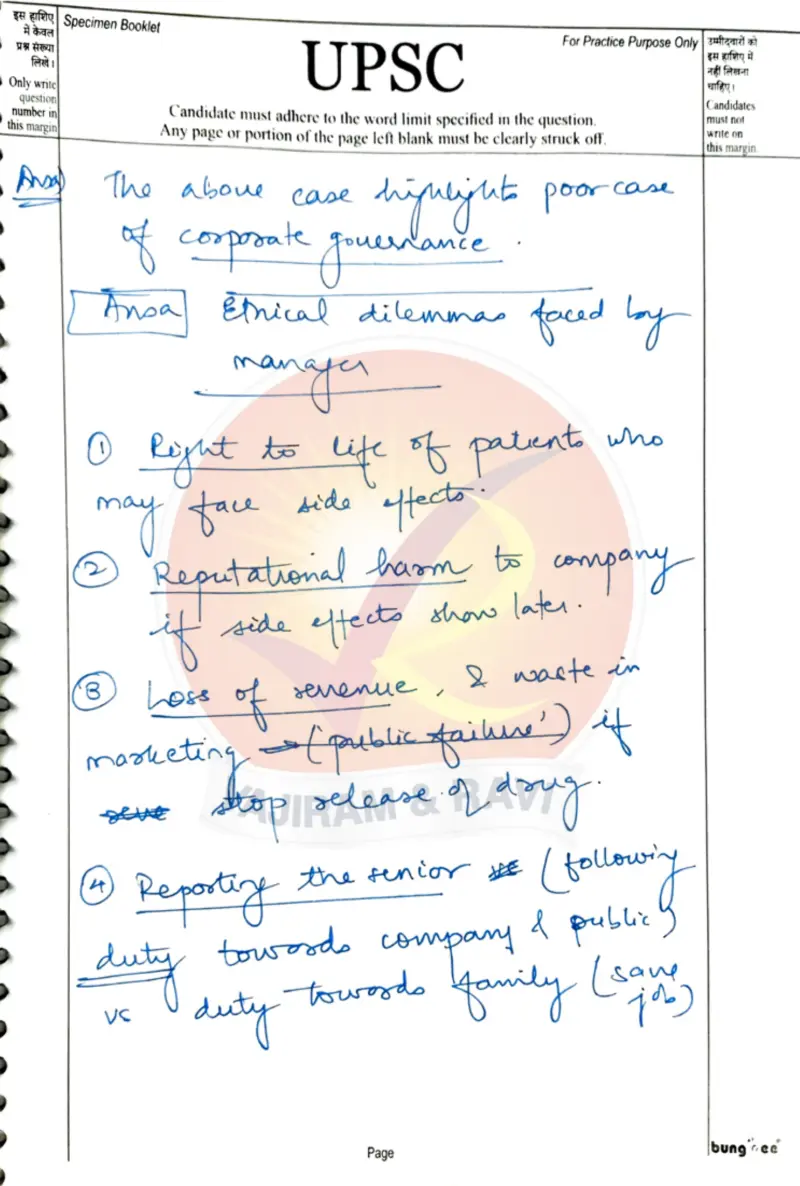
Their question: “Case study (a/b/c): GoodLife Pharma 'Revivol' — concealed fatal side-effects, complicit superior, whistleblowing”
Both are classic whistleblowing dilemmas, an employee discovering a company concealing a public-health hazard and pressured to stay silent; Aayushi's Revivol answer (issues-first, stepwise action, short-vs-long-term) models how to argue for disclosure.
Key learnings from their answer
- ›Her case-study answers follow a fixed, examiner-friendly skeleton: an enumerated 'ethical issues' list first, then stepwise action, then a short-term-vs-long-term justification, and Q12 (Kerala landslides) explicitly splits the cognitive vs affective dimensions. Lesson: a repeatable case-study template (issues -> stakeholders/action -> short- vs long-term) lets you answer all five case studies (Q12,13,15,16,17) fully and consistently under time pressure.