
Vimal Kumar — Vajiram & Ravi GS Paper 4 (Ethics) copy
What’s inside this copy
- ▸Complete 250-mark booklet - all 12 questions (Q1-Q12) fully attempted, including all six case studies.
- ▸Disciplined house-style: boxed sub-headings + numbered points + a concrete 'eg' example attached to nearly every single point.
- ▸Strong visual presentation - comparison tables, spider/stakeholder diagrams, a think-say-act integrity triangle, and merit/demerit tables in every case study.
- ▸Wide thinker range woven in: Kant, Aristotle, Rousseau, Confucius, Thiruvalluvar, Vivekananda, Dalai Lama, Goleman and Gandhi.
- ▸Heavy constitutional/legal anchoring: Articles 39(b)/(c), 21, 43A, KS Puttaswamy, RTE, SC/ST Atrocities Act 1989, Companies Act 2013.
- ▸Case studies resolve by weighing options and picking a balanced 'mix' justified on justice/Preamble and Kantian grounds.
What to learn from this copy
- ★Vimal anchors nearly every numbered point to a named, concrete 'eg' callout rather than abstract assertion -- Palak Muchhal's 3000 children's heart surgeries (compassion), MS Dhoni's 2007 WC last over and 2011 captaincy (emotional intelligence/decision-making), Bezwada Wilson eradicating manual scavenging, IPS Atal Kulkarni's Bharosa Cell, E. Sreedharan and Satyendra Dubey -> in Ethics, attach a specific real person/event to each value-claim; a stocked, varied example bank turns generic ethics points into evidence.
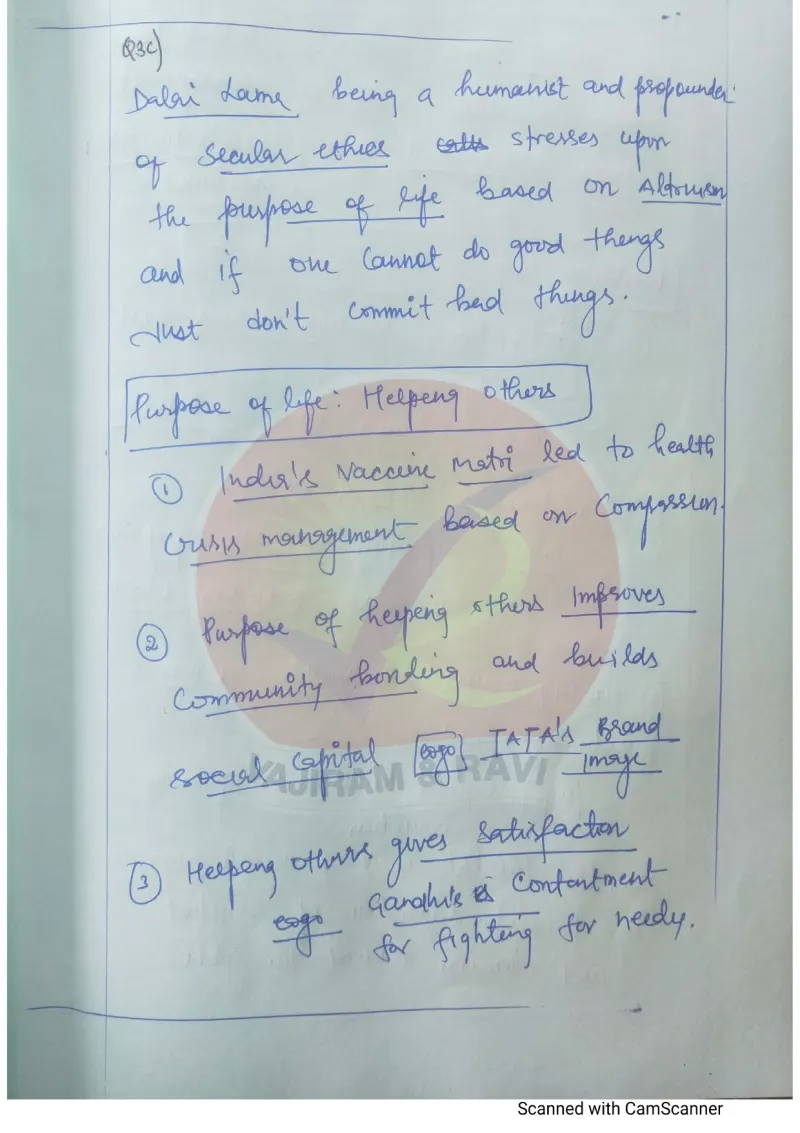
- ★He matches the thinker to the exact question -- Confucius's own definition of courage as 'seeing the right thing and having determination to do that act in the face of adversity' (Q3b), Gandhi's conscience as the 'highest court of justice' (Q6a) and 'commerce without morality is sin' for the influencer-fraud case (Q9), Dalai Lama's 'if one cannot do good things, just don't commit bad things' (Q3c) -> deploy quotations precisely on the question they illuminate (and use the thinker's own words on a quote-based question), instead of scattering generic philosophers everywhere.
- ★Every case study (Q7-Q12) follows a repeatable resolution engine: a stakeholder spider-diagram + a merit/demerit two-column table for each option, then a chosen balanced 'mix' justified on justice/Preamble and Kantian grounds -> for case studies, make your decision auditable -- map stakeholders, weigh each option's pros/cons visually, then justify the final choice on a stated ethical principle rather than asserting an answer.
- ★He hard-anchors ethics answers in law and the Constitution -- Articles 39(b)/(c), 21, 43A, KS Puttaswamy (privacy) on the police data-leak case, SC/ST Atrocities Act 1989 on the caste-discrimination case (Q12), Companies Act 2013 and RTE -> in GS4, citing the precise article/statute that governs the dilemma adds rigour and shows the answer is grounded, not just sentimental.
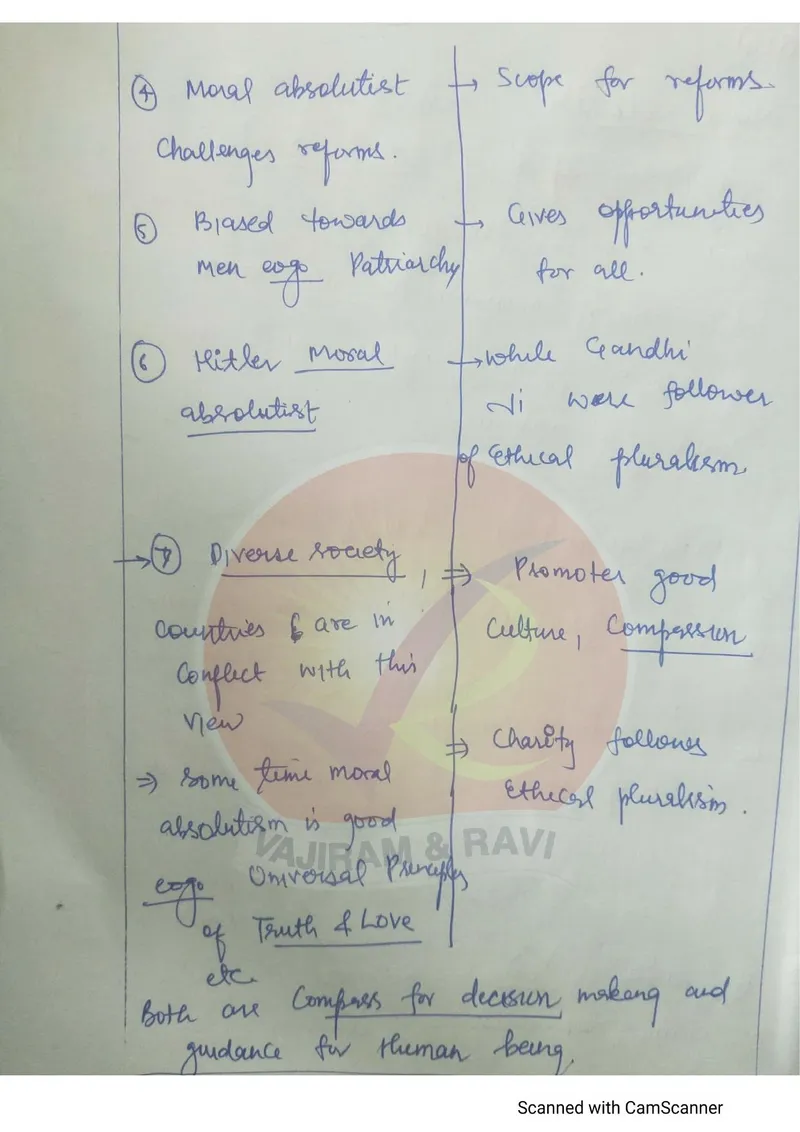
- ★He converts abstract concepts into recall-able visual devices -- a Think-Say-Act triangle equalling Integrity for the conscience answer (Q6a), a two-column Moral Absolutism vs Ethical Pluralism comparison table (Q1a), and a spider mind-map of Thiruvalluvar's key teachings (Q2b) -> design a simple diagram that encodes the concept's structure (a definition made visual), not a decorative box, so the examiner sees the framework at a glance.
- ★He completed the full 250-mark booklet -- all 12 questions including all six case studies fully attempted under a disciplined house-style (underlined key term, boxed thematic sub-heading, numbered points) -> full attempt with a consistent, fast template is itself a scoring strategy in time-pressured GS4; a repeatable structure lets you finish without quality dropping on the last answers.
Questions attempted: Moral Absolutism vs Ethical Pluralism (comparison); Ethical implications of Generative AI; Citizen Charters - transparency & anti-corruption, and 16 more below.
Questions attempted in this booklet (19)+
- Q1a.Moral Absolutism vs Ethical Pluralism (comparison)
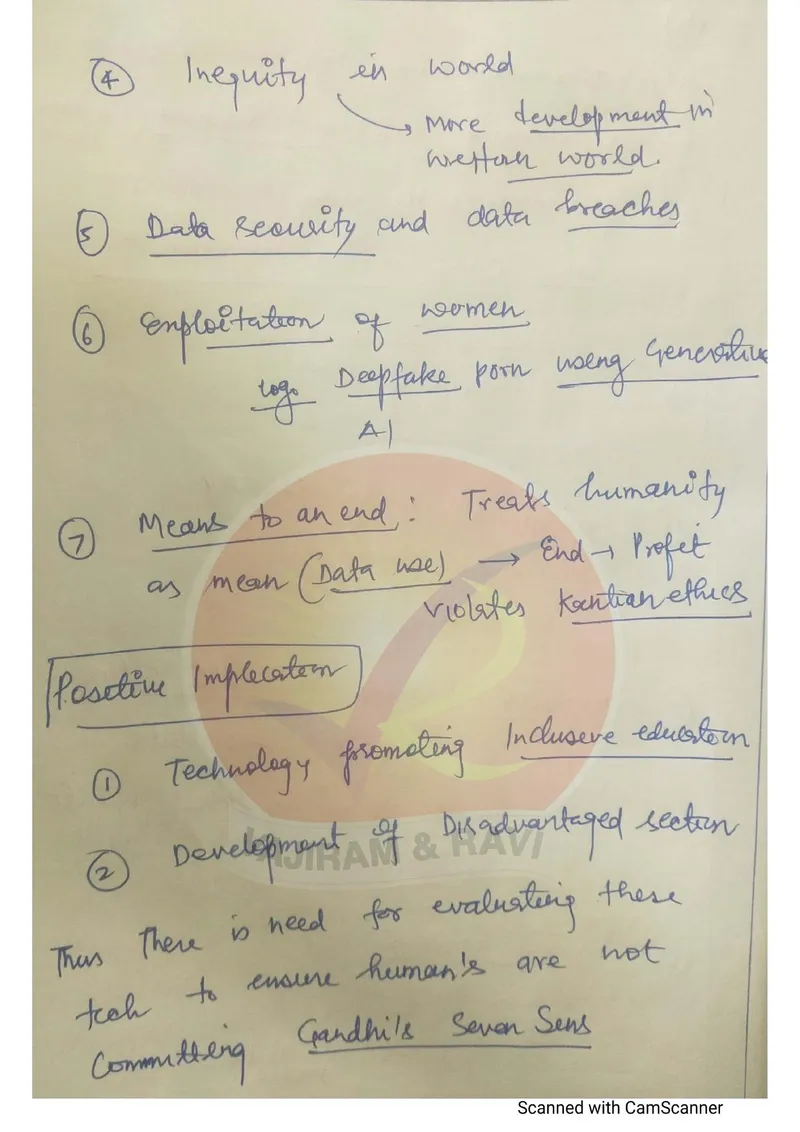
- Q1b.Ethical implications of Generative AI
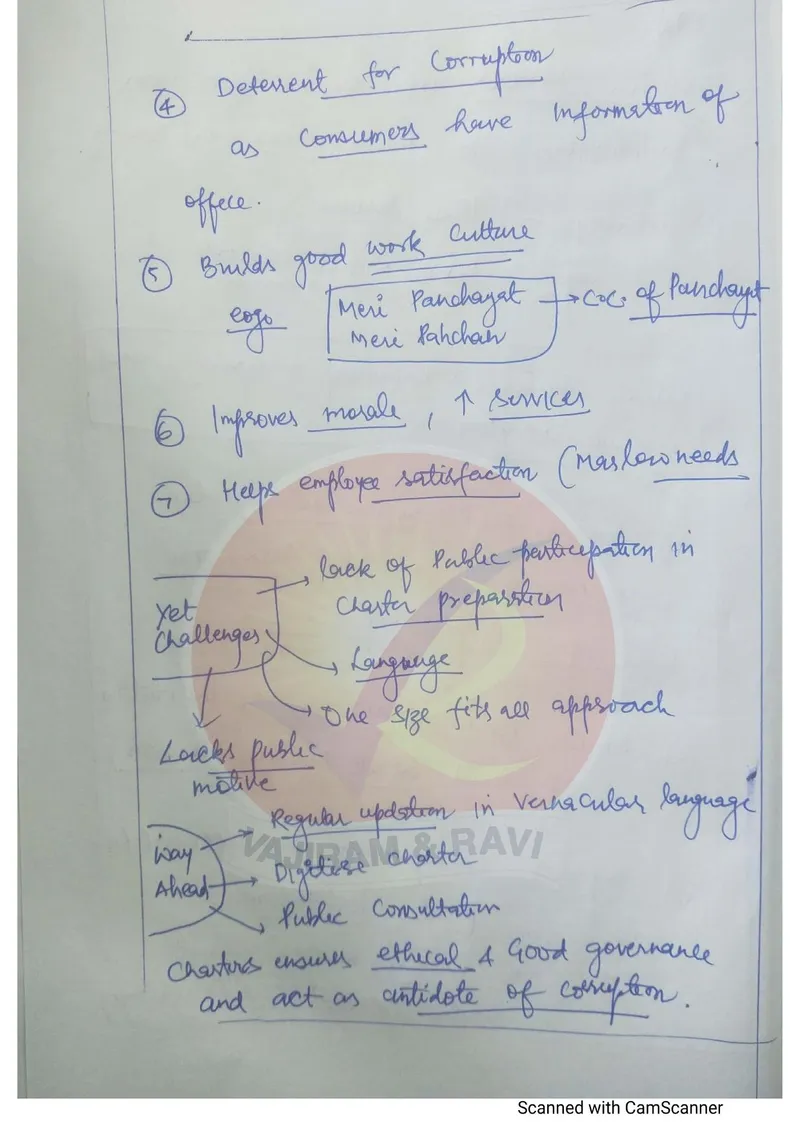
- Q2a.Citizen Charters - transparency & anti-corruption
- Q2b.Thiruvalluvar's teachings (Thirukkural) and present relevance
- Q3a.Vivekananda - following heart vs mind
- Q3b.Confucius on courage (knowing right vs doing it)
- Q3c.Dalai Lama / secular ethics - purpose of life, altruism, 'don't hurt'
- Q4a.Attitude - meaning, ABC model, behaviour as expression
- Q4b.Emotional Intelligence - role in success, resilience, decisions
- Q5a.Climate change ethics - developed vs developing, climate justice
- Q5b.Moral consequences of misusing benefits meant for weaker sections
- Q6a.Conscience and personal integrity
- Q6b.Ethical dilemmas - meaning and ways to resolve
- Q7.Case study - police conflict of interest & privacy leak (Akash/Shipra/DIG Samar)
- Q8.Case study - illegal sand mining, journalist Saho's dilemma
- Q9.Case study - influencer / brand endorsement & defrauded investors
- Q10.Case study - bank disinvestment, bribe, workers' interest
- Q11.Case study - nepotism & corporate governance (Anil Gupta/Rohan)
- Q12.Case study - caste discrimination, Dalit student's death (Ms Radhika)
Examples, data & evidence used
- Vasudhaiva Kutumbkam (cited as G20 theme)
- ChatGPT / Microsoft GenAI; deepfake porn via Generative AI
- Indian Railway Charter; Passport office; Meri Panchayat Meri Pahchan
- Social audit in MGNREGA (Meghalaya)
- Palak Muchhal - 3000 children's heart surgeries
- MS Dhoni - 2011 World Cup captaincy & 2007 WC last over
- Bezwada Wilson - eradicating manual scavenging
- IPS Atal Kulkarni's Bharosa Cell for women safety
- 2047 Viksit Bharat goal
- Shah Rukh Khan during son's drug case
- India's Vaccine Maitri; TATA brand image; India's investment in Afghanistan
- China's Uyghur Muslims; West supplying arms in Russia-Ukraine war
- Bulli Bai case; IAS Pooja Singhal (Rs 3 crore seized by ED)
- Kiran Bedi; Vinesh Phogat; E. Sreedharan (Metro Man); Satyendra Dubey
Quotes the candidate used
- Confucius: courage is 'seeing the right thing and having determination to do that act in the face of adversity' (Q3b, paraphrased in his words)
- Gandhi: conscience is the 'highest court of justice' (Q6a)
- Gandhi: 'wealth without conscience' - cited as one of Gandhi's seven sins (Q5b)
- Gandhi: 'commerce without morality is sin' (Q9)
- Dalai Lama: 'if one cannot do good things, just don't commit bad things' (Q3c)
- Gandhi/proverb: 'Be the change you want to see in others' (Q12)
How it’s written: Highly structured, consistent template across all answers: a 2-3 line definition/intro (often with the key term underlined), a boxed thematic sub-heading (e.g. 'Ethical Implications of GAI', 'Ways to address ethical dilemma'), then numbered points. Almost every point is anchored to a concrete example flagged with hi…
Diagrams & visuals: Two-column comparison table - Moral Absolutism vs Ethical Pluralism (Q1a); Spider/mind-map of Thiruvalluvar's 'Key Teachings' (Q2b); Mind-map of 'Role of Conscience in Personal Integrity' with a Think-Say-Act triangle = Integrity (Q6a); Stakeholder spider-diagrams for each case study (Q7, Q8, Q9, Q10, Q11, Q12); Merit/Demerit two-column tables for every option in the case studies (Q8, Q9, Q10, Q11); Boxed sub-headings and bracketed 'eg' callouts used throughout
Evaluator: No examiner marks or comments are filled in on this copy.